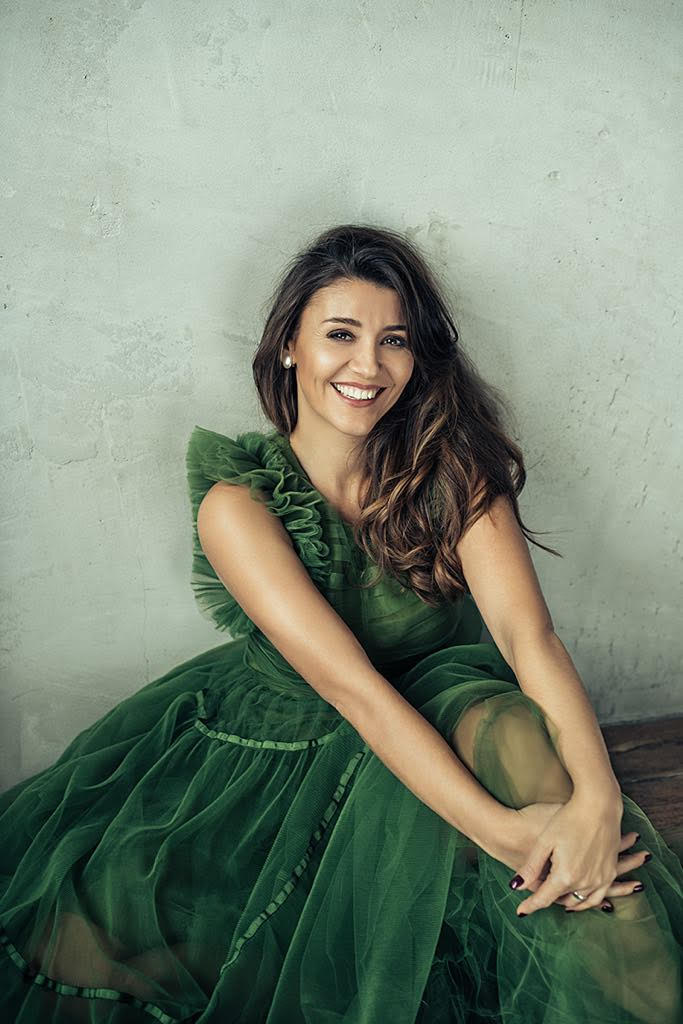
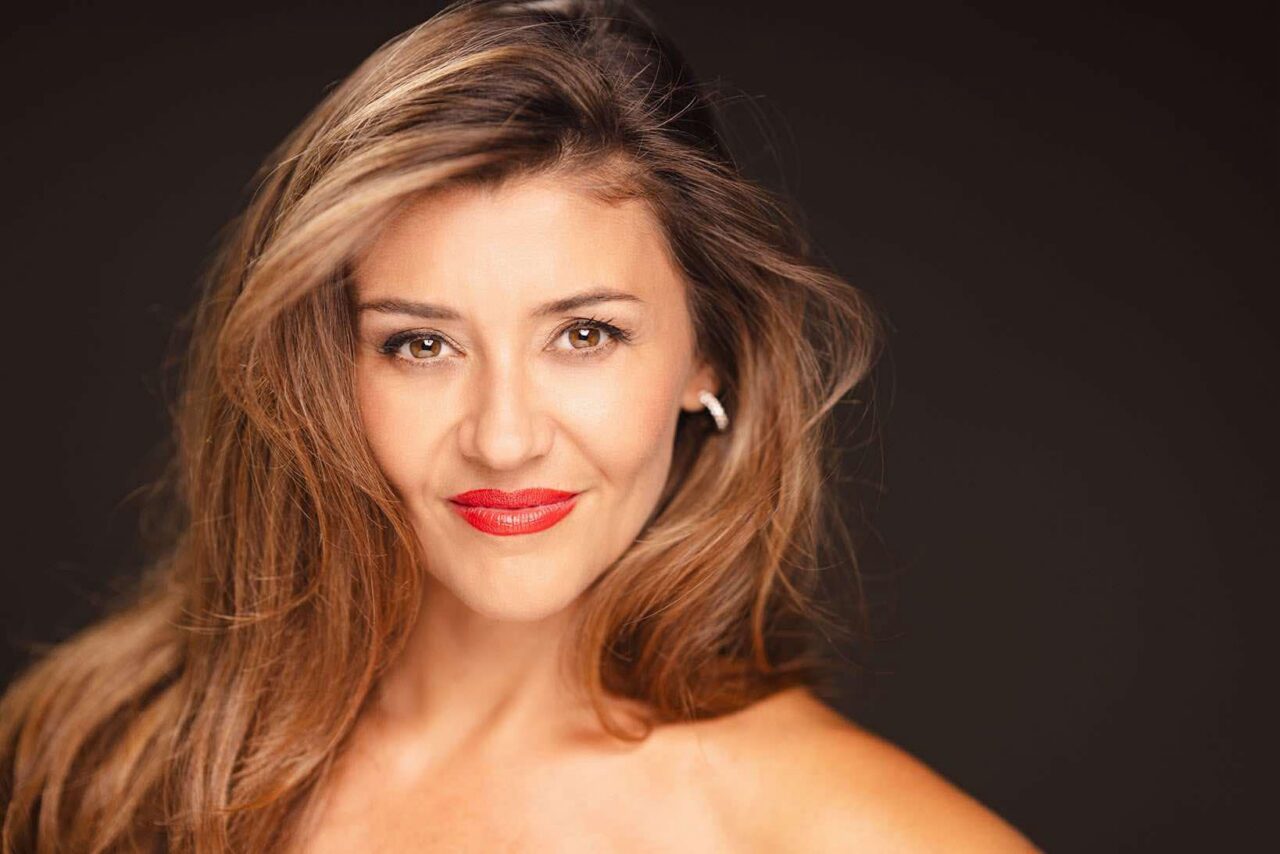
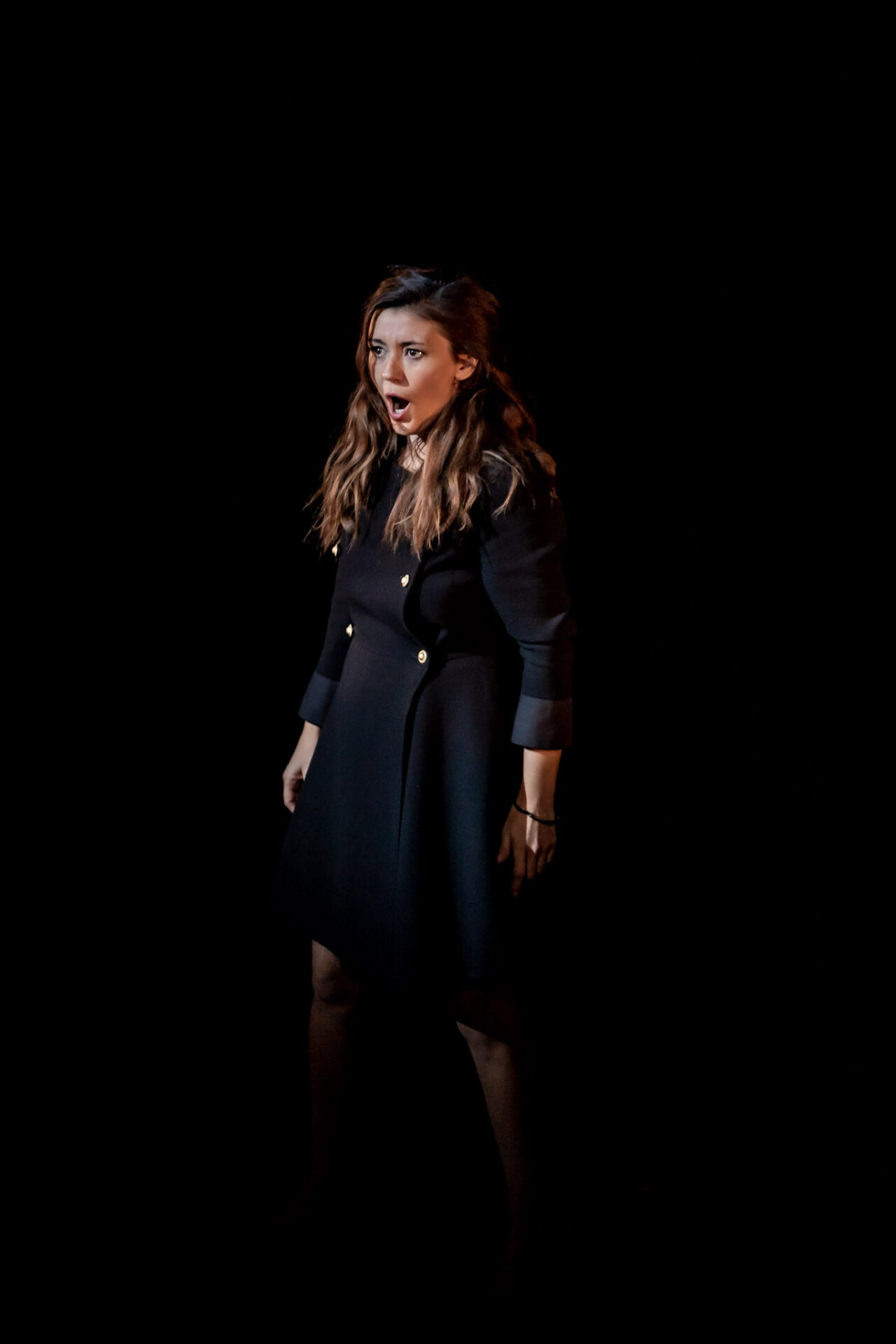
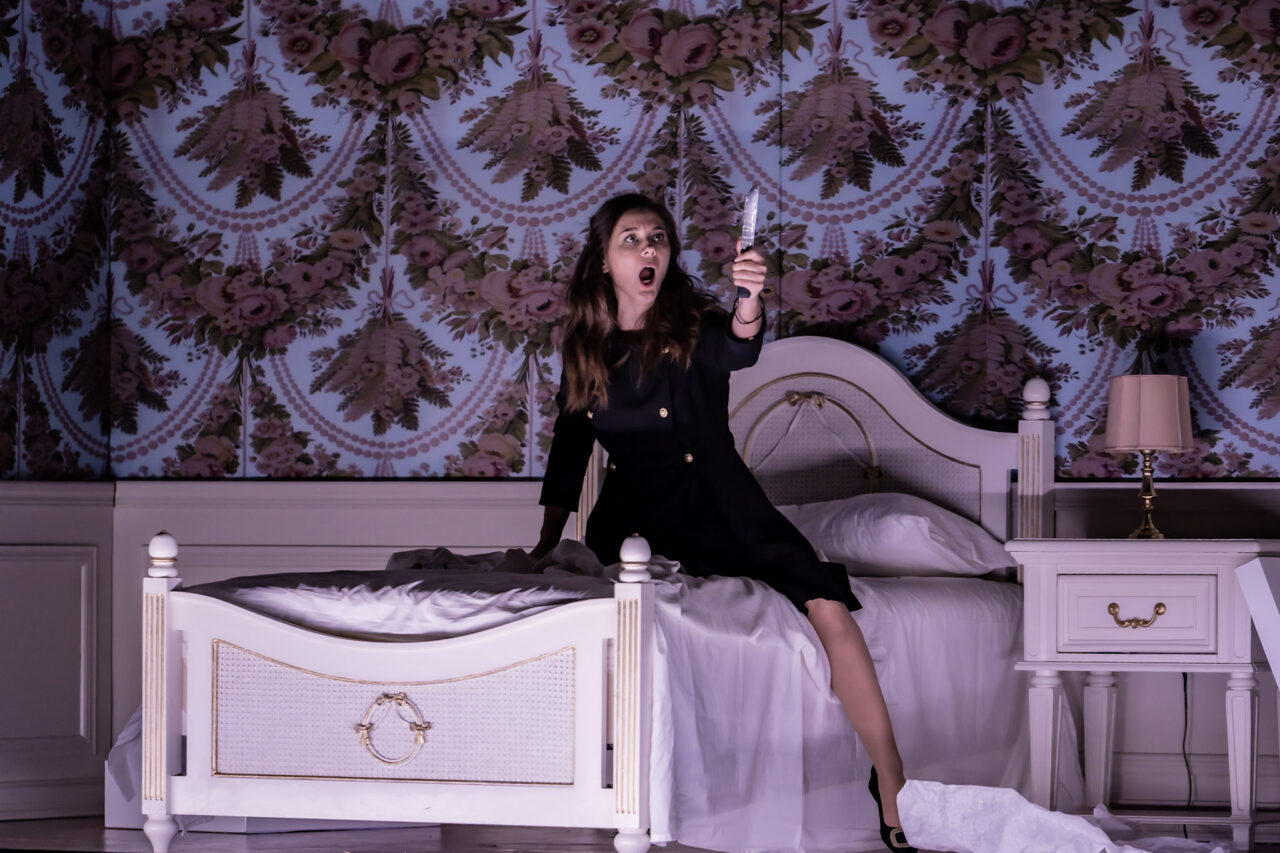
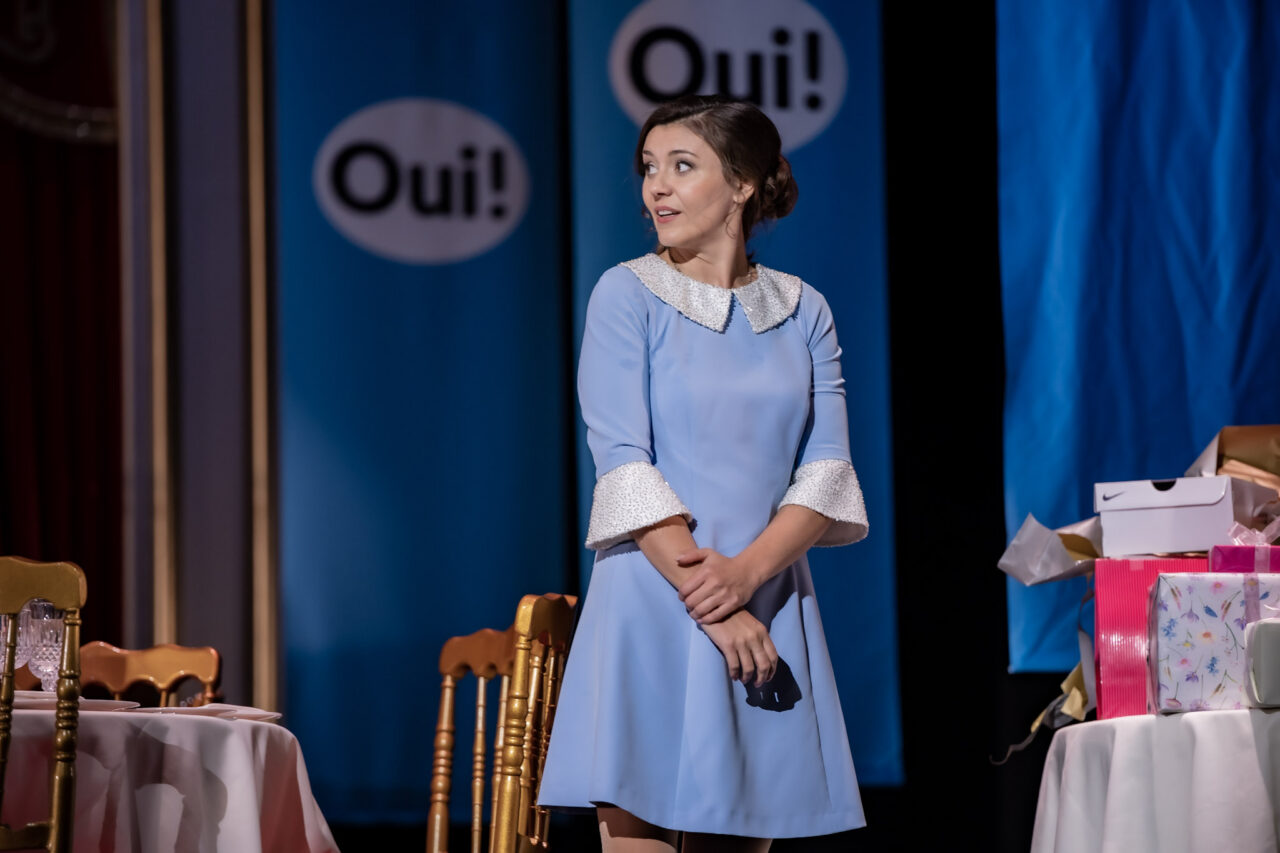
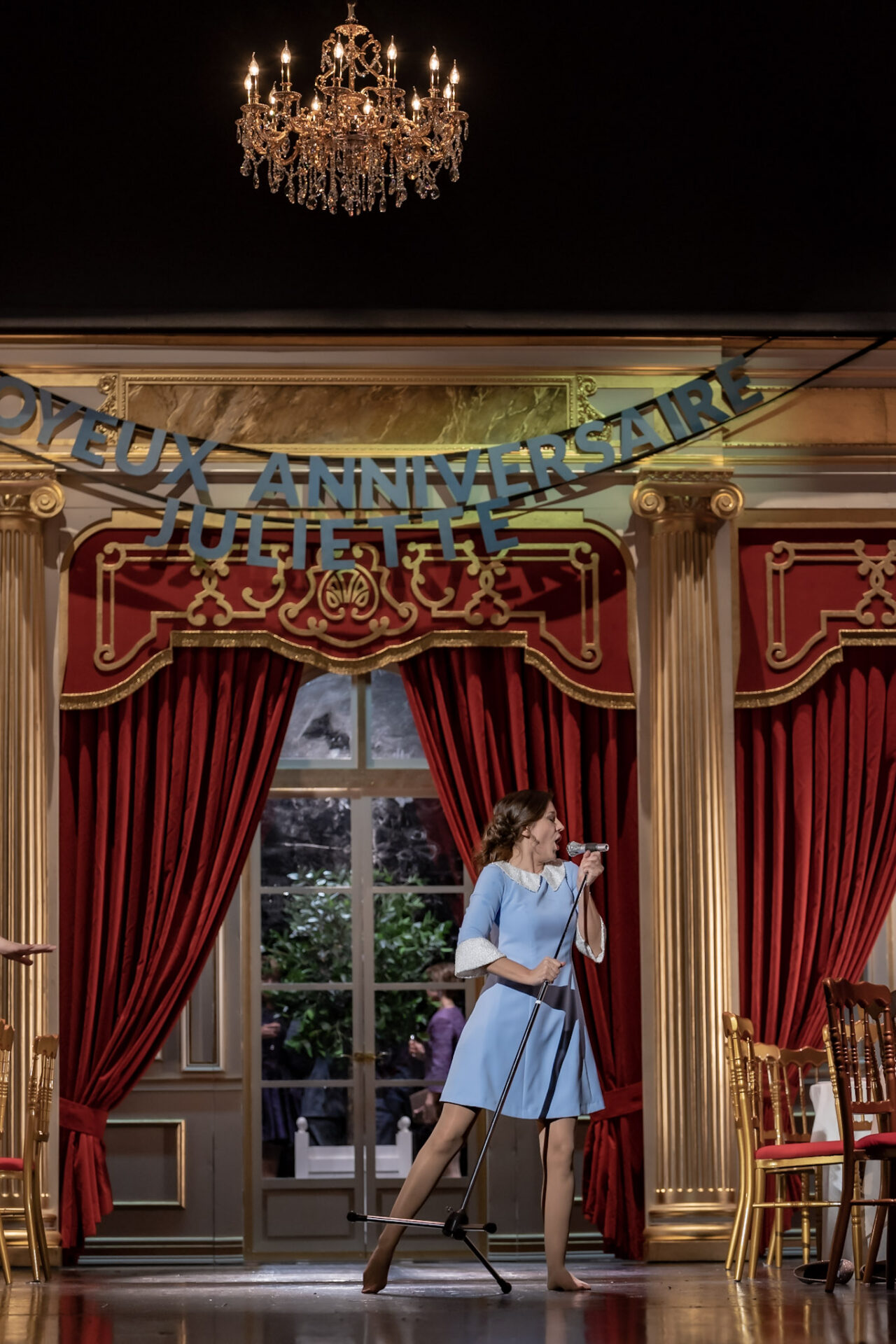
Perrine Madoeuf’s name has been familiar to Estonian opera audiences since 2017, when she made her debut on the stage of the Estonian National Opera in the role of Marguerite in Charles Gounod’s opera Faust. Originally from Lyon, France, Madoeuf has built an impressive career, but the road to the top has not been easy. As a young singer, she had to face both narrow-minded teachers and the rigid structure of the French music education system. In the early years of her career, she lost her voice, and with it, her confidence. But she didn’t let it break her. On the contrary, her dedication and passion for opera helped her rebuild her voice, and after nearly a decade of self-discovery, she found her place in the opera world.
Today, Perrine Madoeuf is more than just a brilliant soloist – since 2024, she has also been sharing her knowledge and experience with young singers as a guest professor of vocal studies at the Estonian Academy of Music and Theatre, inspiring the next generation with her dedication and love for the art of opera.
Perrine recalls her childhood with fond words. “I wasn’t born into a family of musicians, but my mother had always dreamed of becoming one. Coming from a very modest background, she never had the chance to follow that dream herself, so she hoped her children – me, my older brother and sister – would at least give it a go.” So, at the age of five, Perrine began learning the piano at the local music school. But her lively nature and restless spirit didn’t quite suit the piano and before long the instrument was swapped for another one – drums. “I played the drums for a bit, which suited my personality much better, but not my parents, as the drums were in our living room and drove them mad!”
Perrine’s sister noticed a poster at the music school inviting young singing enthusiasts to audition for the children’s opera choir at l’Opéra de Lyon. She helped Perrine prepare and the bold, creative girl with a love for performing made it into the choir. “I got into the opera choir without ever having seen an opera before.” Her first experience of opera is still vivid in her memory – Giacomo Puccini’s Turandot, in which she was performing already at the age of nine. “The prologue of the opera is incredibly powerful. There’s an orchestra and a huge choir on stage. I still remember the overwhelming emotion that swept over me,” Perrine recalls animatedly. “I found myself in the middle of it all and was simply speechless – the intensity of the music was overwhelming! After my first rehearsal with the orchestra, I started to cry because it touched me so deeply. At the end of the rehearsal, I went to my mother and said: ‘This is what I want to do when I grow up!’ It was love at first sight,” she describes. Even today, Perrine becomes emotional whenever she hears the prologue overture of Puccini’s Turandot.
The following years were spent balancing schoolwork and the opera choir. “All my free time was spent with the opera choir. Since performances ended late at night, I often got home around midnight without having had time to do my homework. The next day, I had to wake up at 6 a.m. to get to school. It was very intense,” she admits. “Did it break me? No, but it changed my attitude towards regular school. From the moment I discovered the world of opera choir, which included not only performances but also tours and various exciting projects, going to regular school became difficult for me. Still, it gave me so much! Imagine telling a lively and energetic child who doesn’t particularly enjoy school: ‘We’re going to take you and your friends, dress you up in costumes, and let you play and perform on stage!’ Of course you don’t want to go back to regular school after that – you’ve found what you love and nothing else seems to matter. For me, school became really hard. To this day, I still have nightmares about it.”
From children’s opera choir to the opera stage
At the age of 15, she began studying at the National Conservatory in Lyon – far earlier than most. “My voice wasn’t yet as developed as a professional’s, but I already had a solid foundation and understanding from my time in the opera choir,” Perrine explains. She was a quick learner with an insatiable appetite for music and notes. “I picked things up quickly and thoroughly. I’ve even told my students that, at their age, I could learn an aria I loved in just one day. I ‘devoured’ musical notes,” she says with a laugh. “Every week I’d take on a new piece because I was eager to explore and see results as fast as possible.” Perinne’s progress was remarkable. While most students take two years to complete the course, she finished it in just one. “After the first year, I asked the academic board for permission to take my final exam early, as I was progressing faster than others. But the principal didn’t like the idea. They always found some flaw, some reason I wasn’t good enough.” Despite the principal’s reluctance, which took a toll on Perrine’s confidence, she was still given the opportunity to complete the course in a year. Midway through the academic year, she performed in front of a visiting jury, who concluded that Perrine was on a completely different level from her classmates and should also be allowed to take the exam for the following year. Looking back, Perrine remembers that period as a constant struggle – a time when she had to keep proving that she was good enough.
At the age of 19, Perrine continued her studies at the National Conservatory of Music and Dance in Lyon (Conservatoire national supérieur de musique et de danse de Lyon), under the guidance of a renowned opera singer who had just started teaching. “At the time, no one really knew whether he would be good at teaching or not. For me, the experience turned out to be a disaster – within four months, I lost half of my vocal range under his instruction, and with it, my confidence.” After that ordeal, Perrine decided to leave the conservatoire. Although her choice was met with confusion by some, it was the right thing to do. “I couldn’t find my place at the conservatoire and I was deeply unhappy,” Perinne recalls, adding that the environment was not one that nurtured the growth of a young singer. “People never encouraged you to be your true self. They didn’t see your uniqueness. Instead, they tried to fit you into a mould. That just wasn’t for me.” Perinne eventually regained her voice with the help of her first singing teacher, Evelyne Brunner, with whom she remains in touch to this day and fondly refers to her as her “mother in music”.
A new chapter began at the age of 20, when Perrine was accepted into the opera studio of the Opera Flanders and moved to Belgium. “I thought the doors would now be open for me, but it wasn’t quite that simple. Over the course of four years, I took part in 26 international competitions and auditions, because if you don’t have work, you have to keep putting yourself out there.” She often made it to the finals, but rarely won a prize or landed a role. Perinne described it as exhausting – making it all the way to the final round, only to be passed over for the role and the work. This cycle of constant auditioning went on for ten years – a long time by any standard. “Eventually, things did start to move forward. I began my professional singing career quite early. I got my first contract at just 20, but a contract doesn’t automatically mean you’ll be given roles or actual work.” Perrine points to Estonia and the Baltics more broadly as a positive examples, expressing admiration for how opera houses here treat young, emerging singers. “They really take care of their singers. They trust them and offer opportunities to grow with both smaller and larger roles. They give them a chance, which is a big contrast to places like France where only a select few are chosen. It’s as if the rest simply don’t exist.”
“When I sang in the children’s opera choir, my sister worked as an usher at the opera house. She got to see all the performances staged there. One day, she invited me to see Jacques Offenbach’s The Tales of Hoffmann, where the role of Olympia was sung by Natalie Dessay, who was 29 at the time and still unknown. We went with our parents, and when she sang the famous Doll song (Les oiseaux dans la charmille), I was speechless! Her A in the second octave sounded as if it came from beyond this world. That was the moment I decided that I wanted to become a coloratura soprano. But you can’t simply decide what kind of voice you have. Still, I worked incredibly hard for it. I was 16 when I met my first teacher. I told her I had a final exam coming up and that I wanted to sing The Doll Song, but I couldn’t reach the high notes. She replied in a humorous manner: ‘Mademoiselle, I don’t have a magic wand. But all right, if you want to be a coloratura, then be one! No high notes? Then figure out how to reach them.’ So, I practised and did everything I could to sing these notes. For a while, I did sing as a coloratura soprano, but of course, you can’t turn yourself into something you’re not.” That said, Perinne still admires Natalie Dessay’s talent and voice to this day.
She encourages her students to see university as a place for growth and experimentation. A young singer shouldn’t be met with immediate judgment, but given the space to discover themselves. “You can only do that in a safe environment – and it’s through trying things out that you begin to understand your limits. You have to experiment to find your voice. For example, take Natalie Dessay and Cecilia Bartoli – two brilliant coloratura sopranos. They both sing beautifully, but their technique is completely different. You have to find your own path, because every singer’s instrument is unique. As a teacher, I can’t apply a single ‘recipe’ to every student and expect the same result. It really is a bit like baking – you have to find the right balance between different ingredients,” she says. “I’ve had to endure teaching methods that didn’t suit me, and now, as a teacher myself, I feel a responsibility to turn those lessons into something better. Our voices are an incredibly delicate and unique instrument. There’s no single truth or one-size-fits-all approach. Every voice is different.” As a teacher, Perinne believes the most important thing is to support young singers with kindness. “When you sing, you open your heart. But if the person in front of you takes that open heart and – figuratively speaking – stabs it, they can destroy the joy that should be at the very core of this beautiful profession. If a student feels safe, happy and trusts you, they’ll be able to grow, explore, take risks and feel free to fail sometimes, too. And if something doesn’t go well, that’s fine – we’re not singing at La Scala tomorrow!” she laughs. “You have to experiment to understand how your instrument – your voice – really works.”
Perinne likes to say that the relationship between teacher and student is a mutual exchange – both on the level of knowledge and energy – without a hierarchical structure where one is above the other. “I try to pass on my experiences to my students,” she says. “The lessons I’ve learned from both successes and failures. I’m still an active performer myself. I continue to do auditions, though I no longer take part in competitions. So I remain engaged in that dynamic, and I can share real, up-to-date insight into what young singers need to know: what to expect, how to prepare, how to manage their nerves, and so on. It’s not a distant memory for me – it’s still a very real and important part of the opera singer’s journey. Learning to sing is one thing, but being an opera singer is about so much more than just singing. The world of singing is vast, and technology and the internet have played a huge role in opening it up.” The competition, she says, is intense. “Even I, as an active performer, have to keep up with social media alongside my busy life – it’s simply part of being an opera singer today. Thirty or forty years ago, audition and competition panels were usually made up of opera singers or casting directors. These days, the jury might include people who aren’t singers or even musicians. And such decision-makers often have different criteria: acting ability, stage presence or vocal individuality, rather than just the voice itself. At auditions like these, it’s not enough to rely solely on your voice or technique – you have to bring your whole being and musicality. Repertoire choice also plays a big role. If you find pieces that few others perform, you immediately stand out. One thing is certain, you have to put in the work,” Perrine emphasises. “You need to find your strength and make it your advantage.”
Tallinn has a special place in her heart
Perrine first came to the Baltics thanks to her partner at the time, who was also a singer. “My career started in France, but I grew tired of the snobbish attitudes that often didn’t support local opera singers. What bothered me most was the lack of honesty in how singers were treated. When I came here, I discovered that the opera houses really look after their singers,” she says. Perrine highlights Estonia’s strong opera culture, saying, “Your opera houses are always full! That’s much more than I can say for France, where people often go to the opera just to tick a cultural box.” Her collaboration with the Estonian National Opera began in 2017. At the time, Helen Lepalaan – then head of international relations at the opera house and a visiting lecturer at the Estonian Academy of Music and Theatre – heard Perrine at an audition and offered her a role immediately. Perrine was deeply impressed by Lepalaan’s directness and the decision to start working together came easily.
One of her first roles in Estonia was Marguerite in Charles Gounod’s Faust, followed by a lead role in the opera Roméo et Juliette. “I never imagined I’d be performing French repertoire outside my home country. But actually, it’s wonderful,” she says. “It felt like my destiny – why not take French music beyond my home country and share it elsewhere? I’m more than happy about that.”
Estonia holds a special place in Perrine’s heart. “I was seven months pregnant when I first performed on the stage of the Estonian National Opera. It was a truly special experience. I felt incredibly lucky to be able to sing – pregnancy isn’t easy for many women, especially when you’re working as an opera singer,” she says, recalling how her sage partner at the time was Ain Anger. “I was under a lot of stress and worried my performance would be cancelled, but I had support. I’m very grateful to the Estonian National Opera for that,” Perinne says. She also highlights Ott Maaten, the director of the Estonian National Opera, who first told her about the opportunity to teach at EAMT and encouraged her to consider it. It was EAMT’s rector, Professor Ivari Ilja, who ultimately convinced her to join the faculty. “I’m deeply thankful to both of them,” she adds.
Not everyone can become an opera soloist. What matters is finding your own path
“When we started rehearsals for Carmen in September, I was able to bring some of my students along,” Perrine says. She believes it’s important for young vocal students to get an early look behind the scenes of opera, so they can understand if they have what it takes. “It takes nerve and courage. You won’t realise this in the classroom,” she says. “I know many singers, who, after finishing their studies, realise they’re not cut out to be soloists on big opera stages and choose, for example, a career in the chorus instead. You never know what will happen. I give them the tools to develop, but who they become in the end is up to them. What really matters is finding what makes them happy.”
International career and family life: finding the balance
“I push back against the idea that everything always has to be hard. I have a child who’s often with me. I travel a lot with her, giving her the chance to experience opera, hear different music and be exposed to different languages. Yes, it’s tiring, but also very interesting. I believe it’s absolutely possible to be a mother and have an international career at the same time.” Perinne gave her first concert when her daughter was just one month and ten days old. “She sat in the front row with her father while I was singing. People often talk about those who are struggling and forget about those who aren’t. We go on about how difficult it all is, but in reality, there’s no need to overdramatise,” she says. “You can be a mother and an opera singer – anything is possible. The older I get, the more I allow myself to just be who I am. And with that, I can achieve more.”
The job offer from the Estonian Academy of Music and Theatre came as a surprise to Perrine, but she didn’t hesitate for a moment. “When the offer reached me, I felt it was meant to be, and I knew I had to accept it. Academic life has given me even more opportunities to practise flexibility – juggling a busy travel schedule, performances and motherhood. While it can be challenging at times, I see each day as a gift and a chance to live fully and dedicate myself to what I love most.”
The author of the interview is Jaanika Vilipo. The article was published in the third issue of the Estonian Academy of Music and Theatre magazine (spring 2025).
The photo gallery opens when you click on the image.
Additional admission for the Classical Music Performance (Vocal) are open until 18 August 18 at 5:00 p.m. More information on the academy’s website here.