


CPPM trains with Sarah Dowling (Punchdrunk) and Guillaume Pigé (Theatre Re) in Venice
7. Aug 2026
29 June to 12 July 2026 · Centro Teatrale di Ricerca, Giudecca, Venice
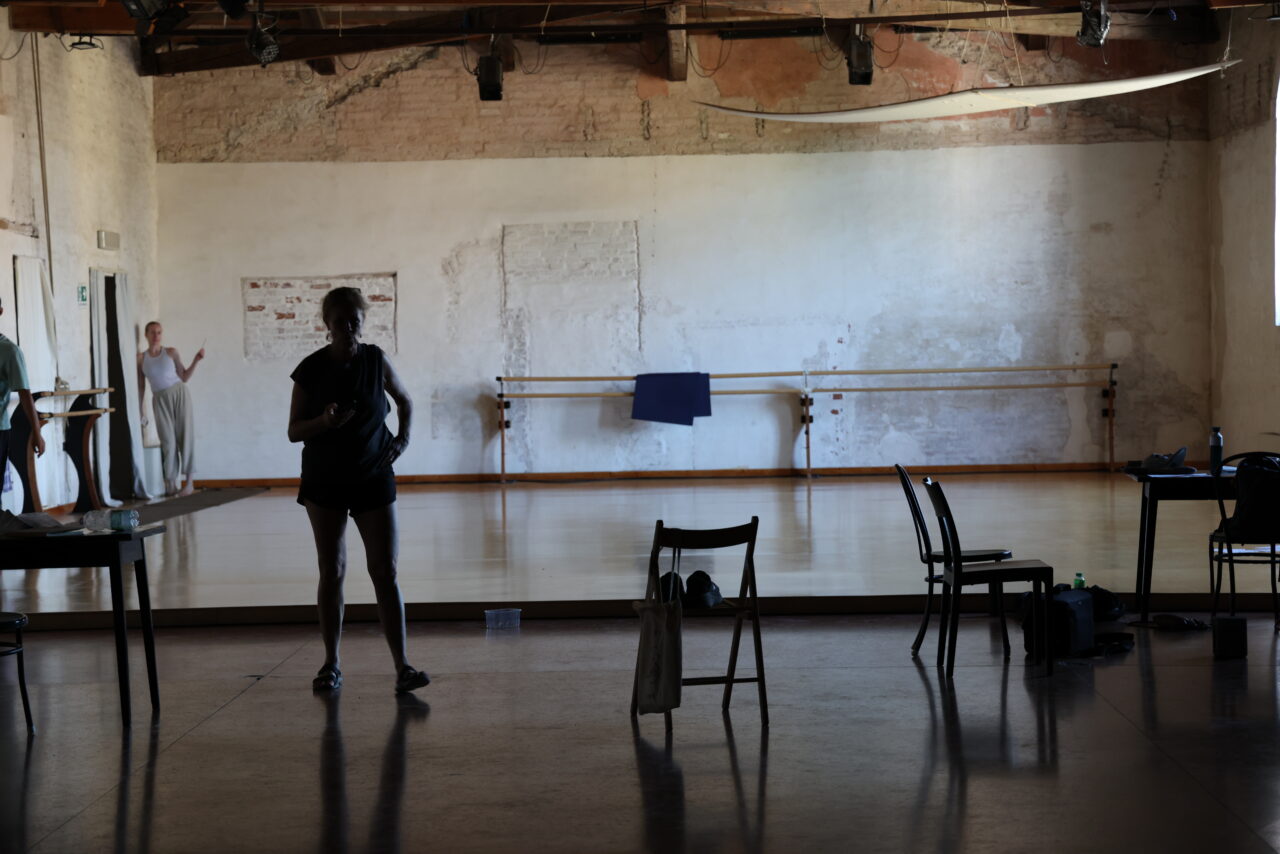
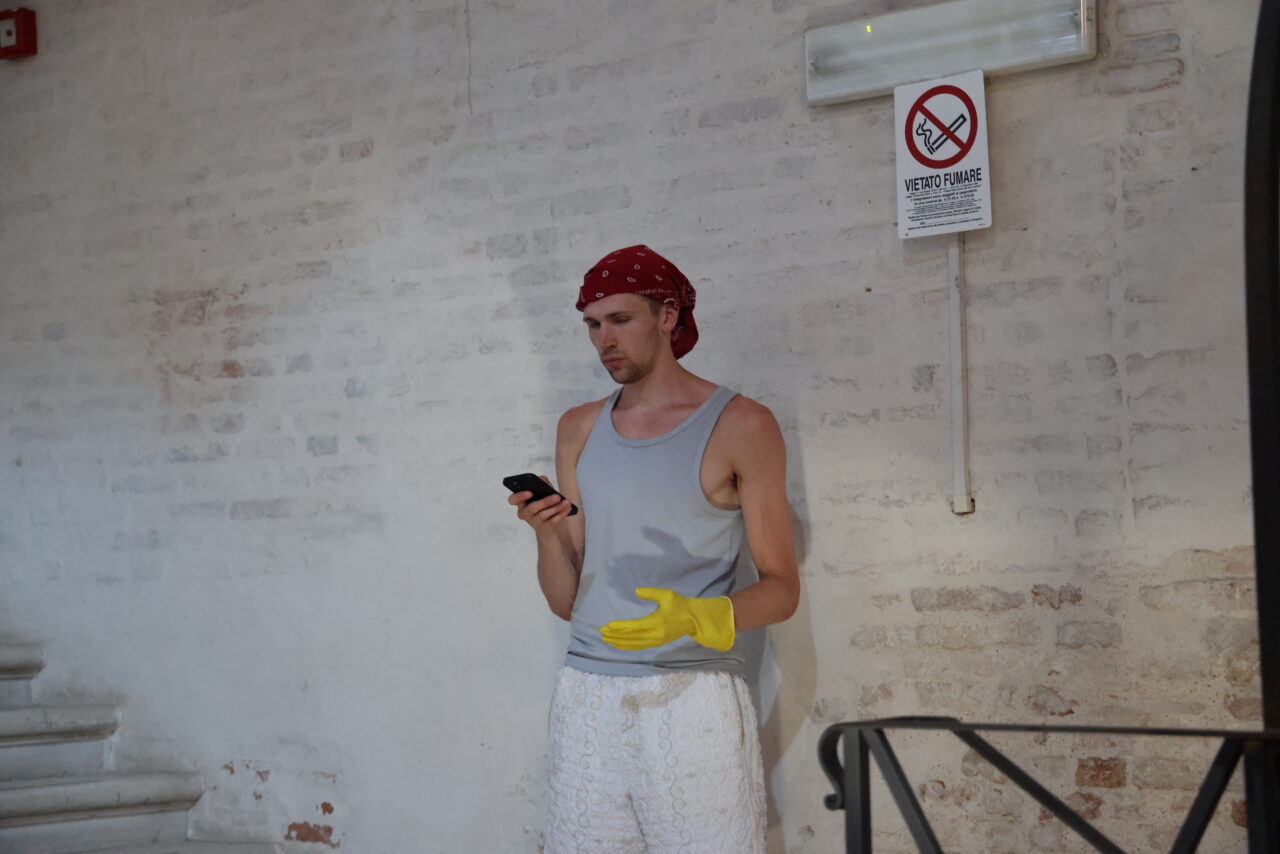
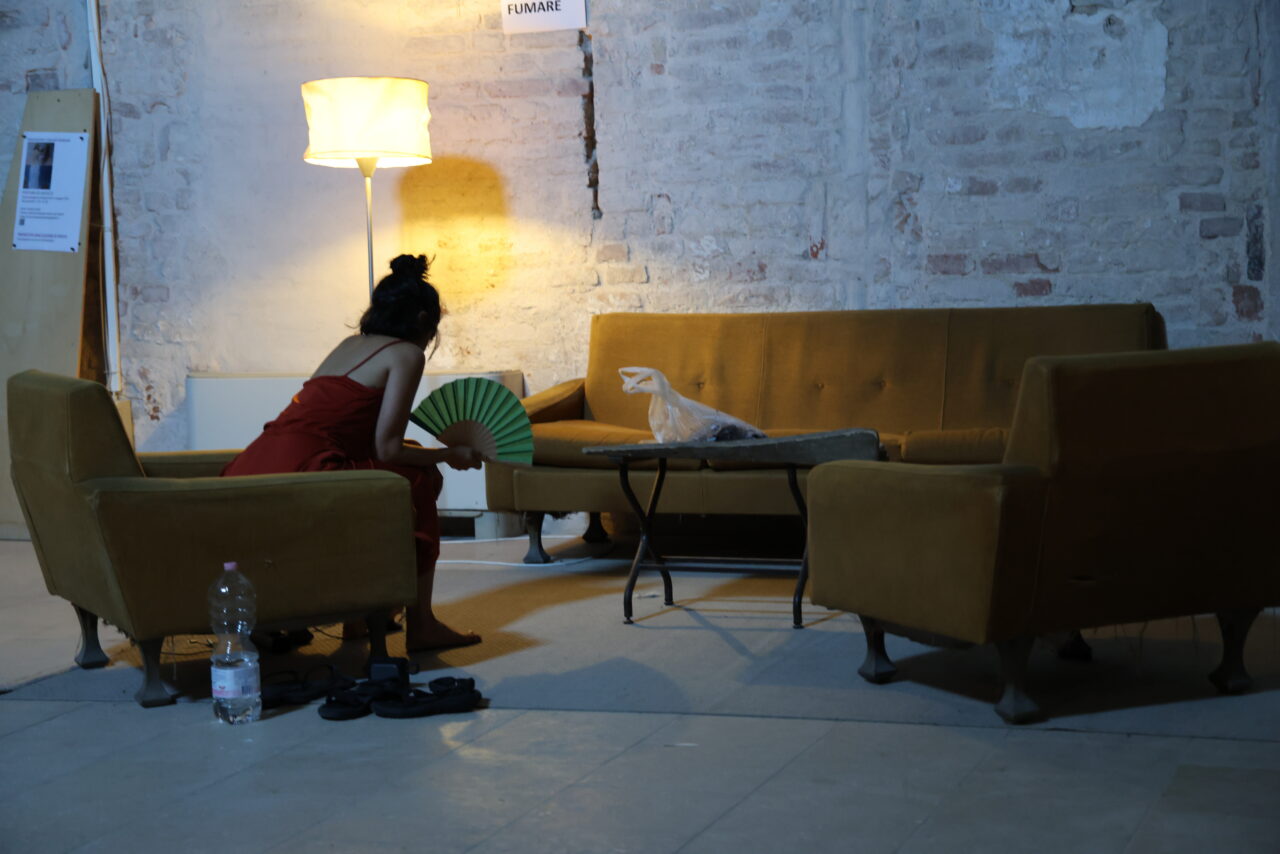
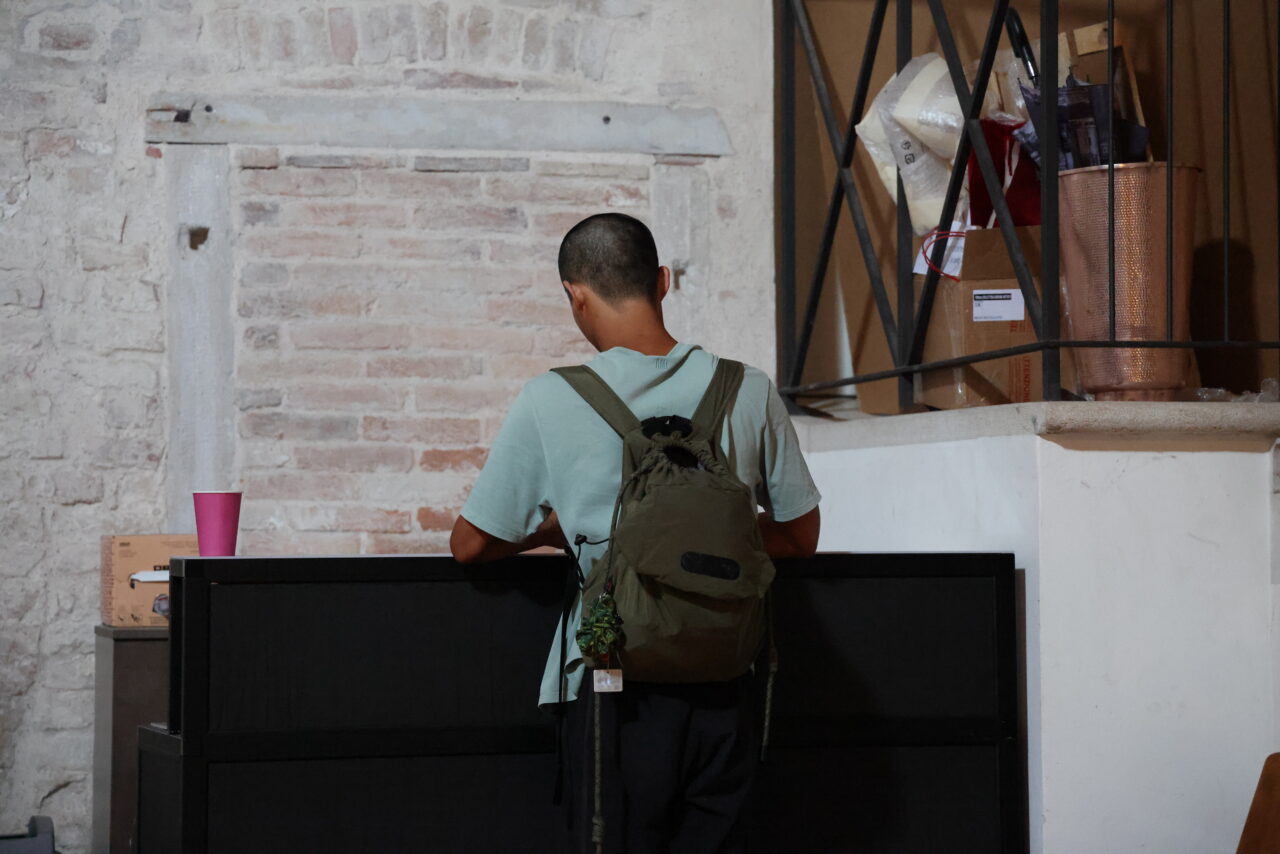
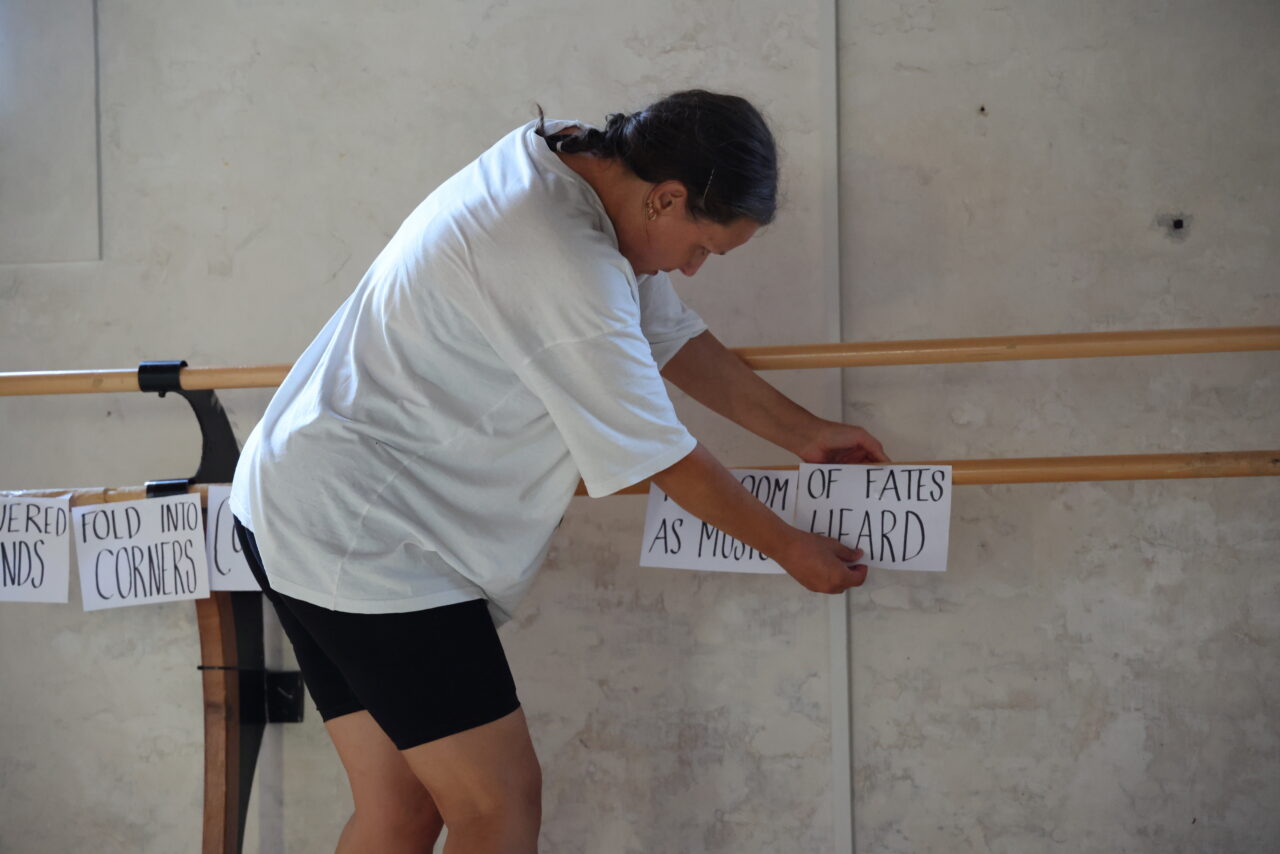
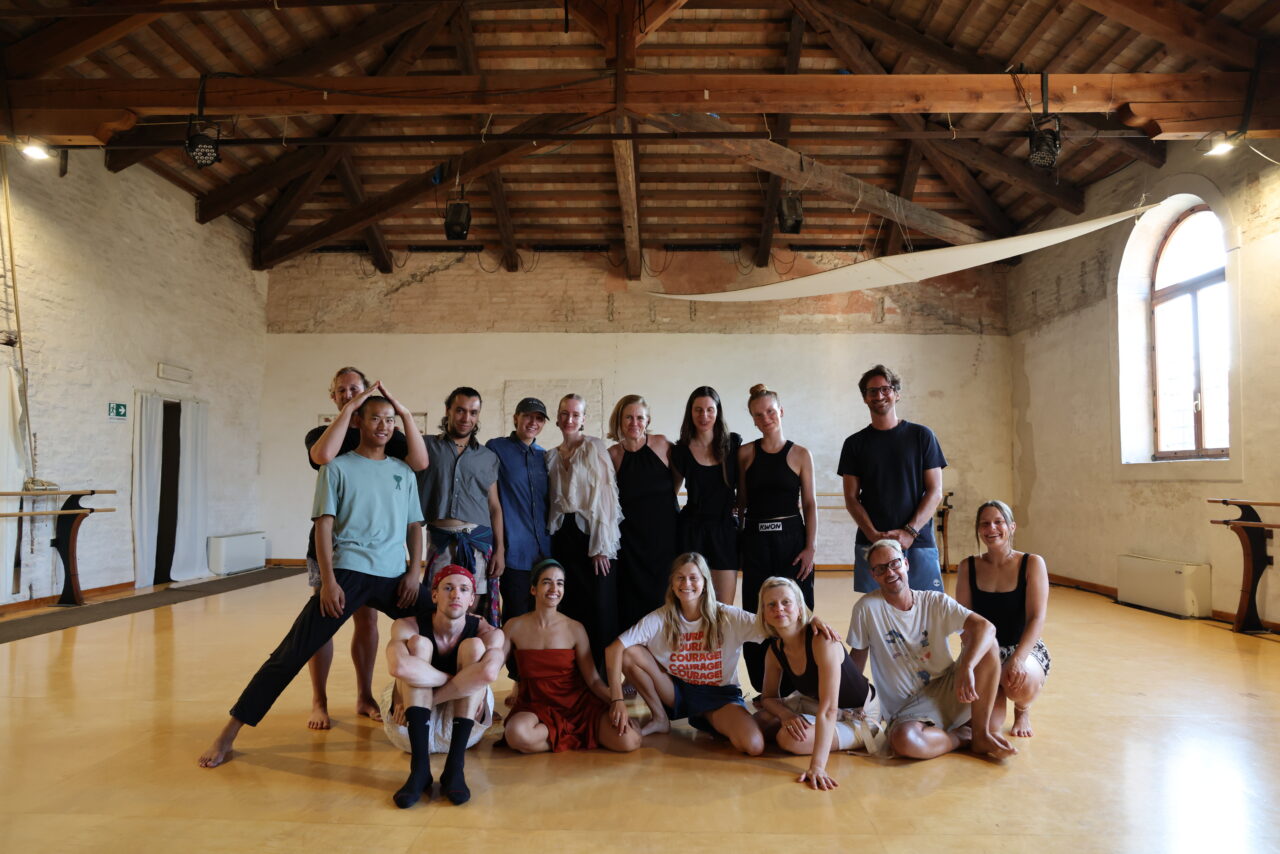
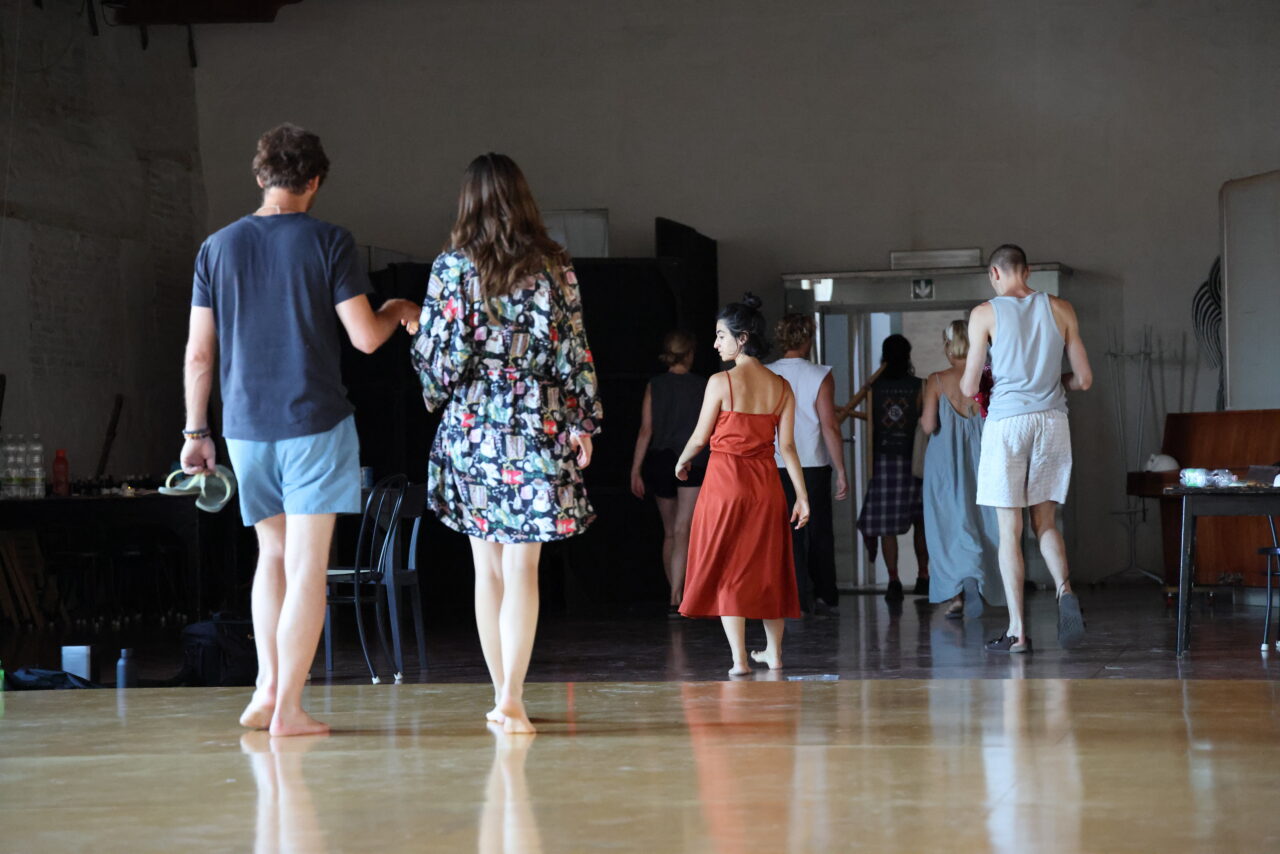
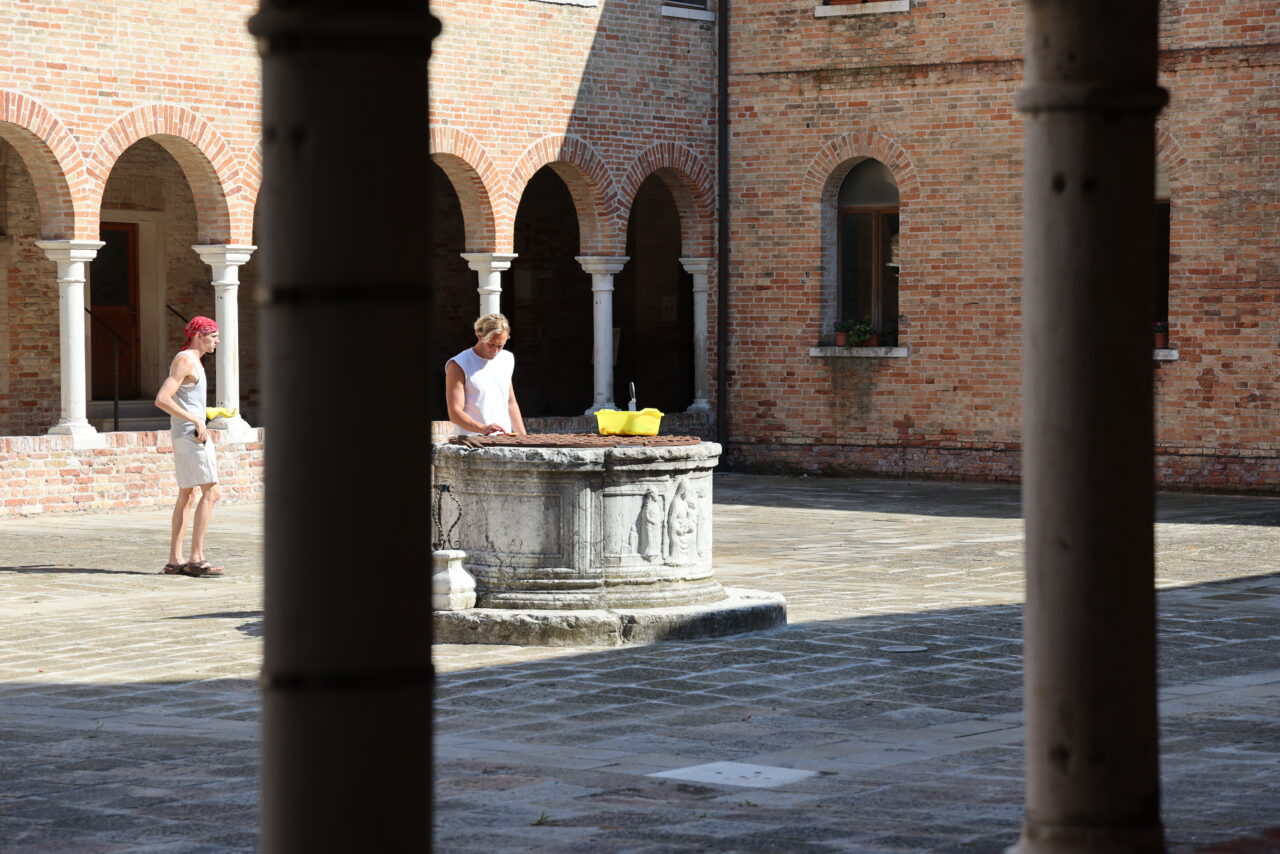
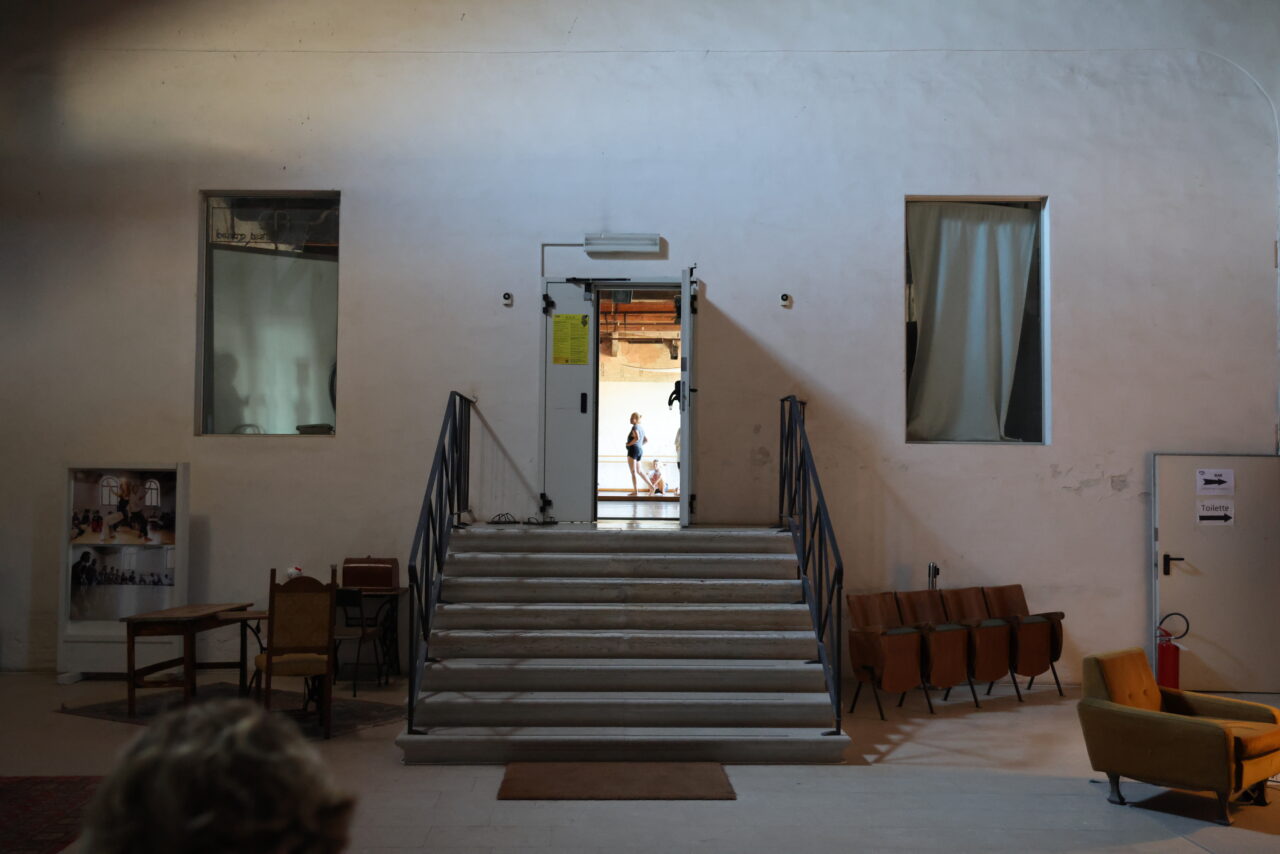
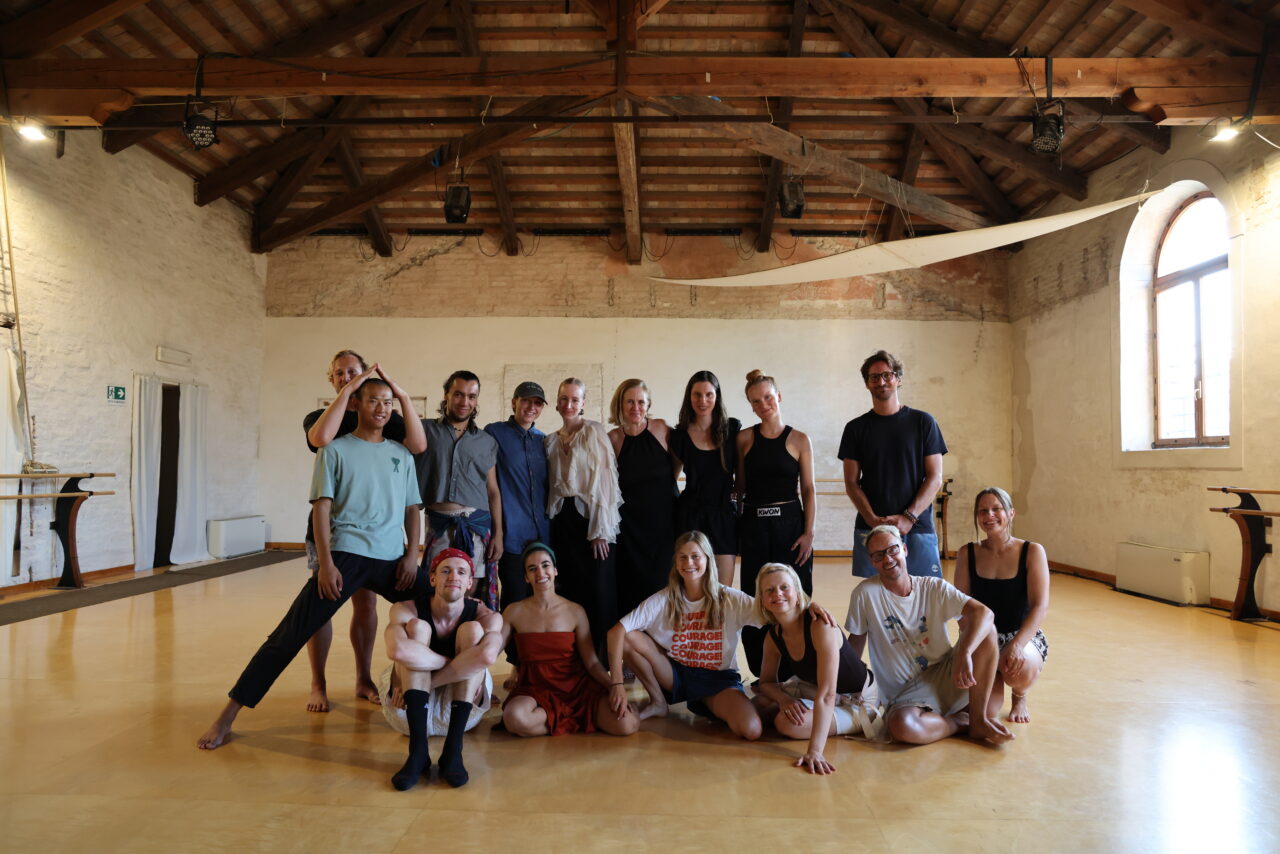
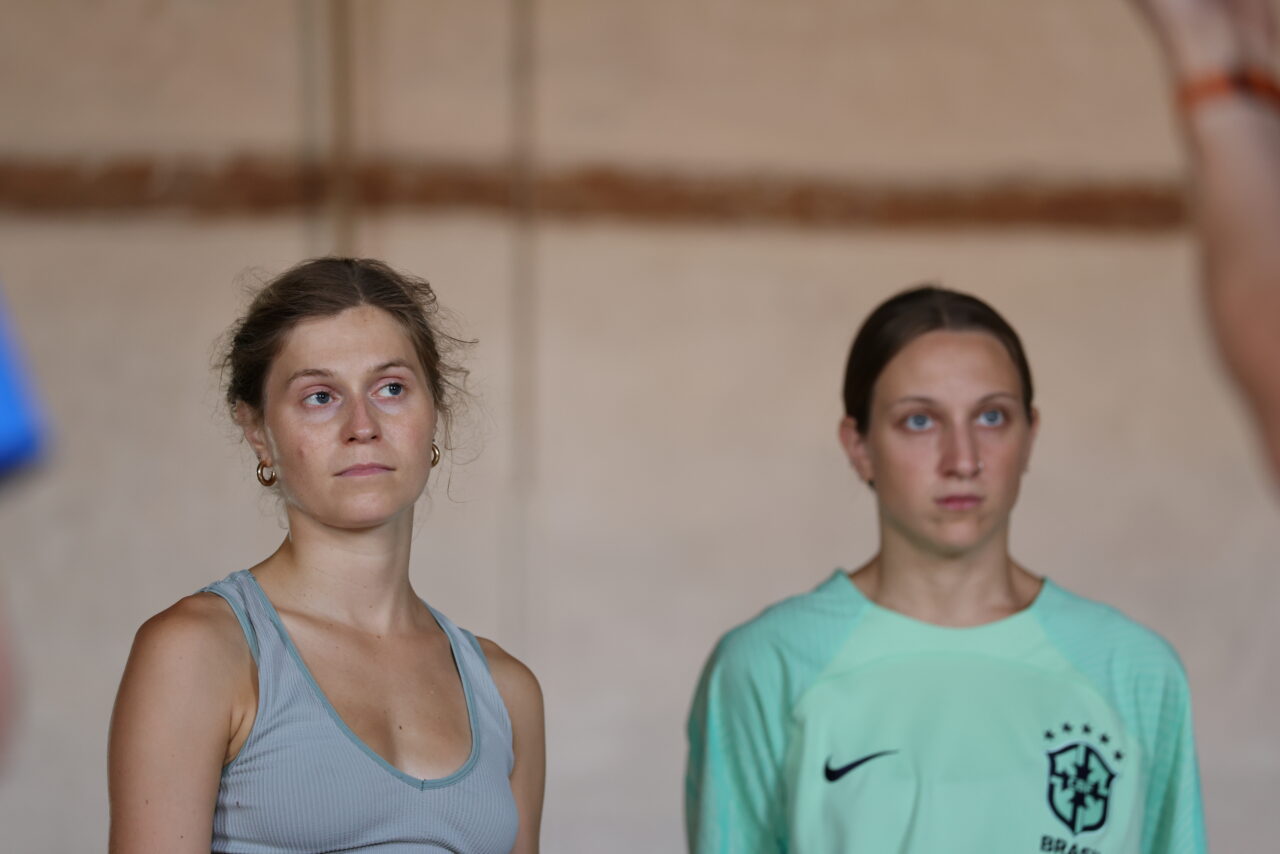
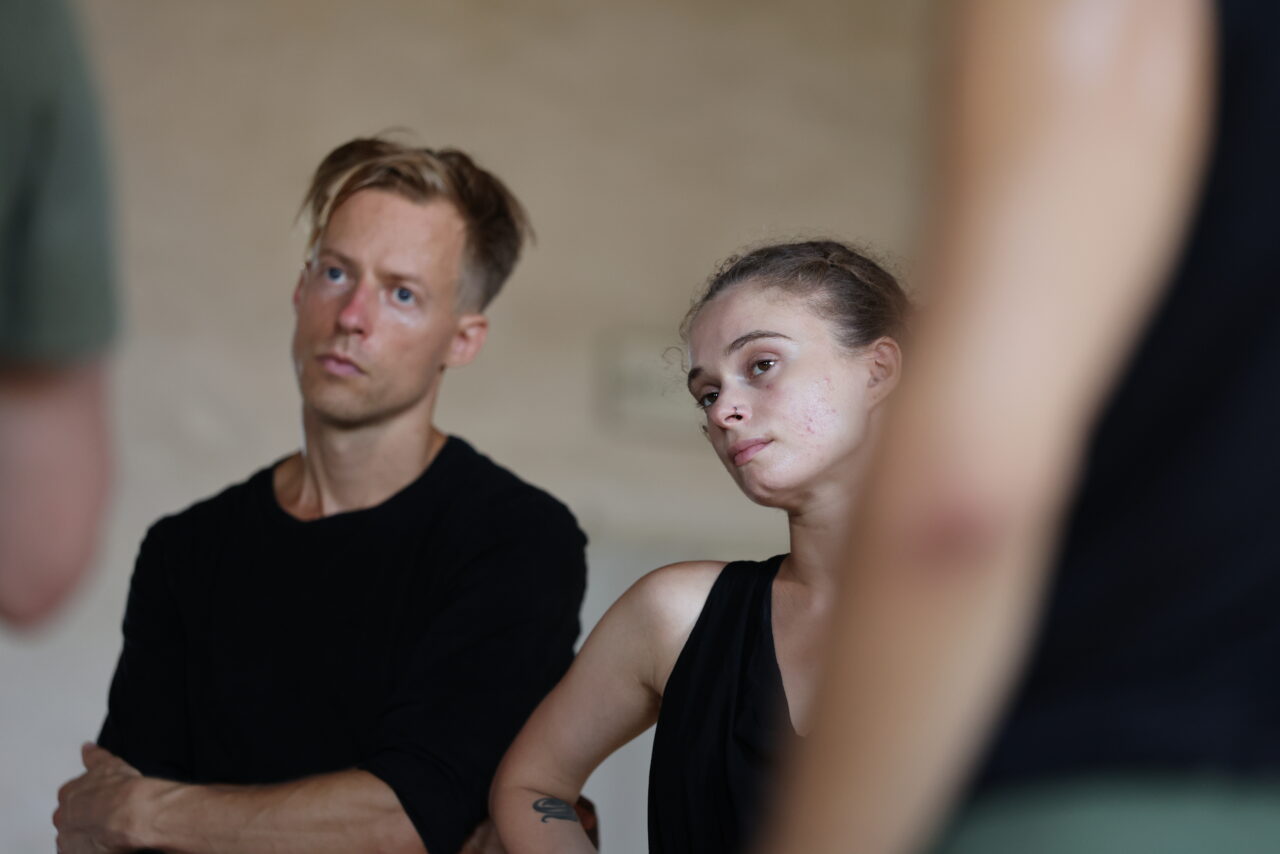
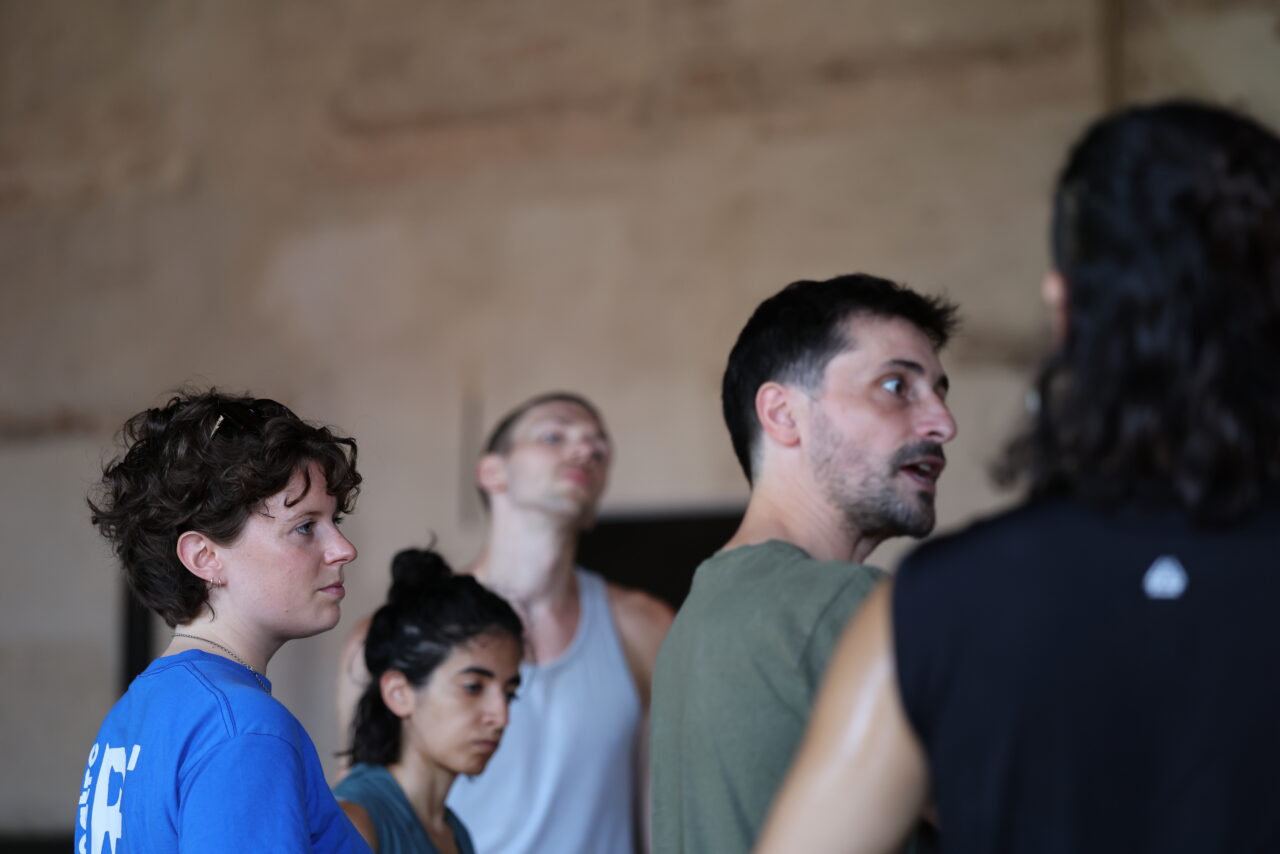
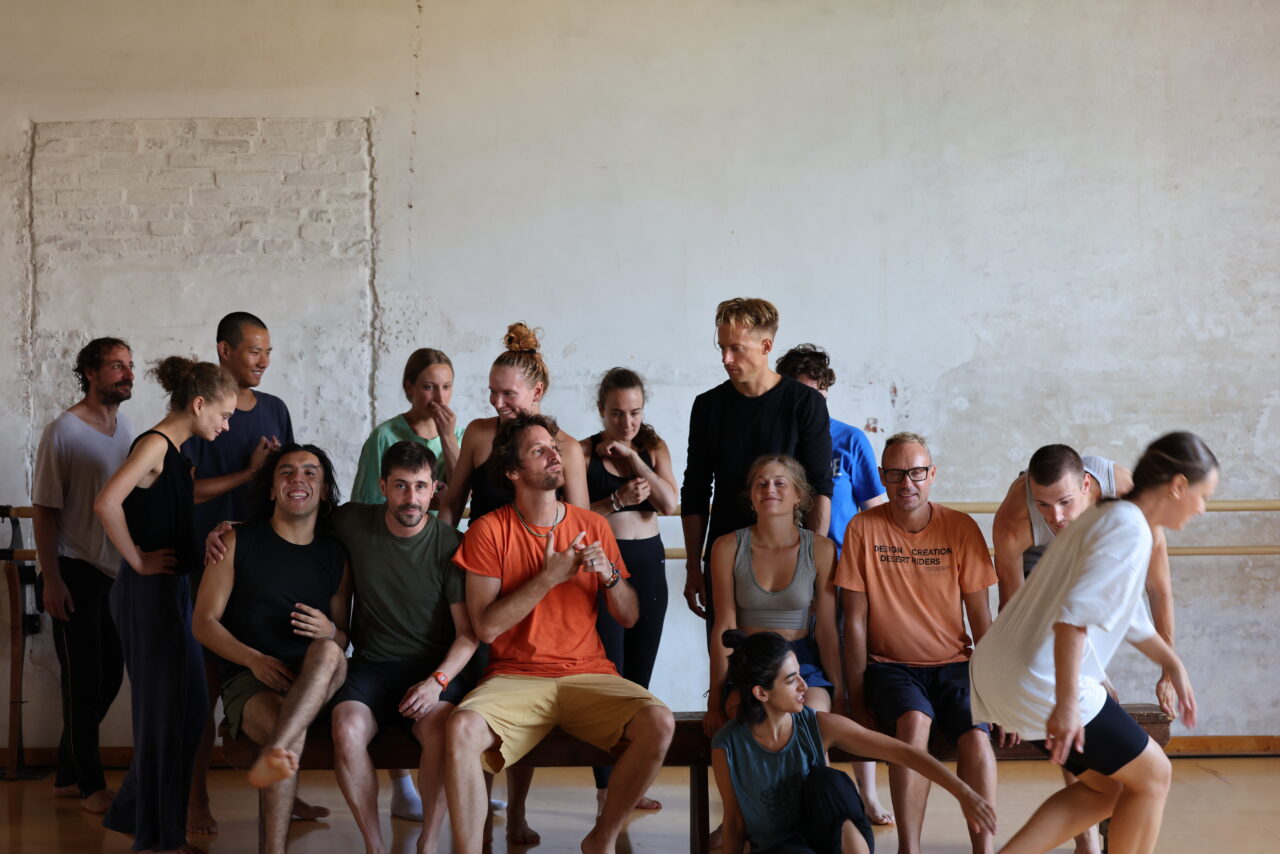
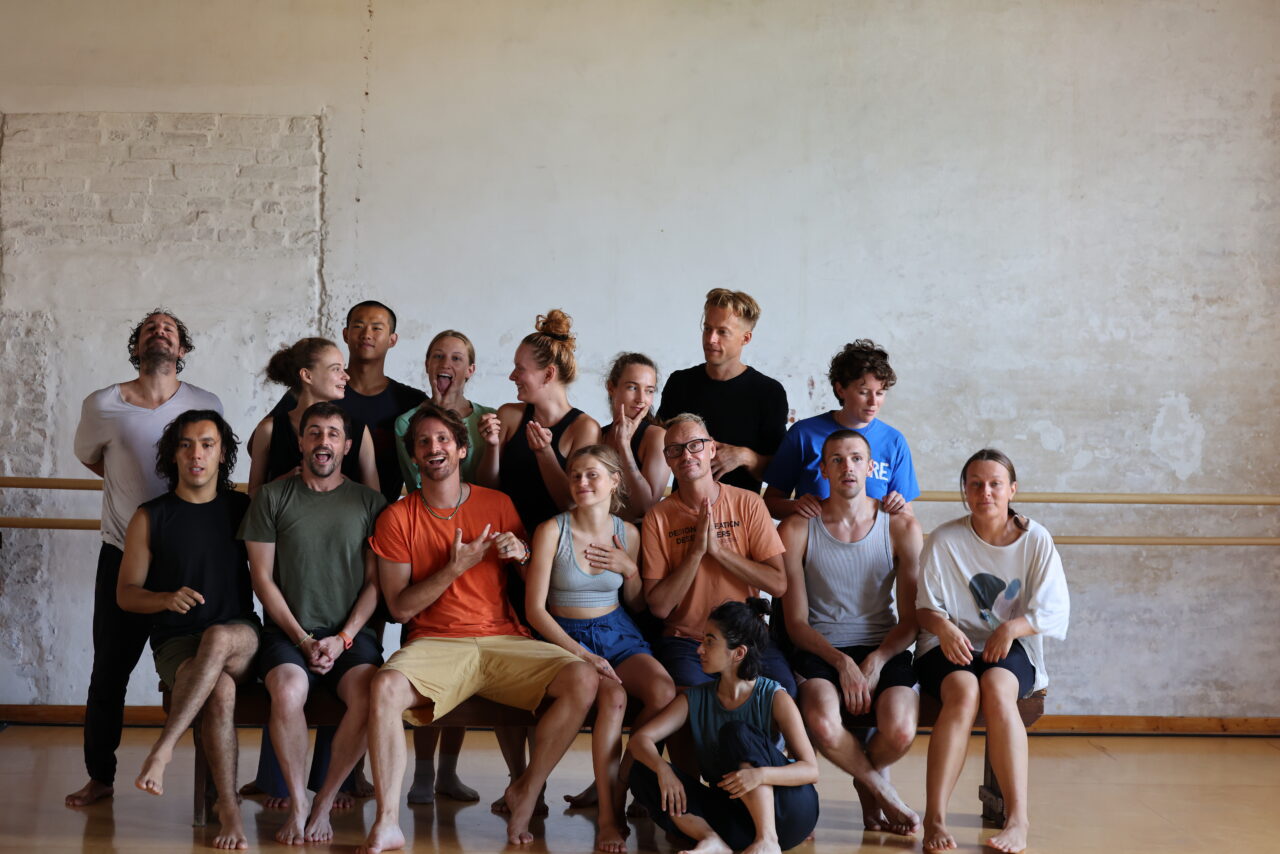
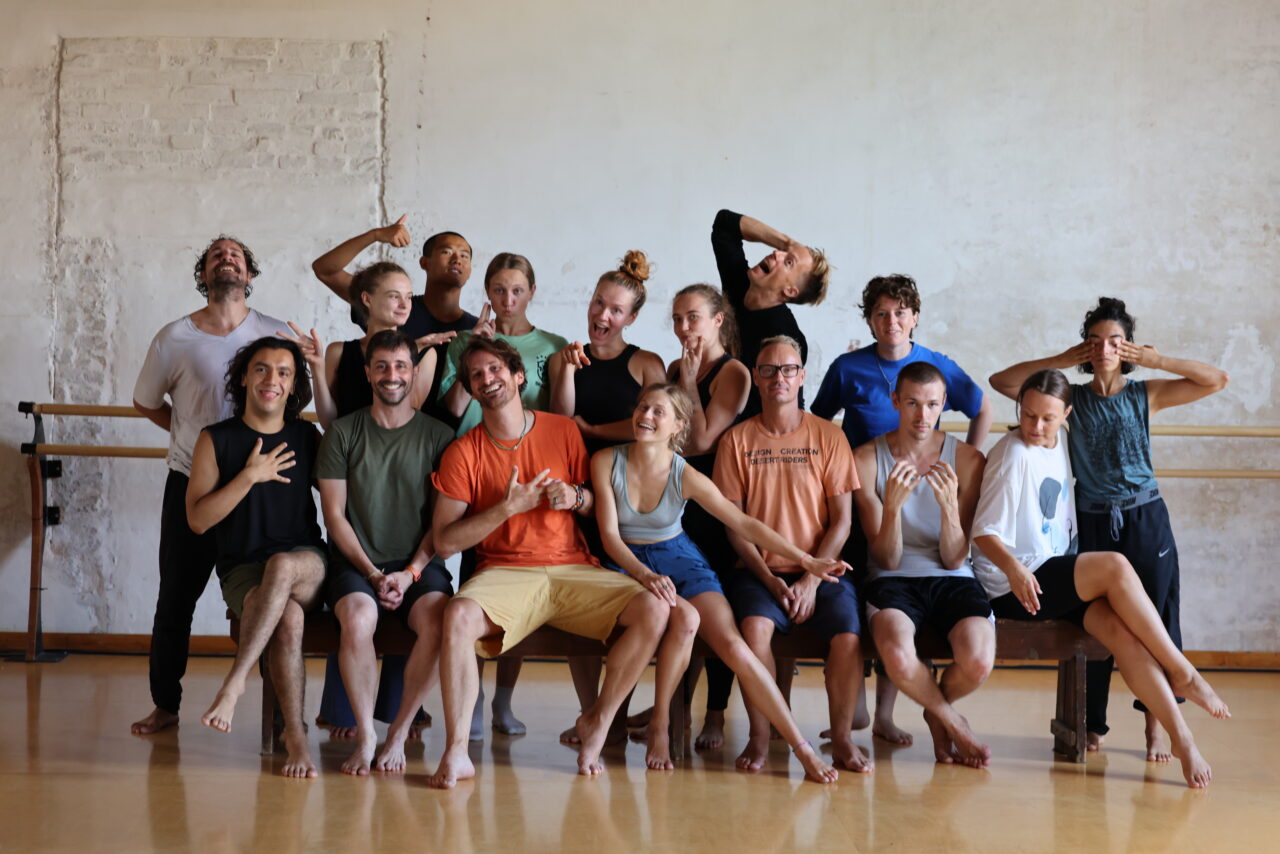
For two weeks either side of the turn of July, the CPPM cohort worked in a theatre on the Giudecca with two of the companies that changed how audiences meet a performance. First Punchdrunk, then Theatre Re. Each week ended with the doors opened to the public.
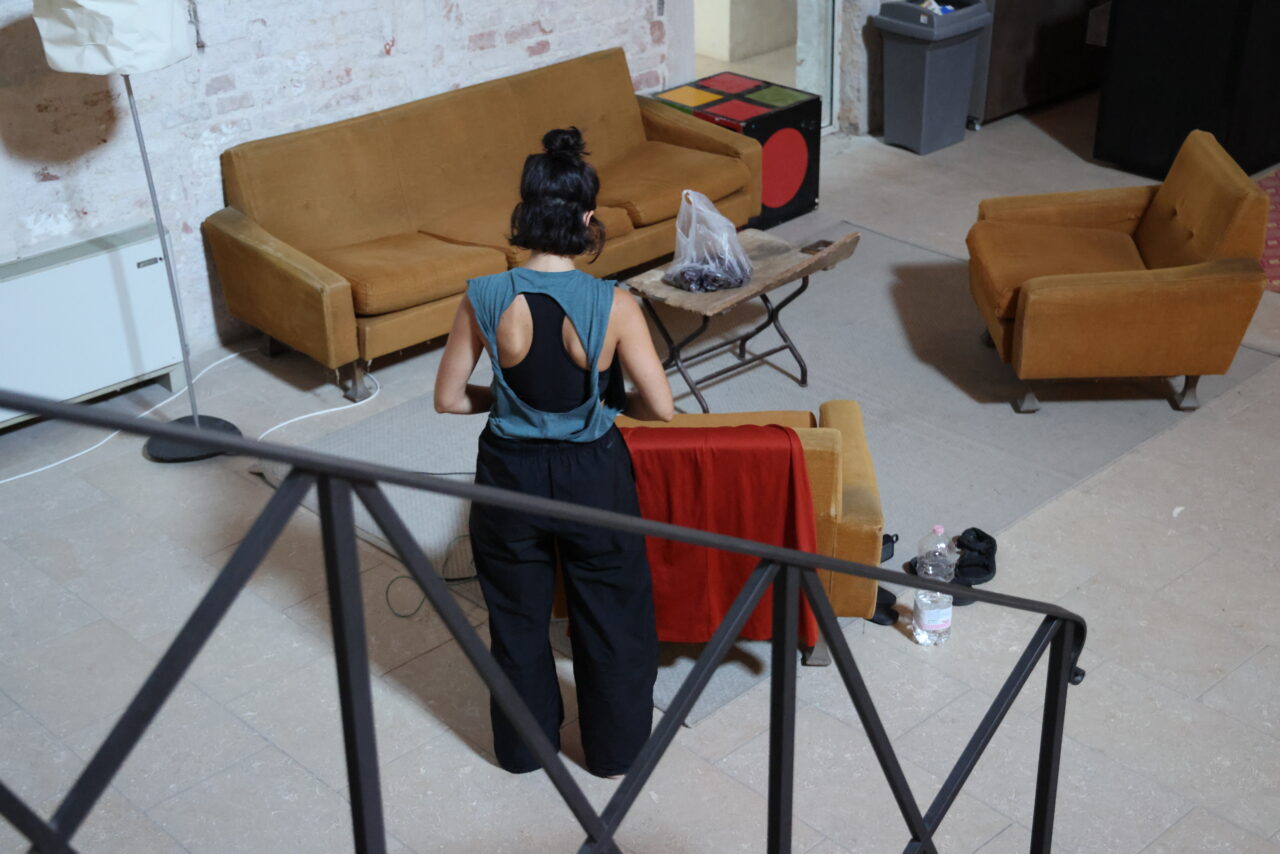
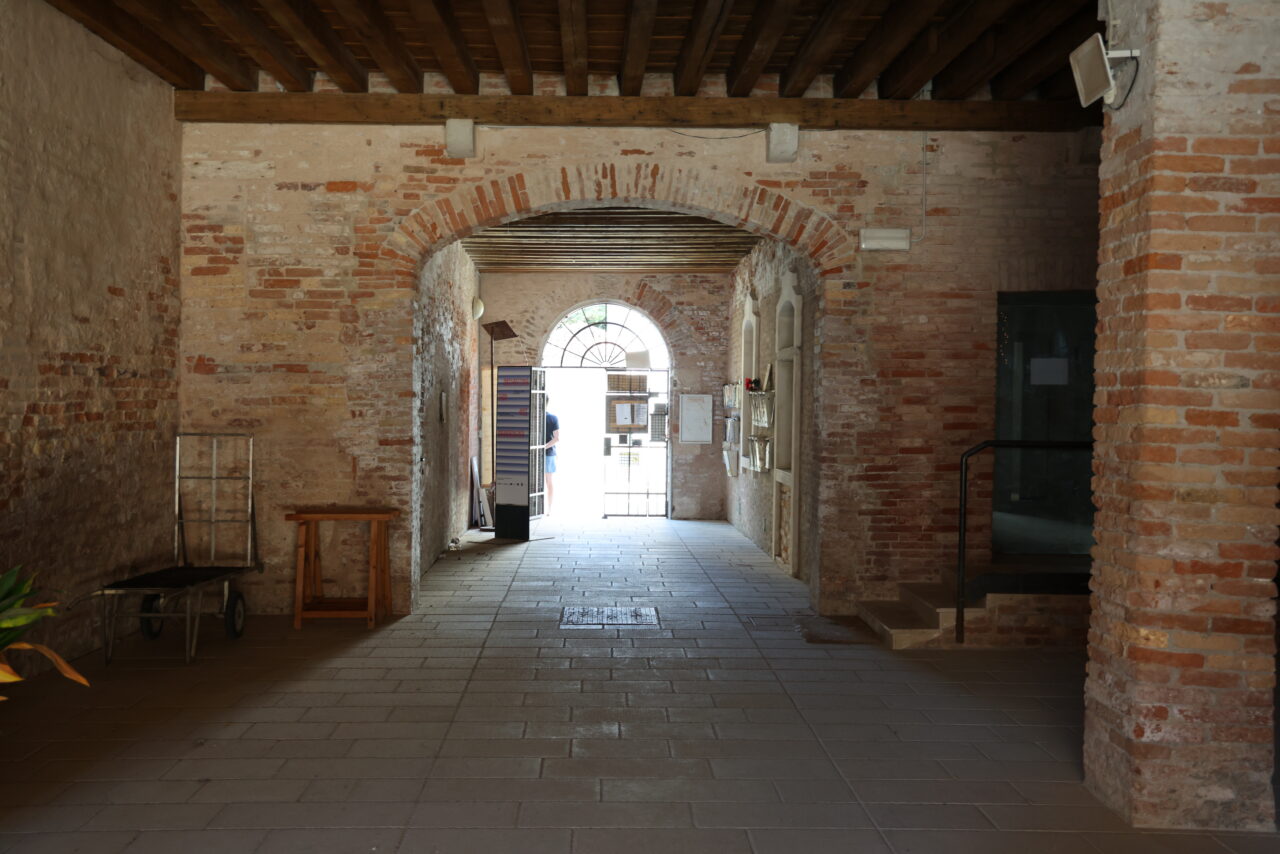
The physical theatre workshops in Venice opened the third chapter of a four-month Erasmus+ traineeship carrying the whole cohort through Italy and Greece. The venue was the Centro Teatrale di Ricerca on the Giudecca, the long island across the water from the tourist city, where the programme held its Venice residency for four weeks from 28 June. Like every phase of the journey, the Venice chapter was shaped by Cracalia ETS, the Italian cultural association that is the umbrella for the entire traineeship. The two guest weeks came first. The two weeks that followed belonged to the cohort’s own making.
A week inside Punchdrunk’s practice
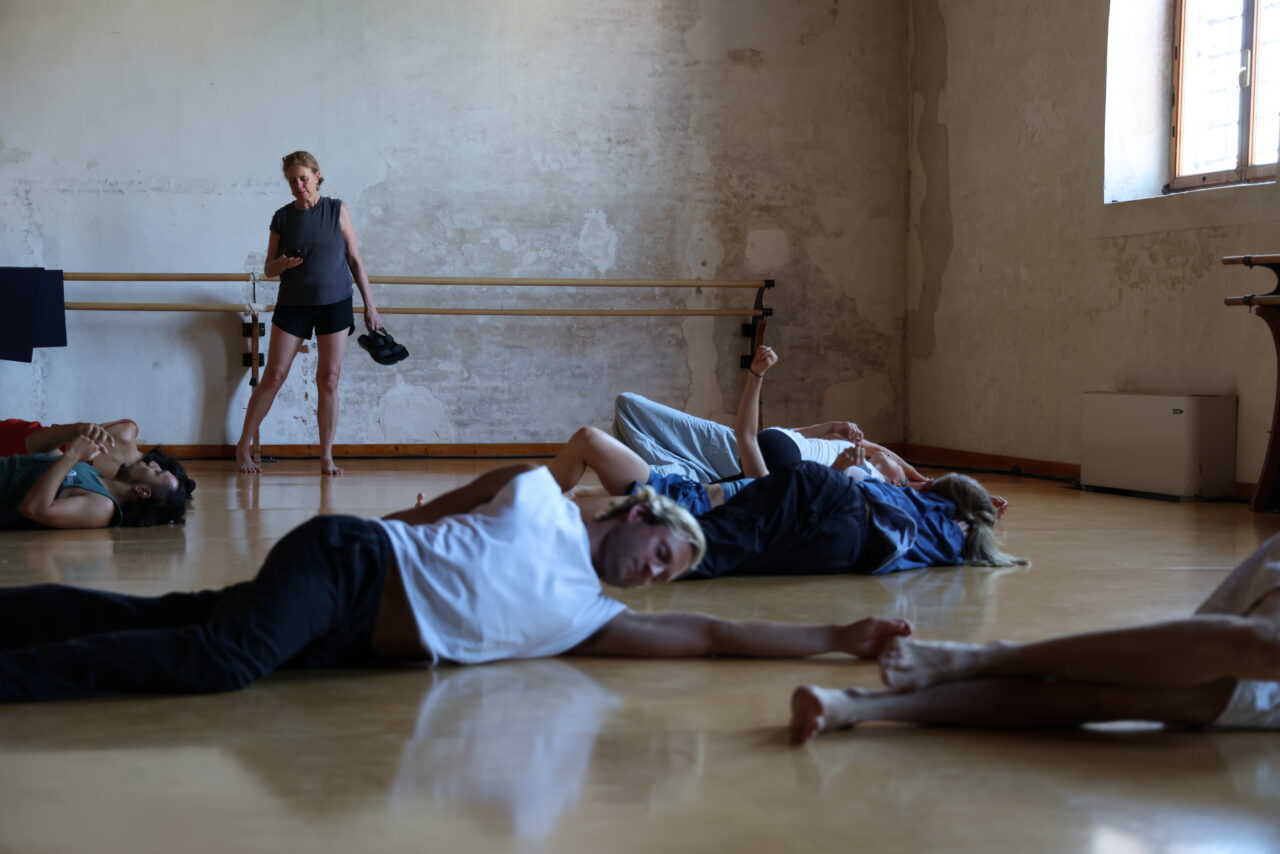
Sarah Dowling led the first week, 29 June to 4 July. She has been a Punchdrunk collaborator since 2002, and the roles behind her are the company’s landmarks: Lady Macbeth in the original Sleep No More in London, Dolores Grey in The Drowned Man, and on The Burnt City both original-cast Hecuba and Associate Director. Alongside that she makes her own dance and theatre work and is an Associate Artist at the Royal Opera House. Punchdrunk itself, founded in 2000 by Felix Barrett, built the form most people now mean by immersive theatre, where the audience walks through a world rather than sitting in front of one.
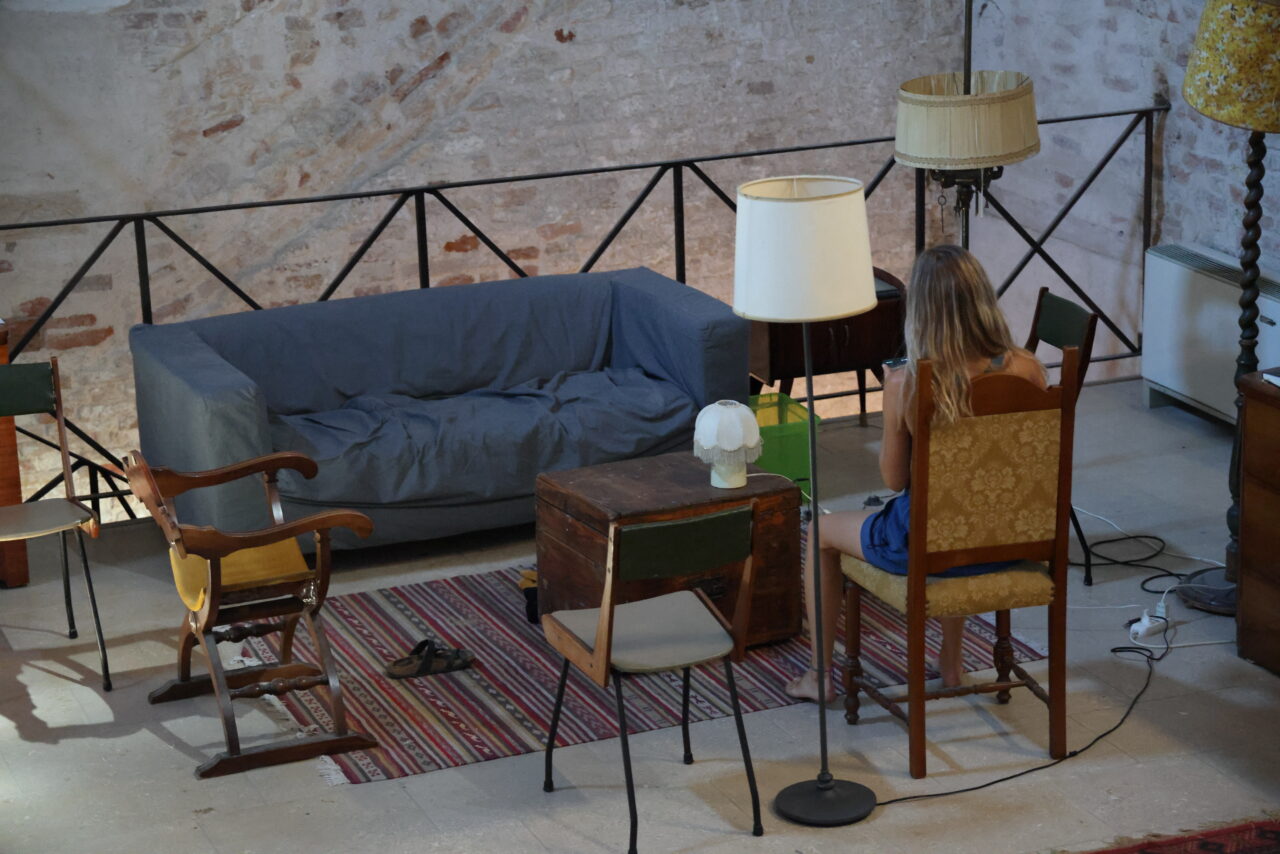
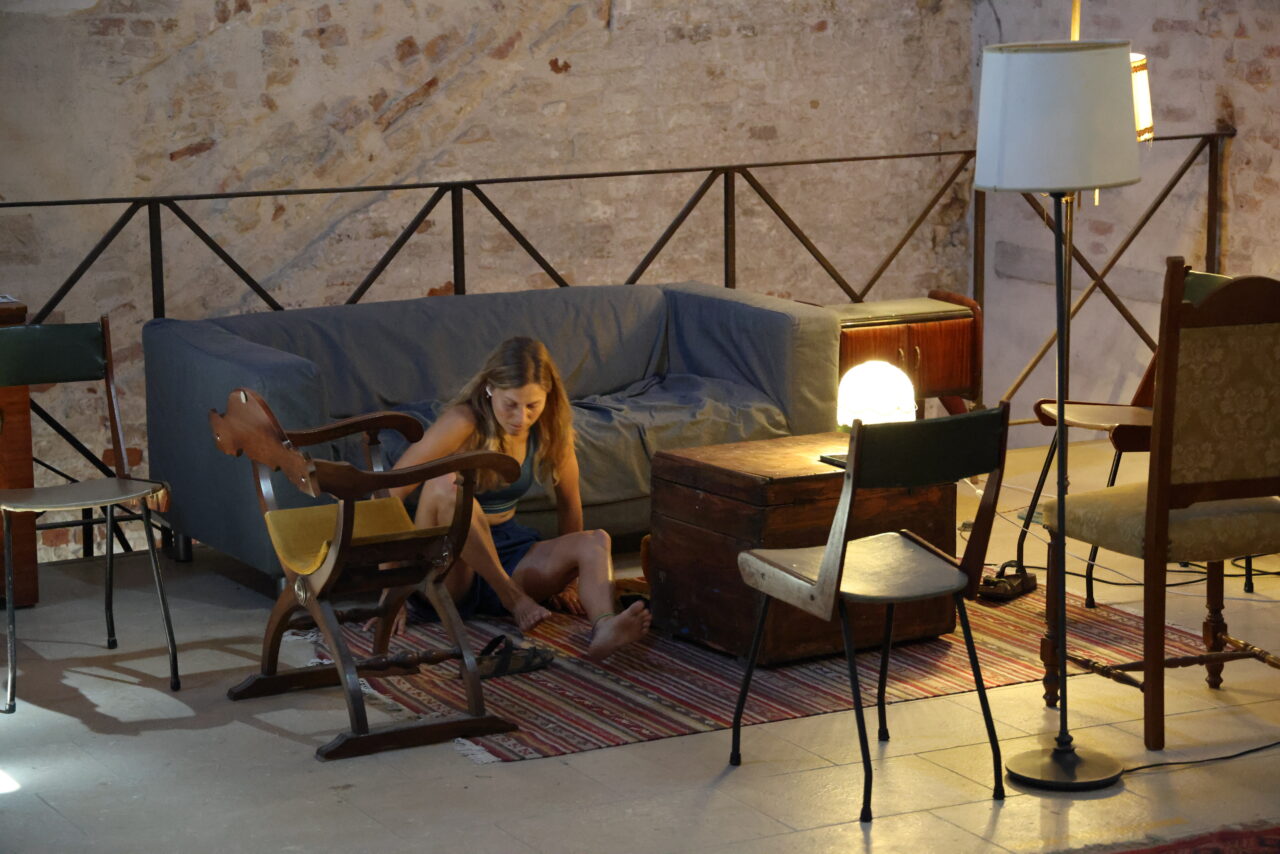
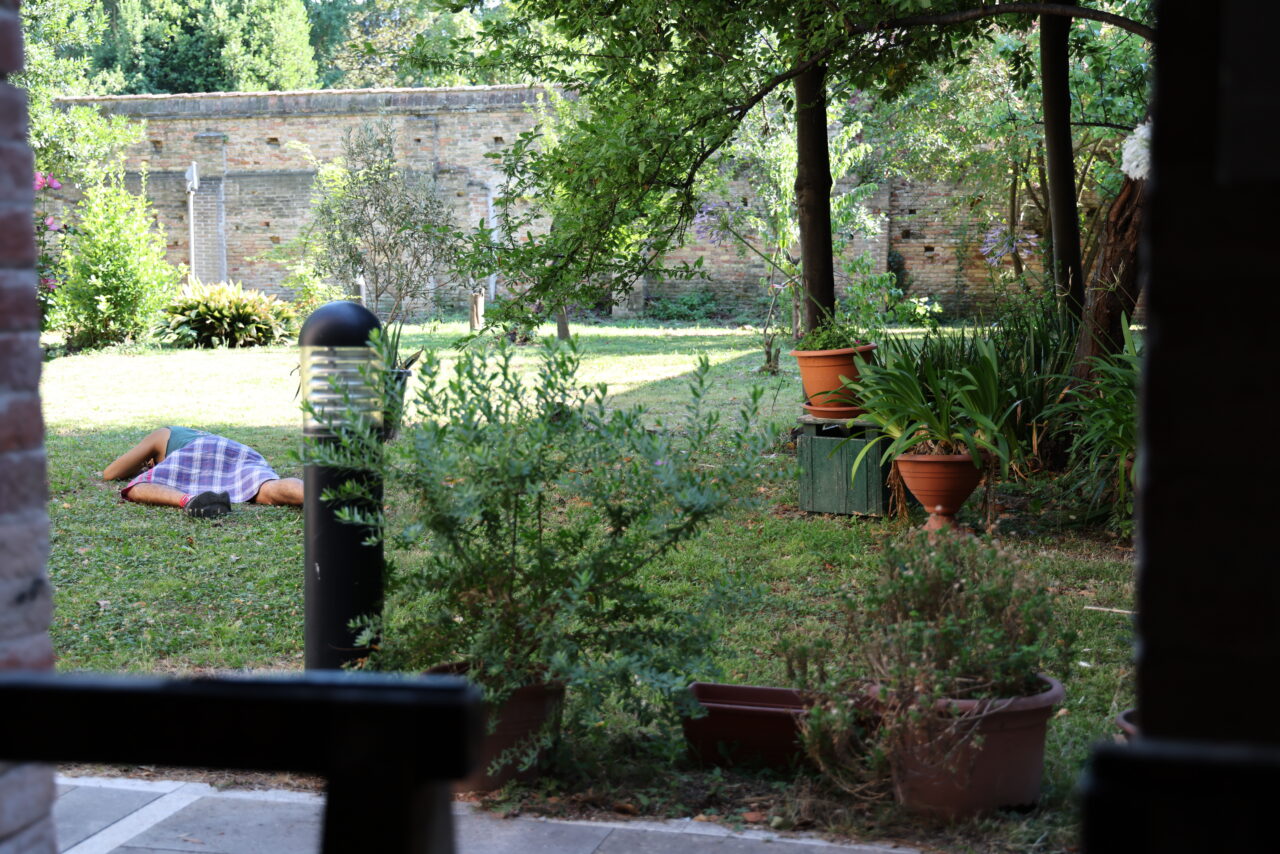
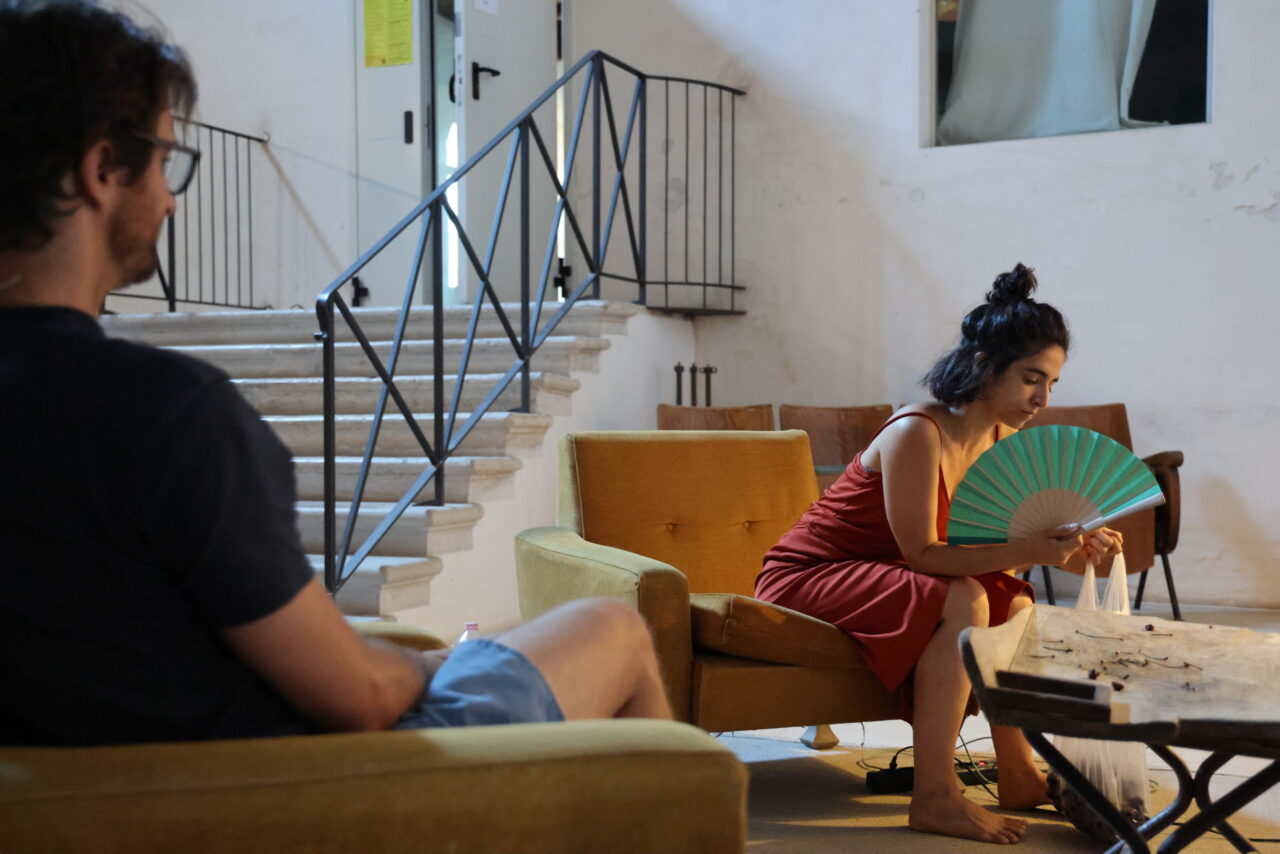
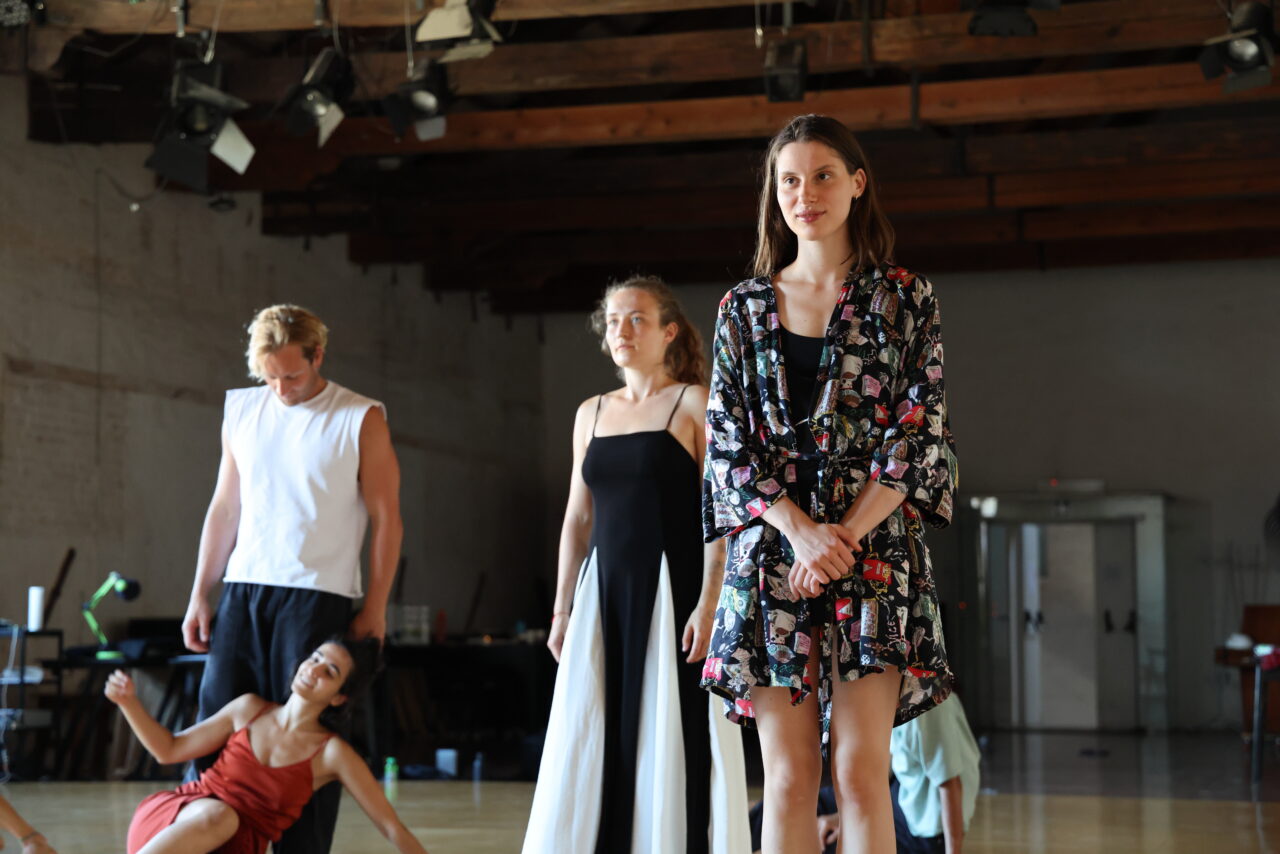
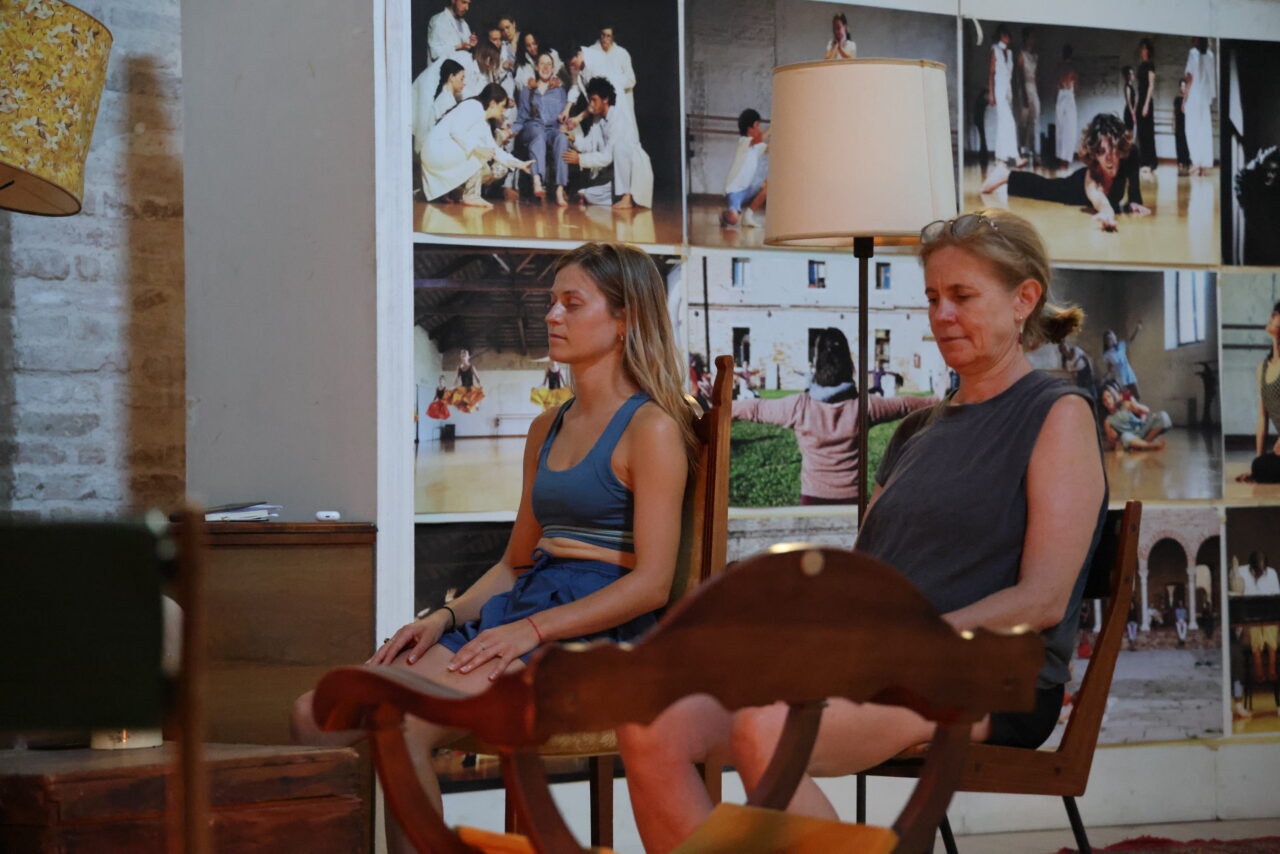
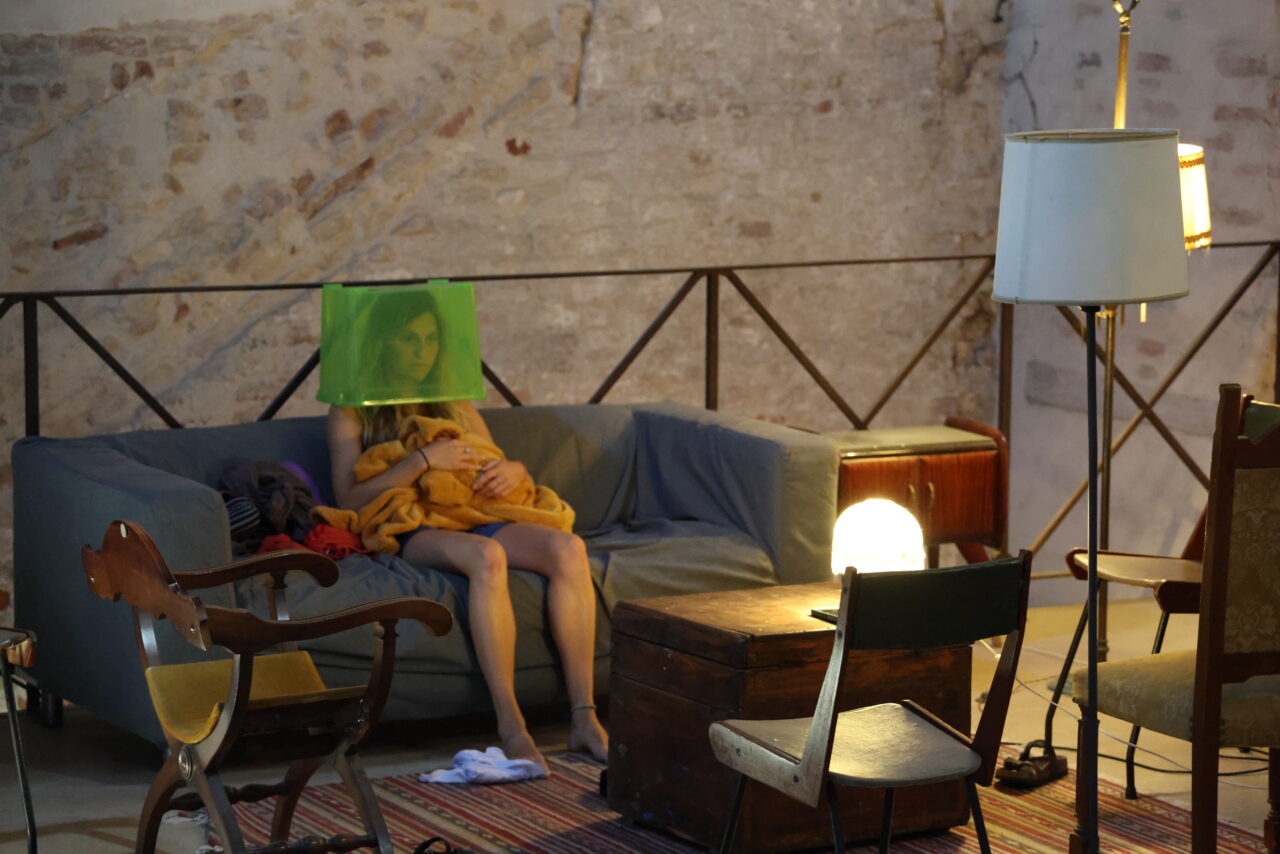
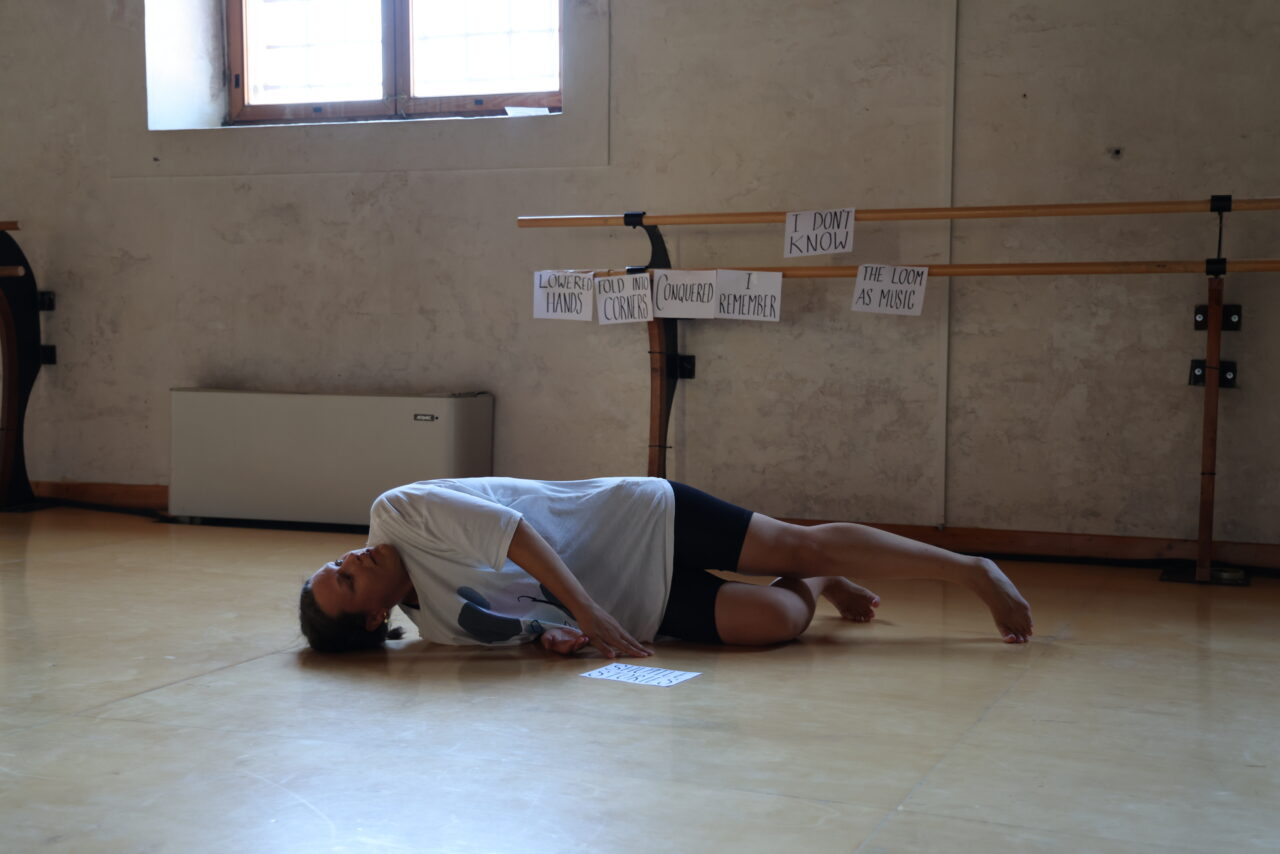
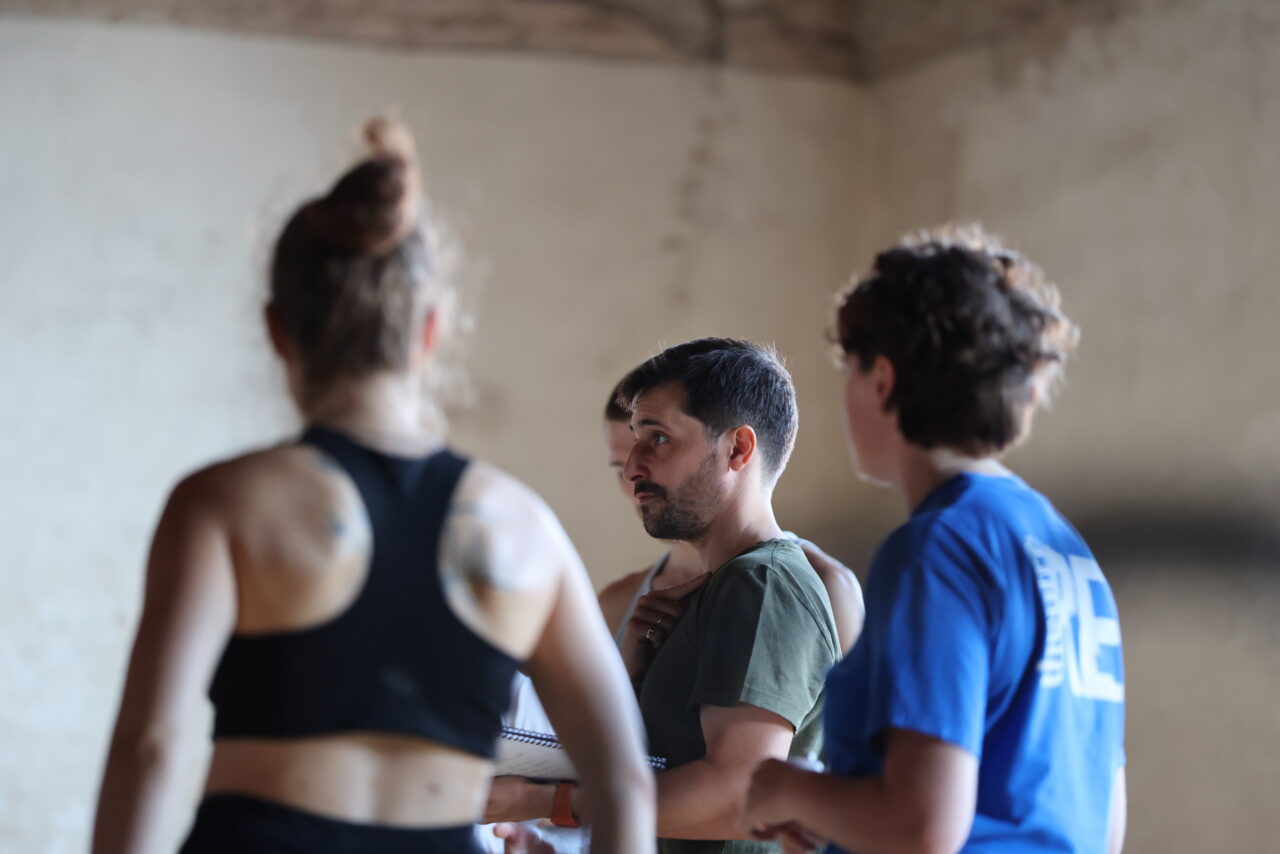
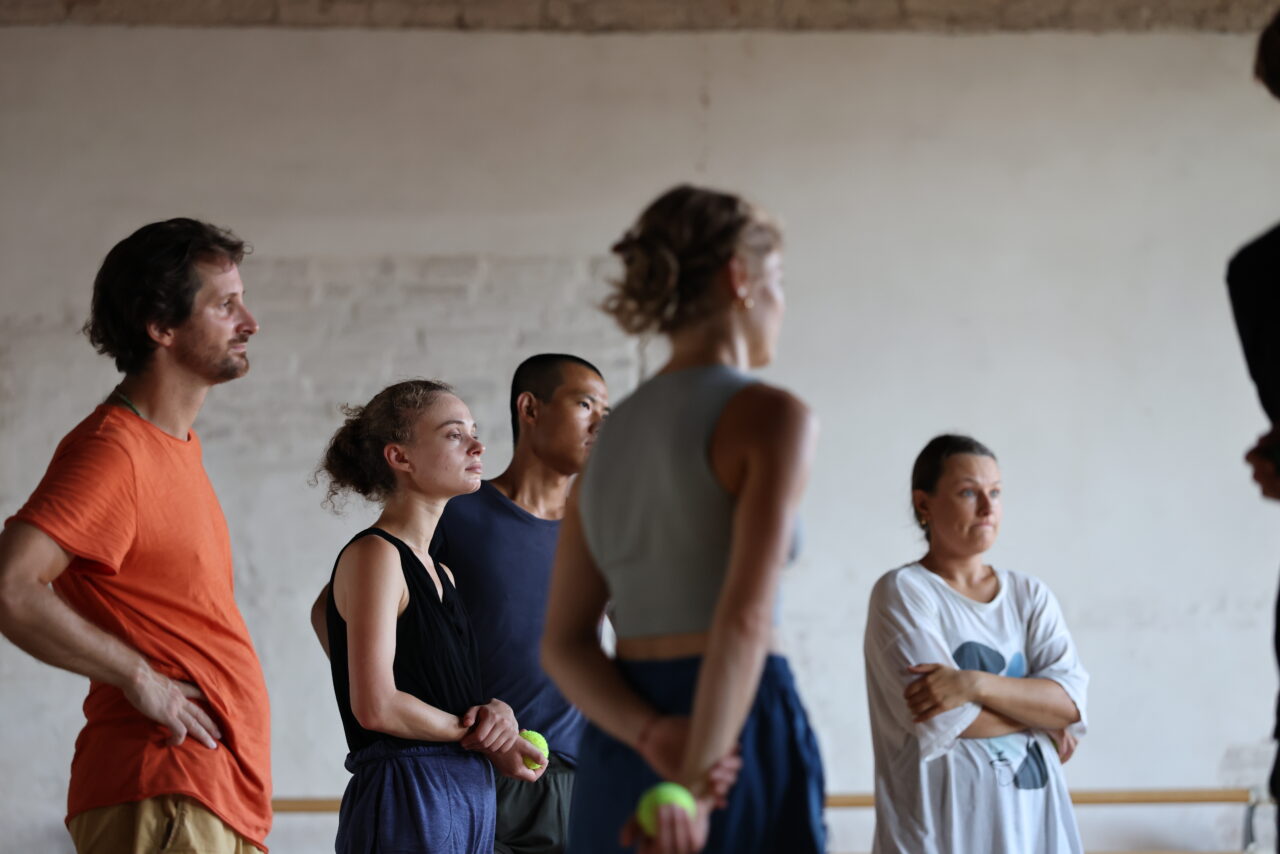
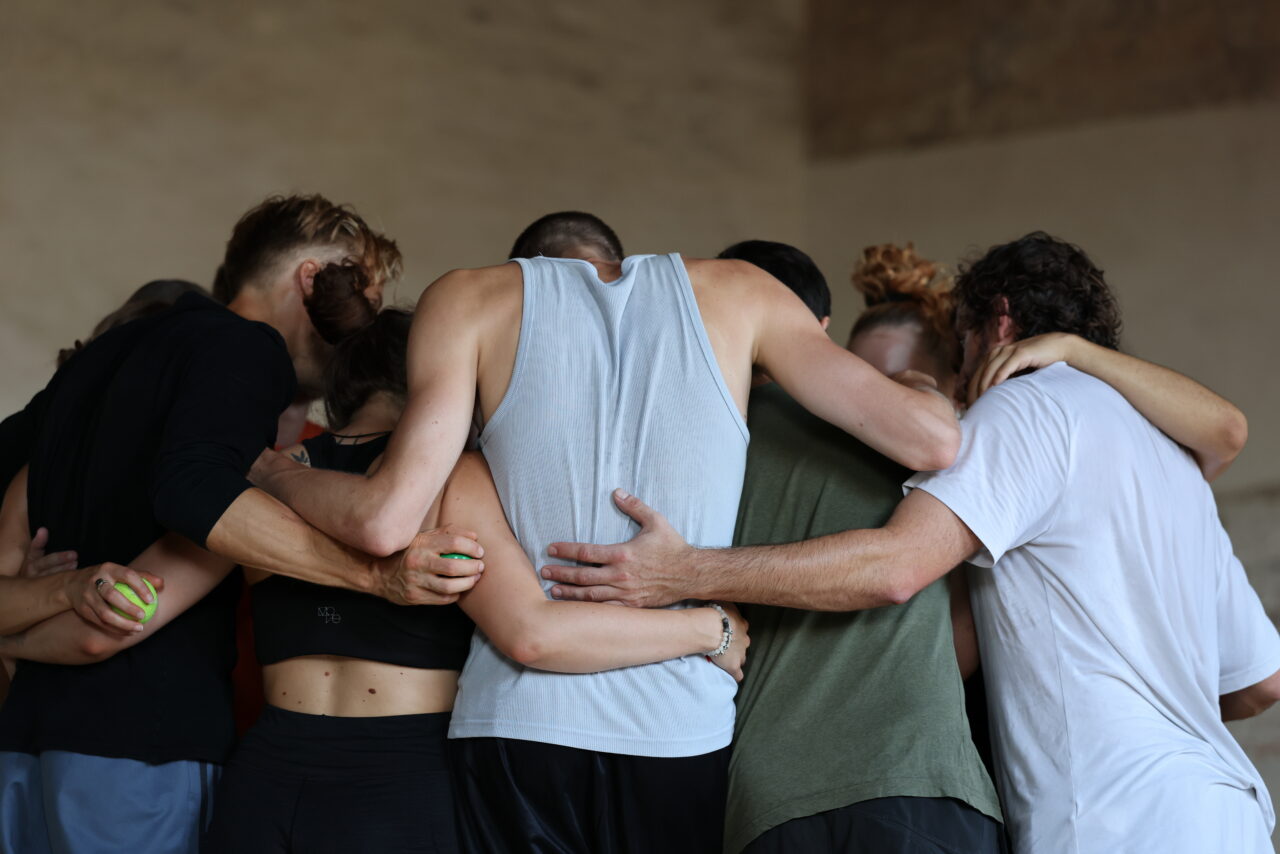
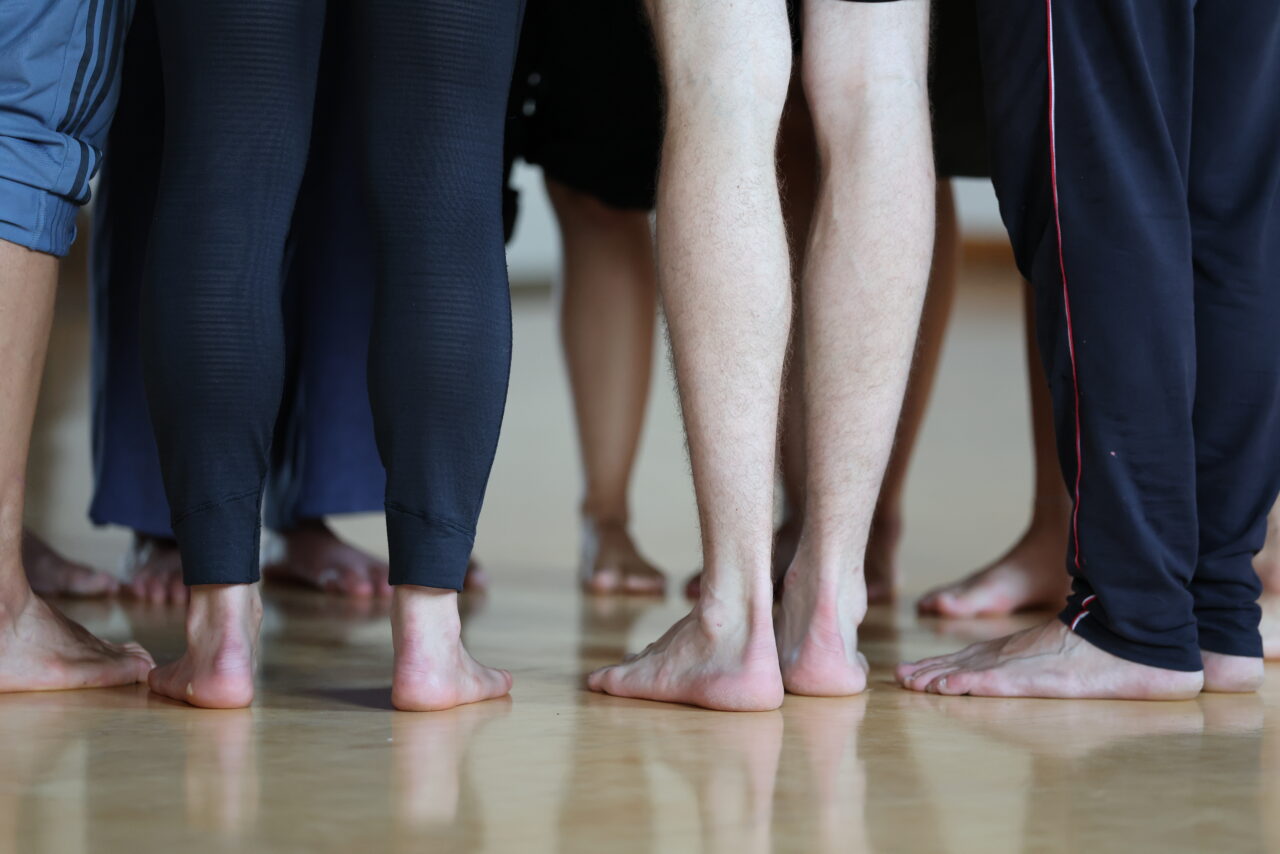
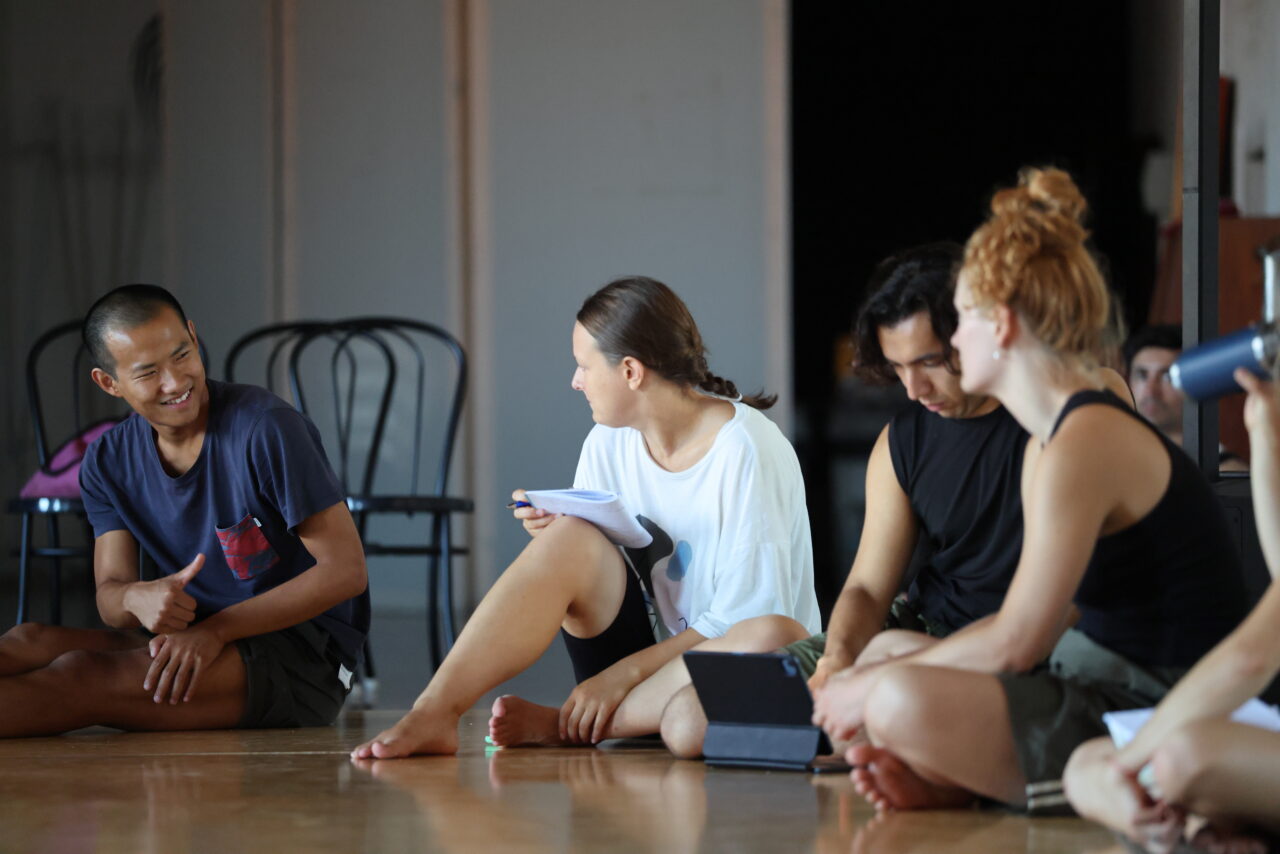
What she brought was not a lecture about a famous company. It was a practice the cohort stood inside. The week worked on spectatorship in immersive and site-sympathetic space, and on the making processes underneath it. Material was built fast and deliberately unjudged, the body given simple instructions and left to find the rest. Attention went to communicating the feeling of a movement rather than its appearance. The audience became a variable to compose with: how close they stand, where they place themselves, how long they are willing to look. Architecture stopped being a container and became a partner, a boundary to seek out and work against. By the third day the question had turned to the spectator’s senses, and the answer was mostly slowness. Do not bypass the small things. Let temperature and texture and sound arrive.
Her way of working was itself part of the teaching. Complete preparation, total attention to the room, and no wasted energy. That combination is worth remembering as a model of professionalism in this field, independent of any aesthetic. The week closed with a public open class on 4 July.
Punchdrunk
Actions first, meaning later
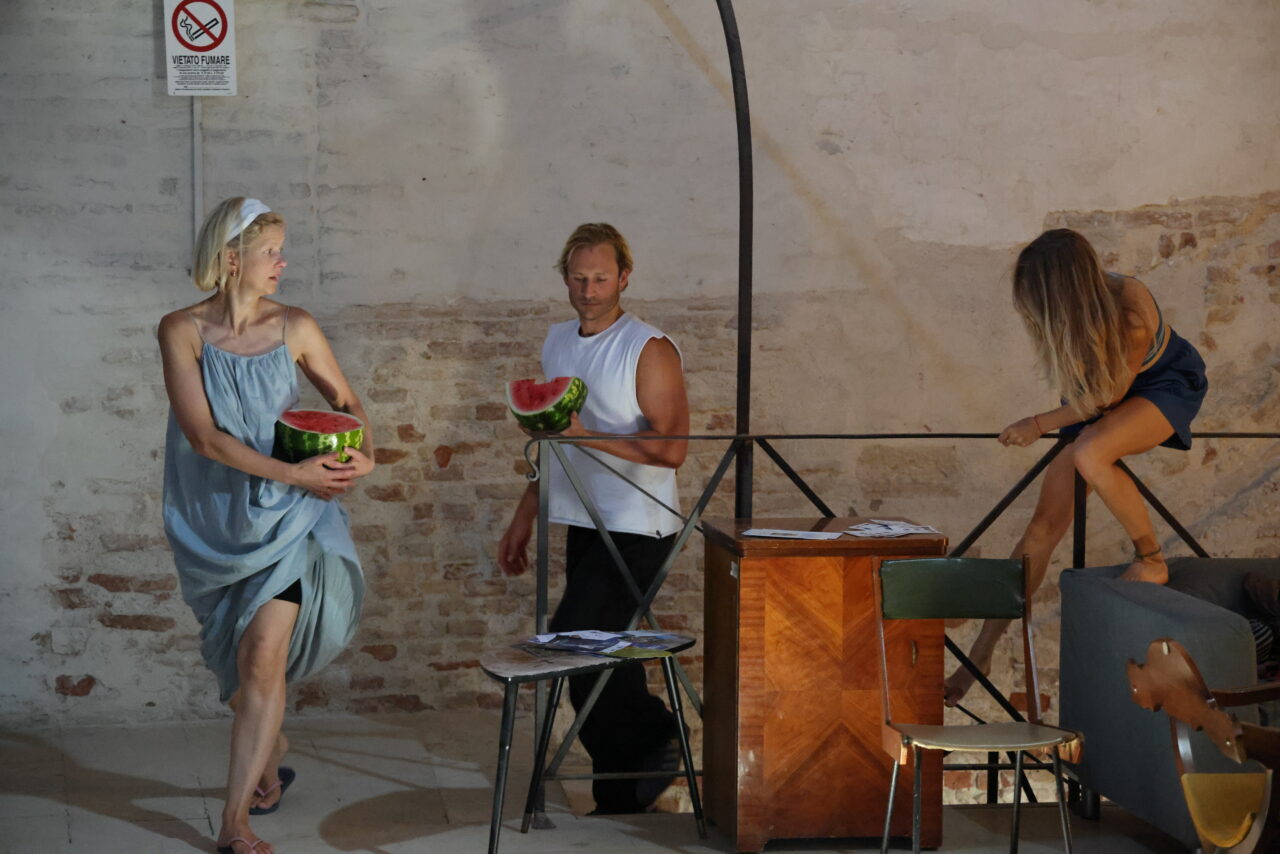
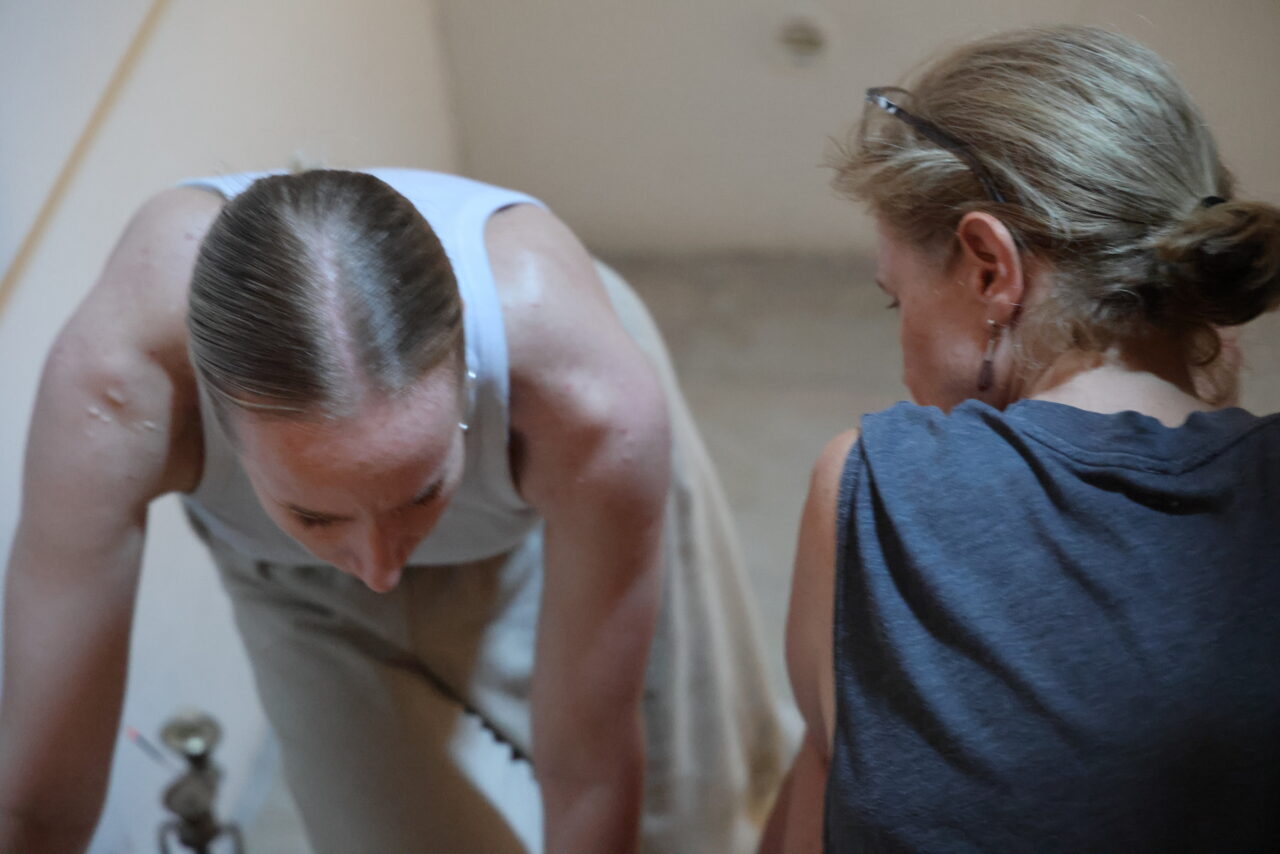
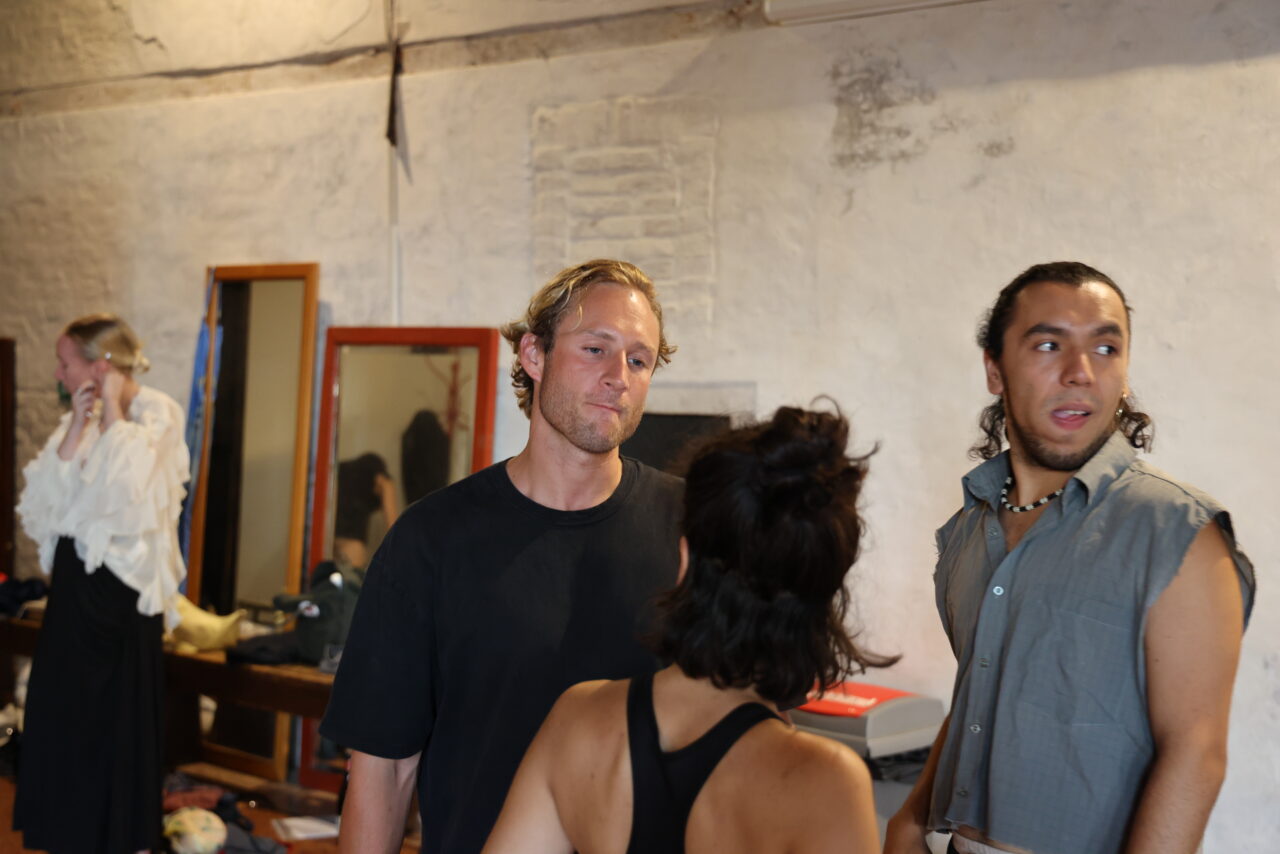
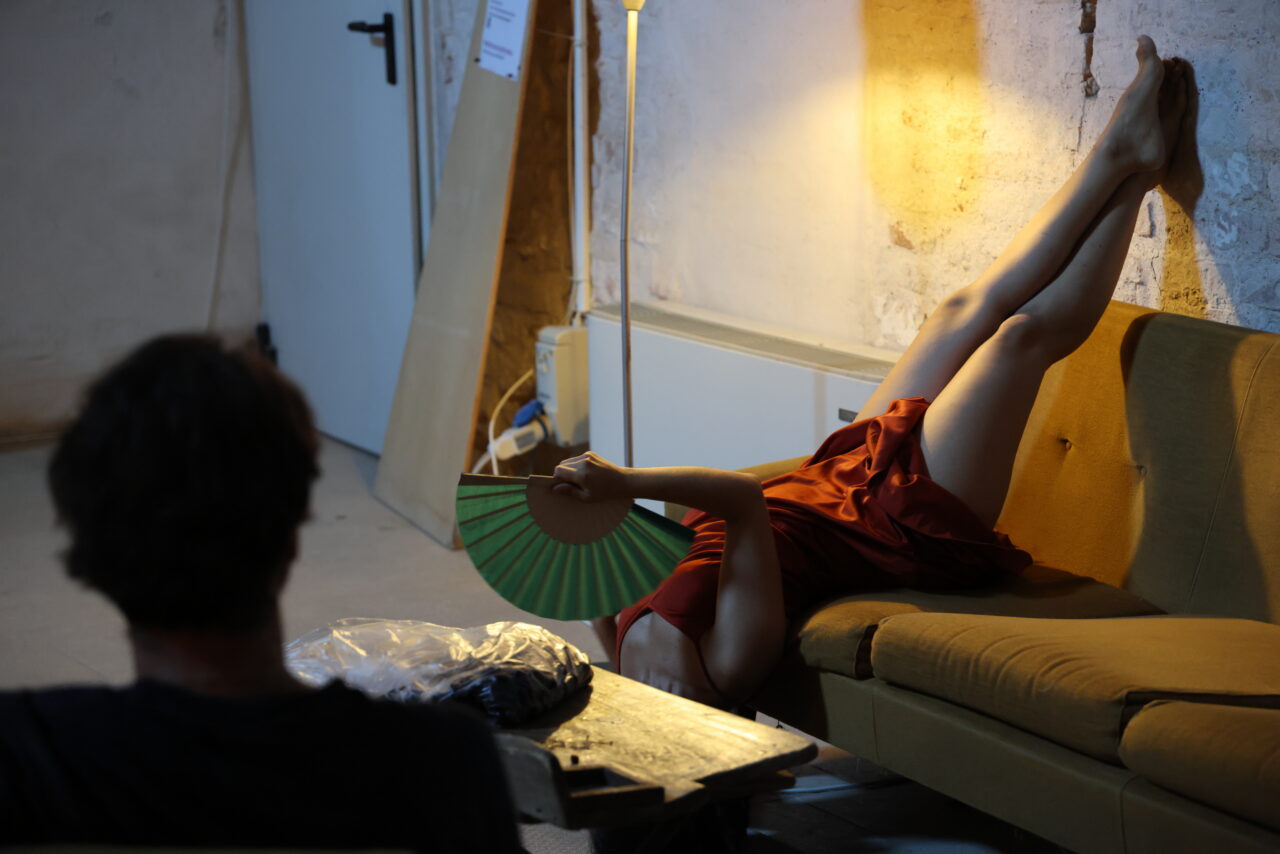
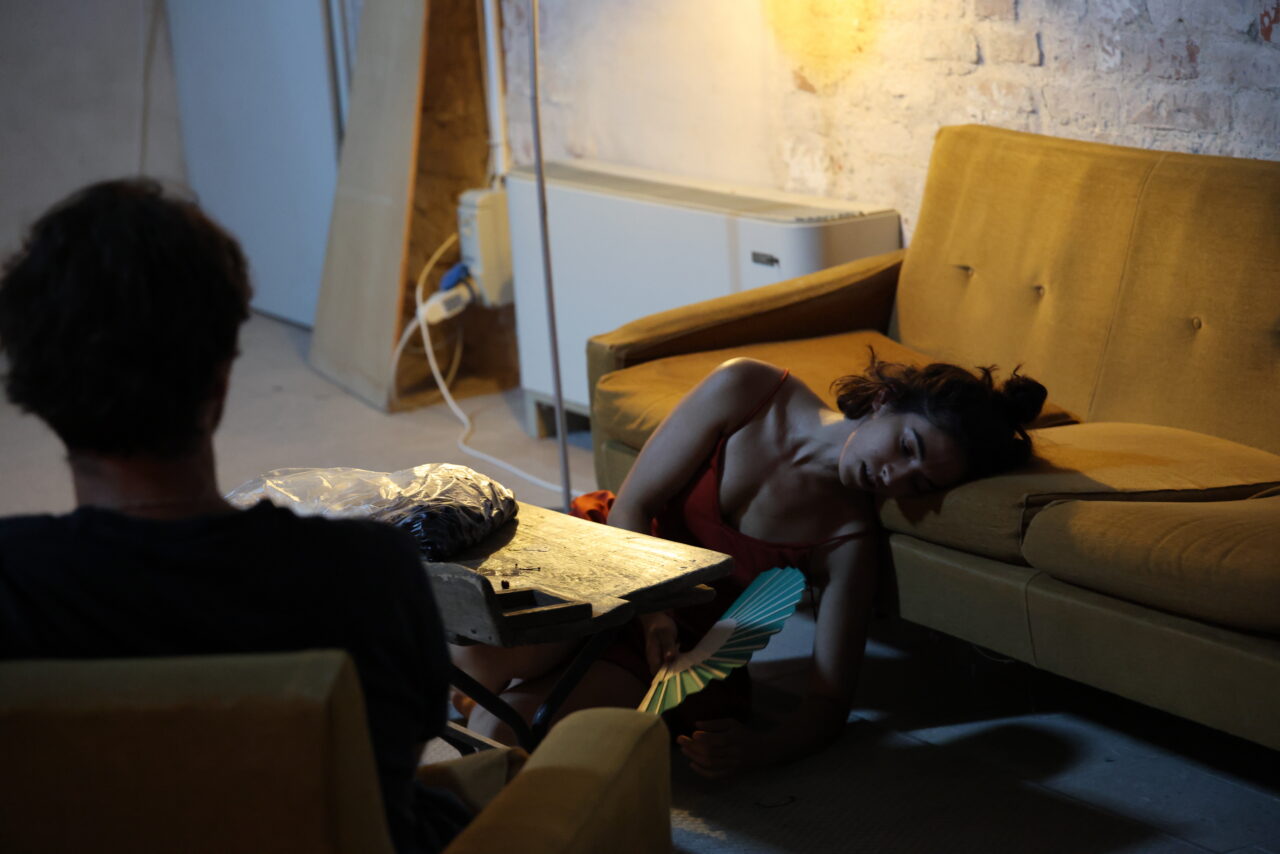
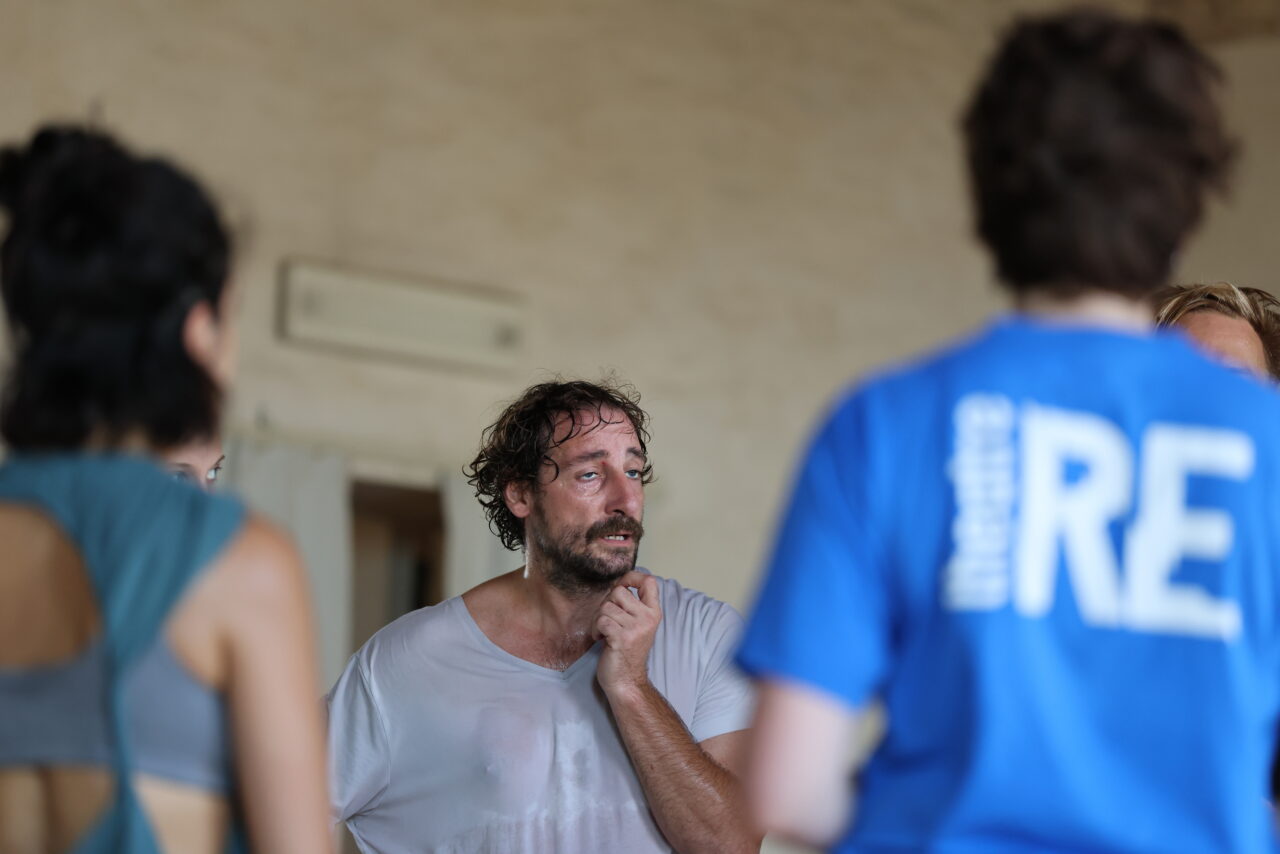
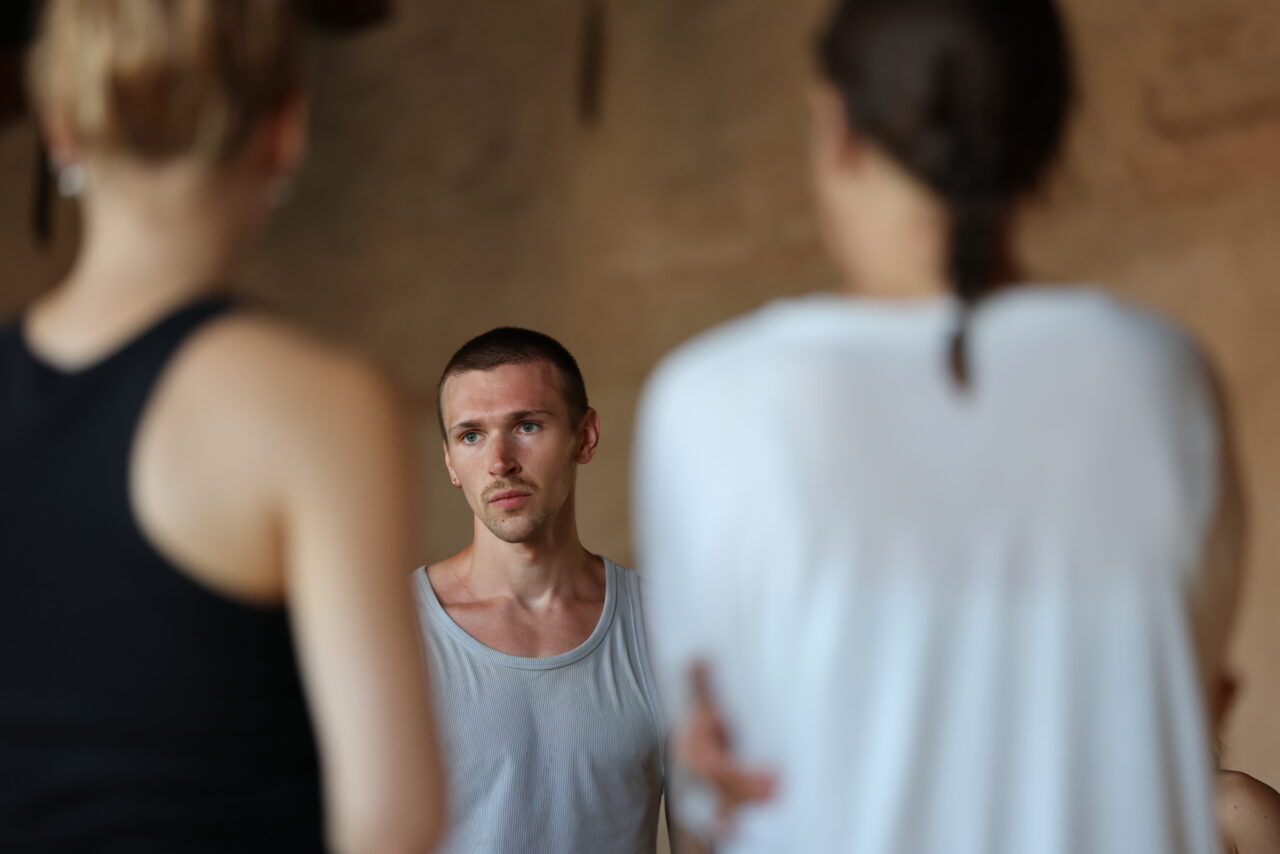
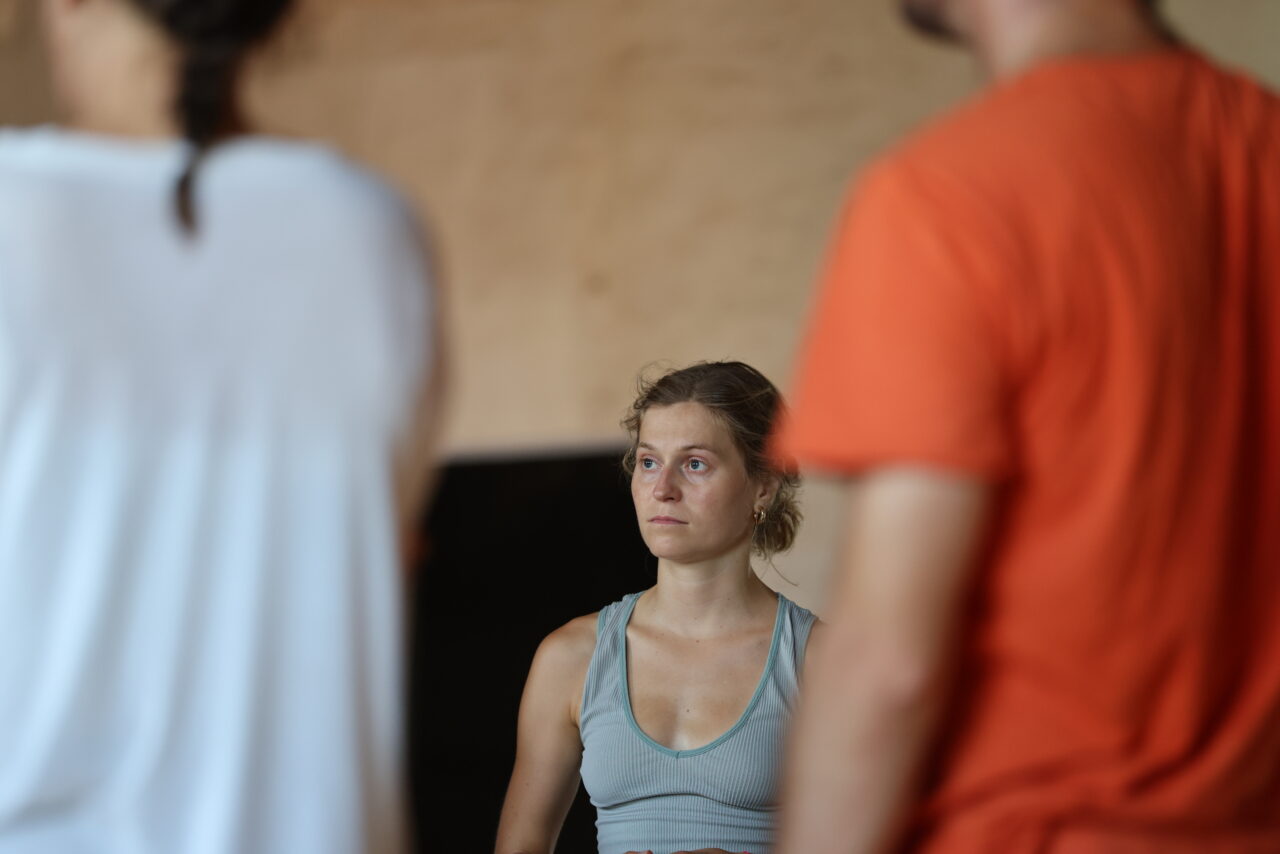
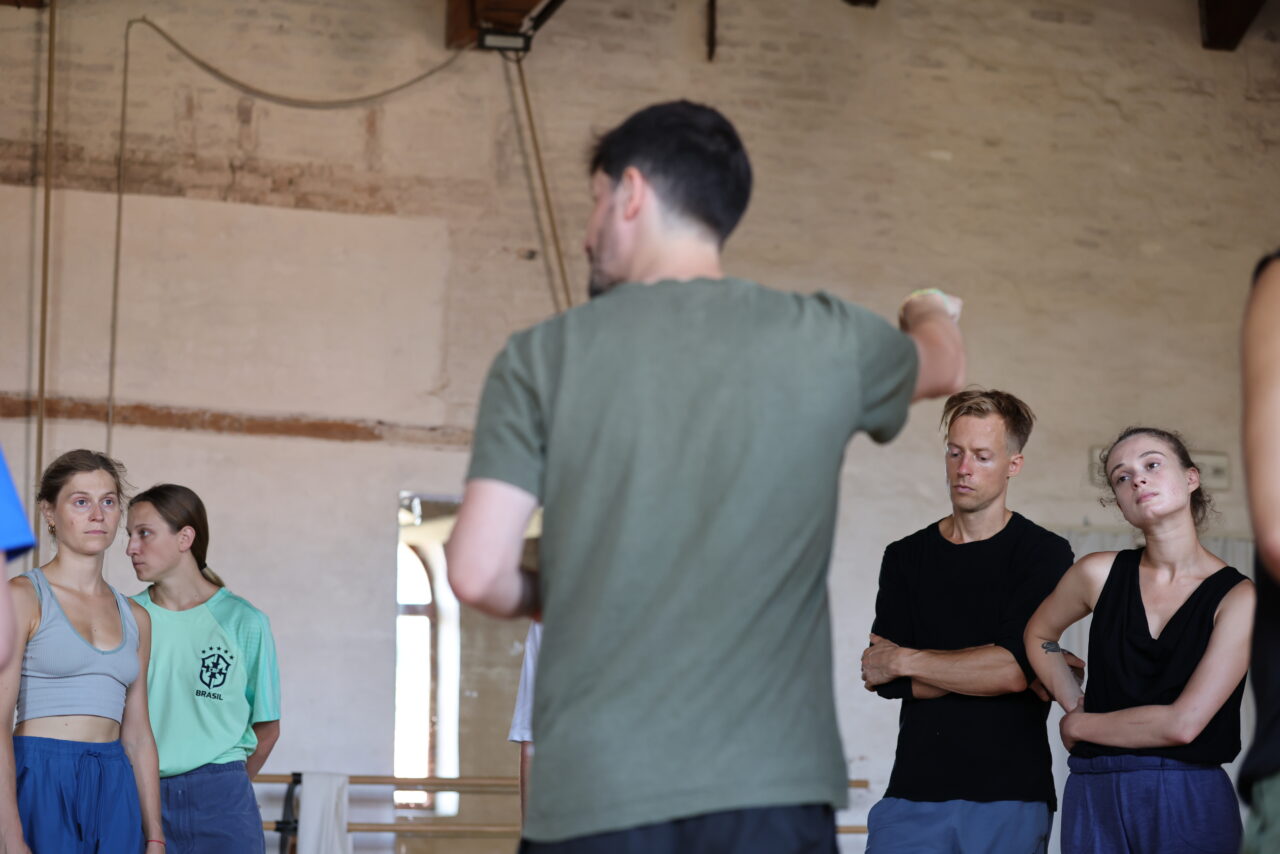
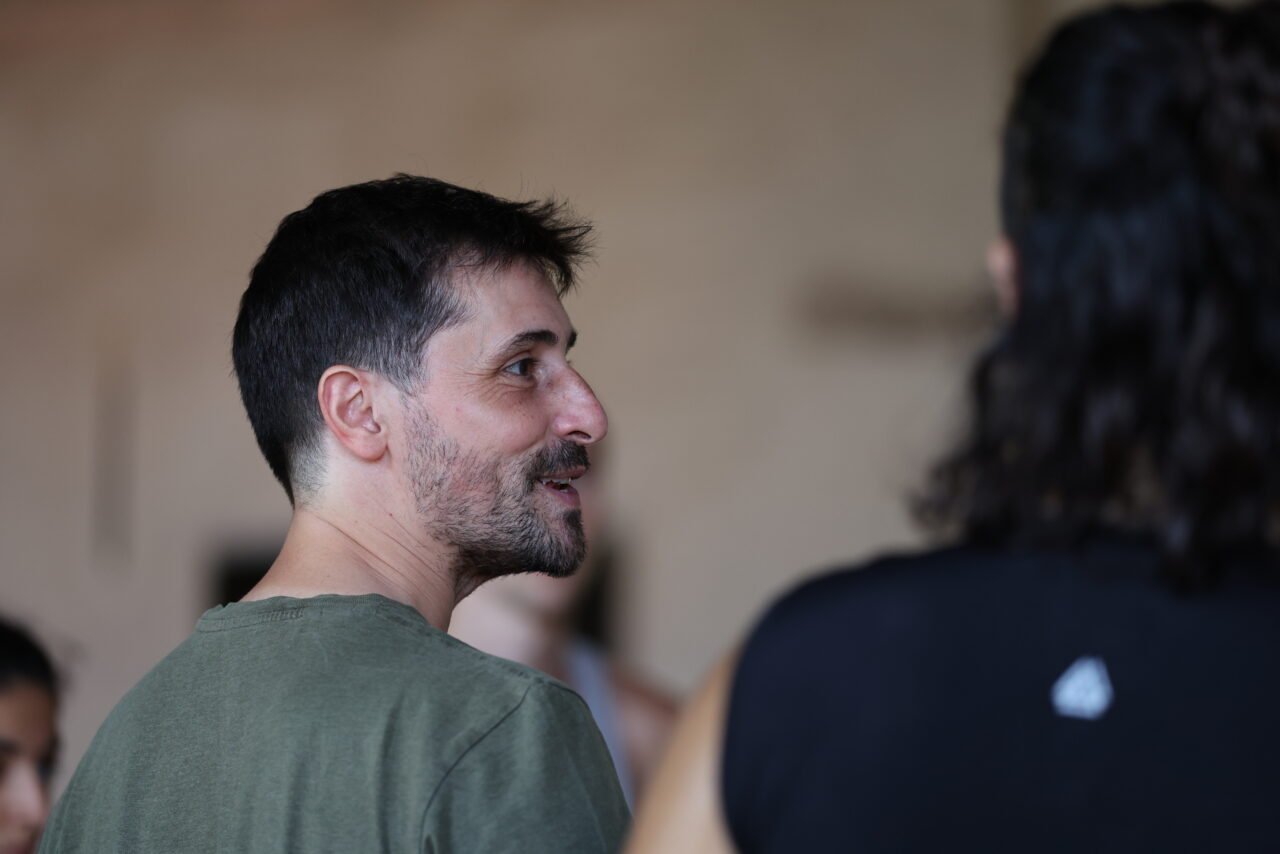
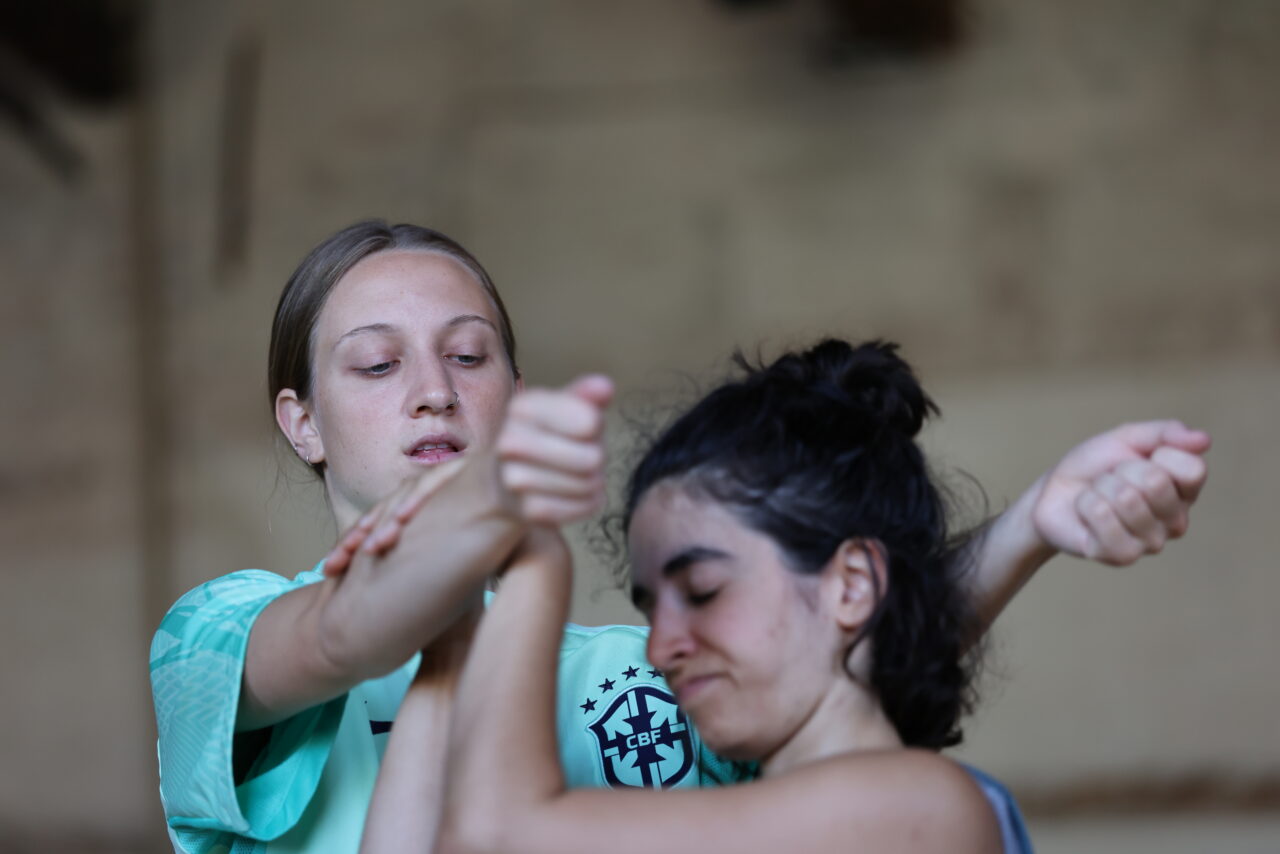
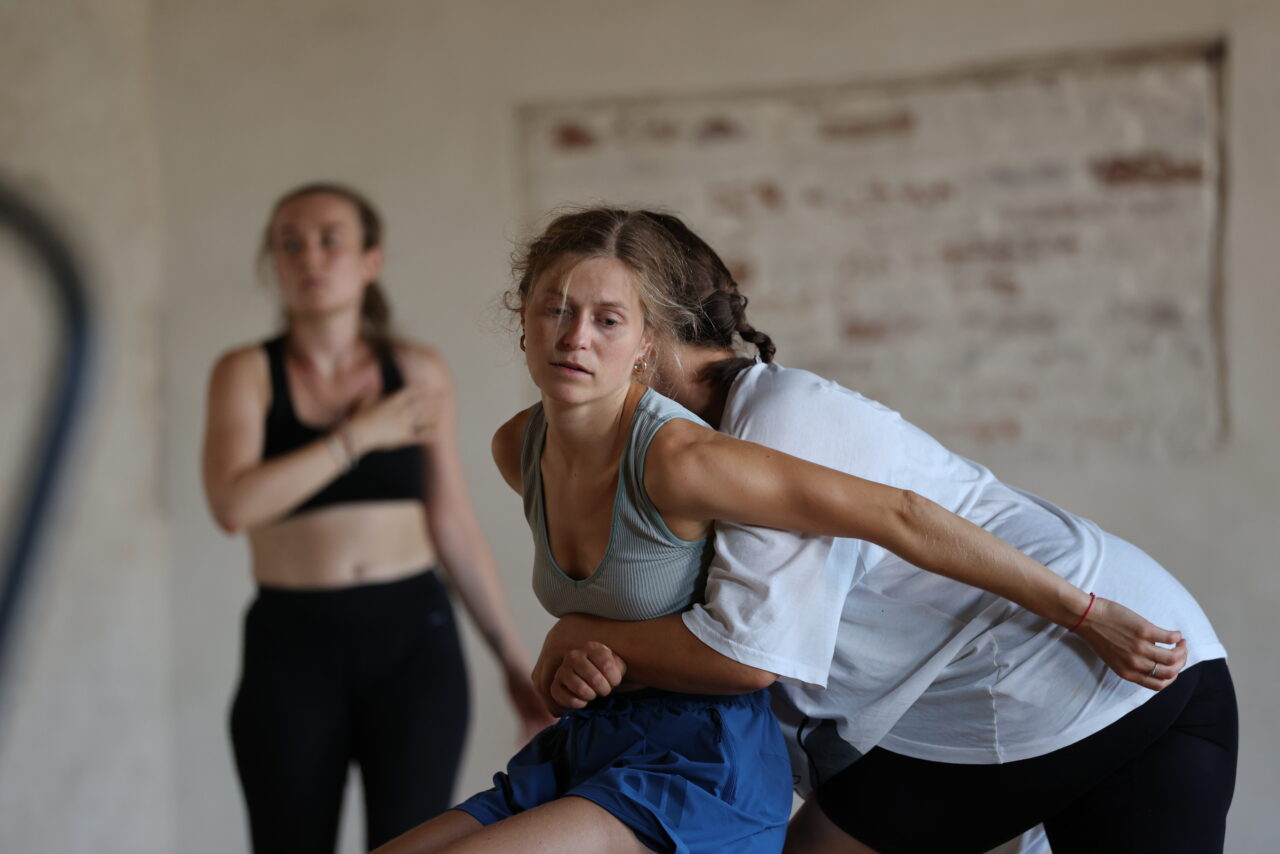
Two days later the room changed hands. From 6 to 12 July, Guillaume Pigé and Mary Johnson of Theatre Re led a week on the company’s own making process. The governing principle is one Pigé states plainly: actions come first and the meaning arrives later. The work has to be found, not planned and not invented, which means getting on your feet before you have decided what you are doing. In Theatre Re’s room there is no right and no wrong. There is only play, and the best idea in the room is the best idea in the room, whoever brought it.
The starting point is a piece of vocabulary inherited from Étienne Decroux, the verb to be. Not a state of mind but a readiness: the performer available for action, the zero from which every choice is made. From there the company works through four ways of writing, which is their word for building material. Writing with space, where a truthful walk is articulated by stops and changes of direction, because a stop invites meaning. Writing with weight, worked in pairs through touch and response, because weight is what gives things value. Writing with rhythm, which they call dynamo-rhythm, the amalgamation of energy, speed, tempo and trajectory that decides whether a gesture carries dramatic value or merely happens. And writing with inner space, the body articulated part against part, lines of force running through it.
Each of the four follows the same arc. Find something truthful, articulate it, observe what it actually does, transform it, and keep what survives. What accumulates is a physical repertoire rather than a set of scenes, and the scenes come later, out of the repertoire. One of the more useful discoveries for a room full of makers is that Theatre Re treats transitions as physical problems in their own right. What began life as a way of getting from one moment to the next has, more than once, turned into a scene of its own.
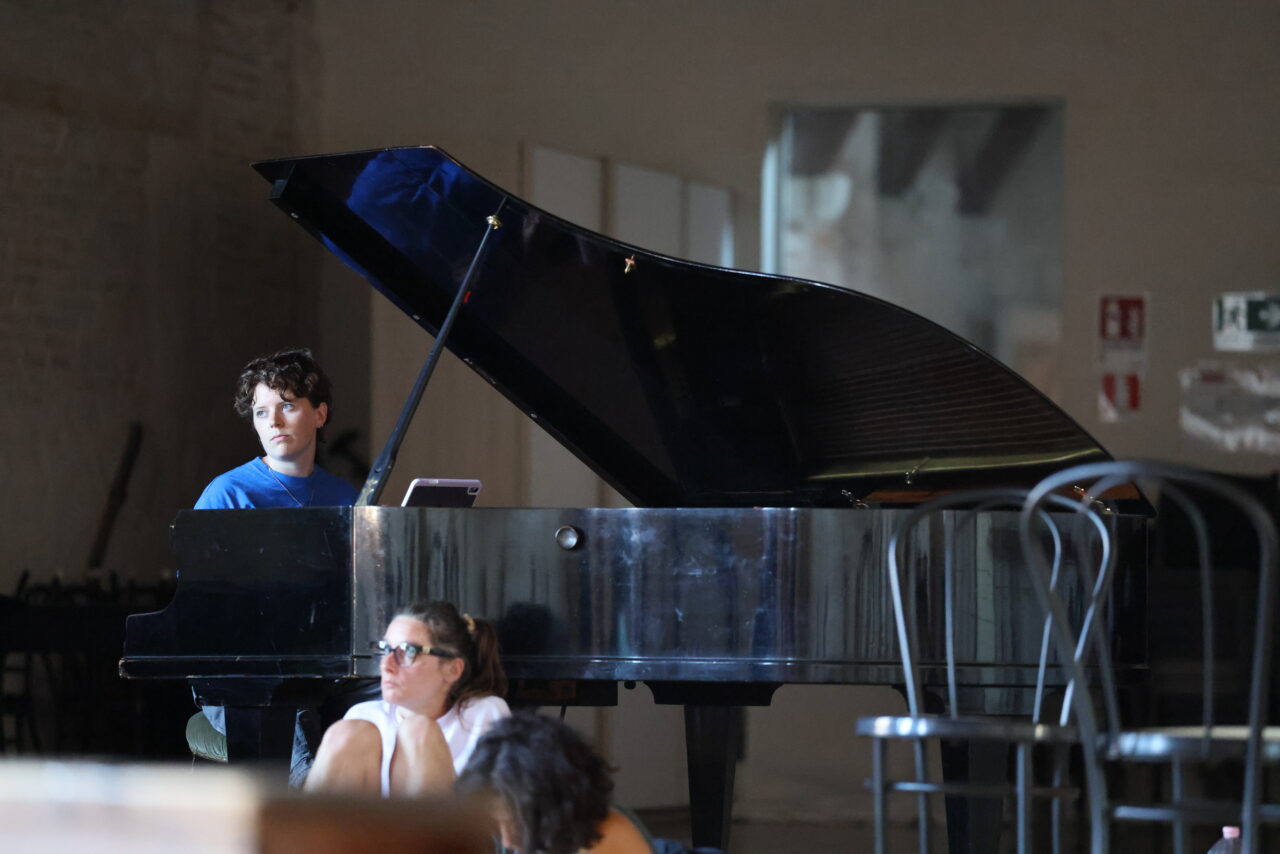
The music is not added afterwards. It is devised alongside the movement from the first day and performed live, so that the musicians respond to the performers in real time rather than accompanying a finished thing. That is why Mary Johnson was in the room all week. A London-based multi-instrumentalist and theatre maker, she trained in percussion at the Royal Welsh College of Music and Drama and graduated with first-class honours in 2022, and she plays percussion in Theatre Re’s The Nature of Forgetting. She played the week rather than scoring it.
Theatre Re was founded in 2009 by Pigé and makes highly visual, non-verbal theatre carried by original live music. Its subjects are the large human ones, memory and family and life and loss, reached through the body and the score rather than through speech. The name comes from the prefix. To rediscover, to reinvent, to reveal, to remind. In 2026 the company marks fifteen years of professional activity, with seven mid-scale productions toured to 88 venues in more than 51 cities across 17 countries and three continents, and The Nature of Forgetting was named Best Physical Theatre of the Edinburgh Fringe in 2025. Pigé has been an Associate Teacher at RADA since 2011, and his history with CPPM runs longer than most: he first taught here in January 2020, with the programme’s first cohort, and again in 2023. Venice was his third time teaching here, and his first with this cohort. The week ended with a public open class on Saturday 11 July at six in the evening.
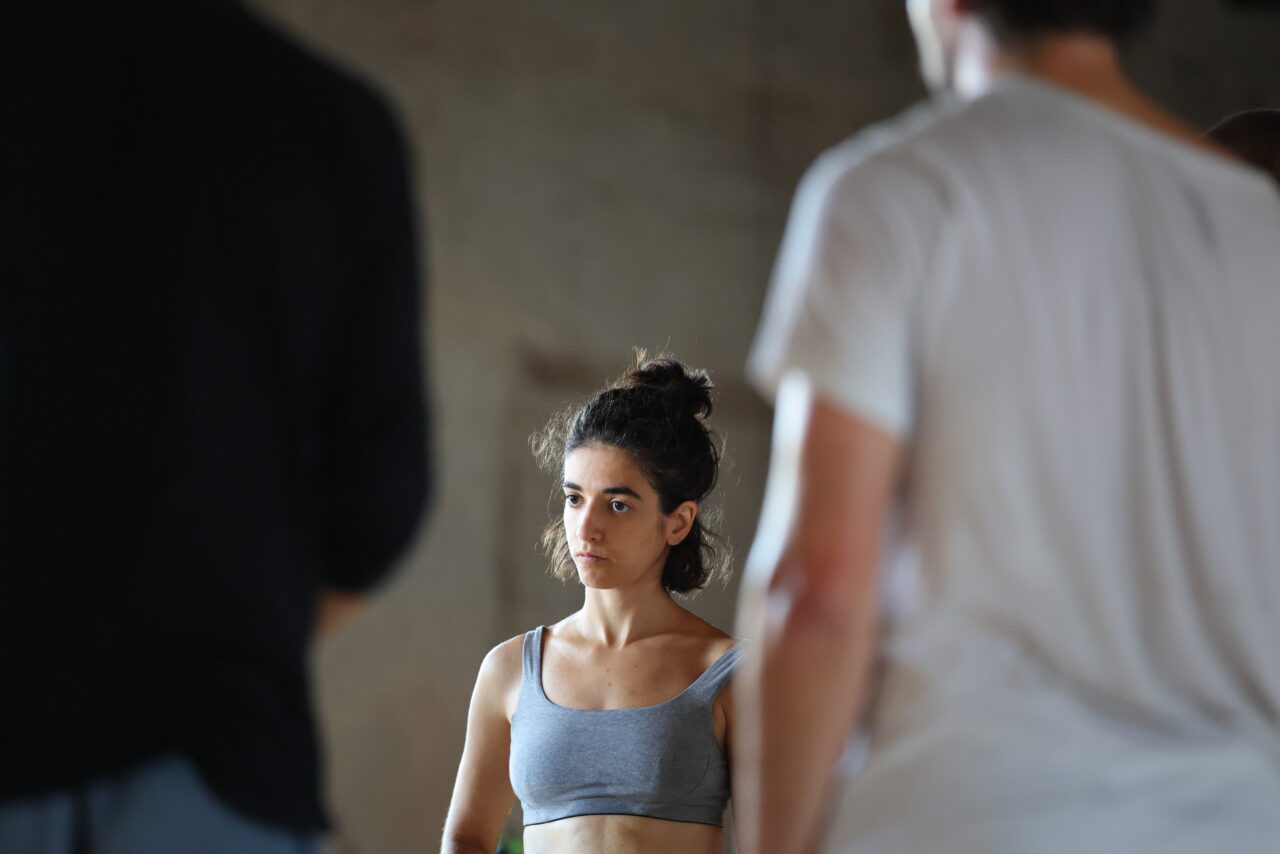
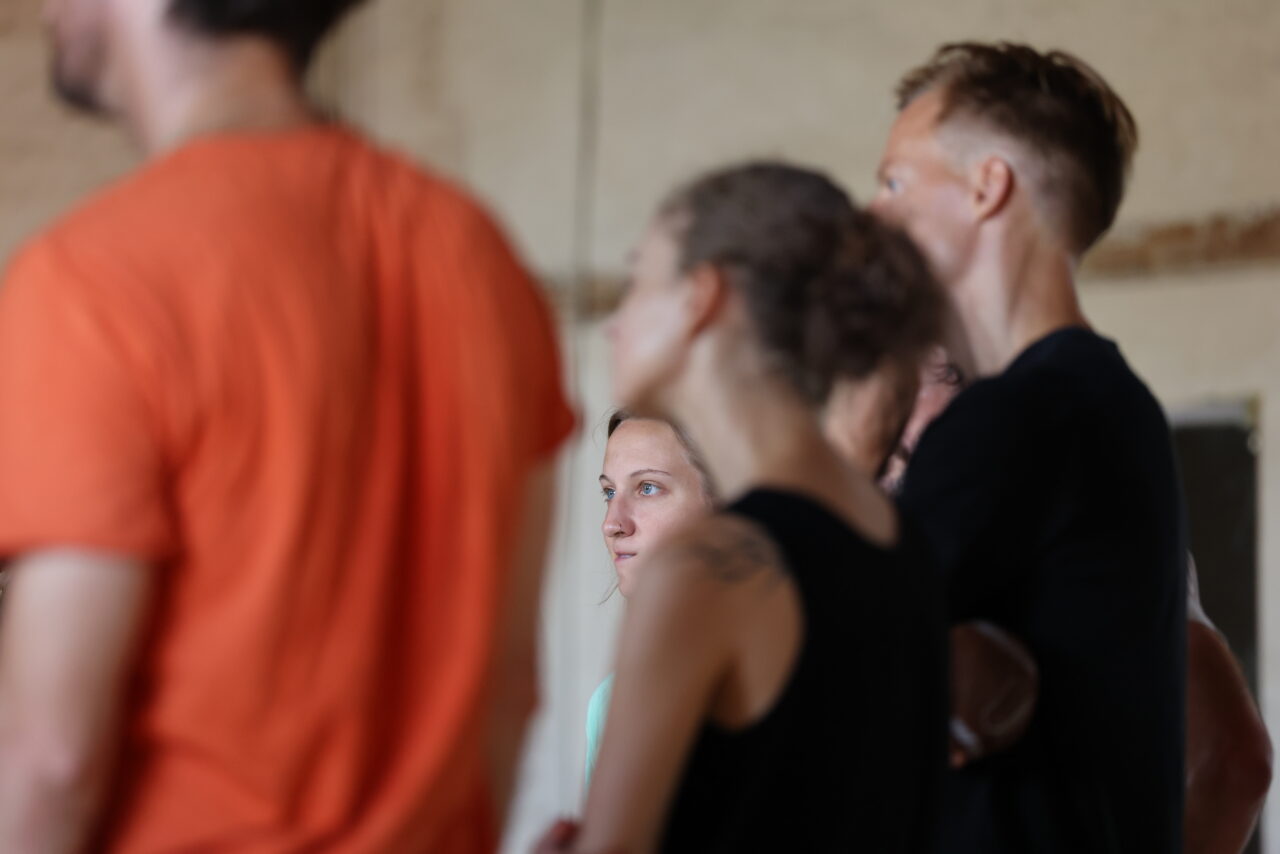
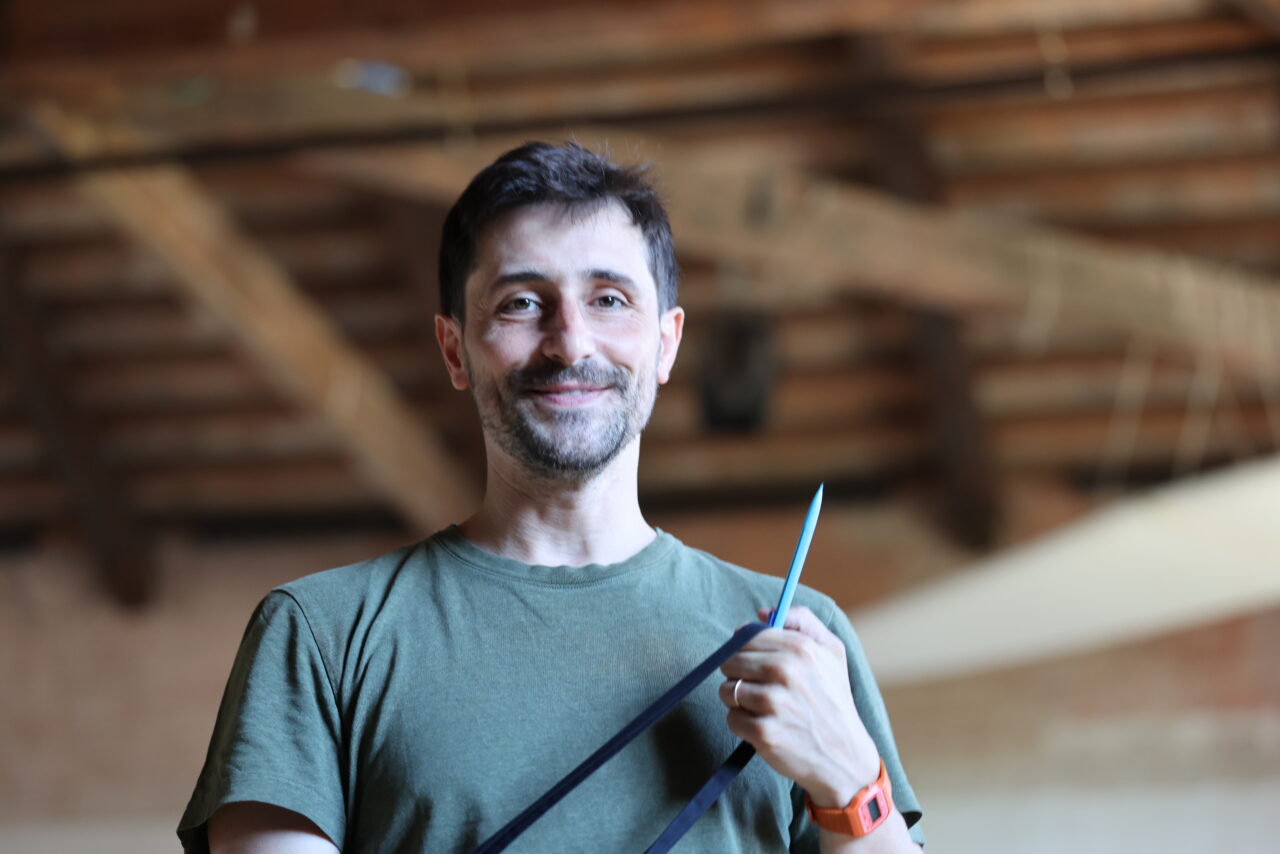
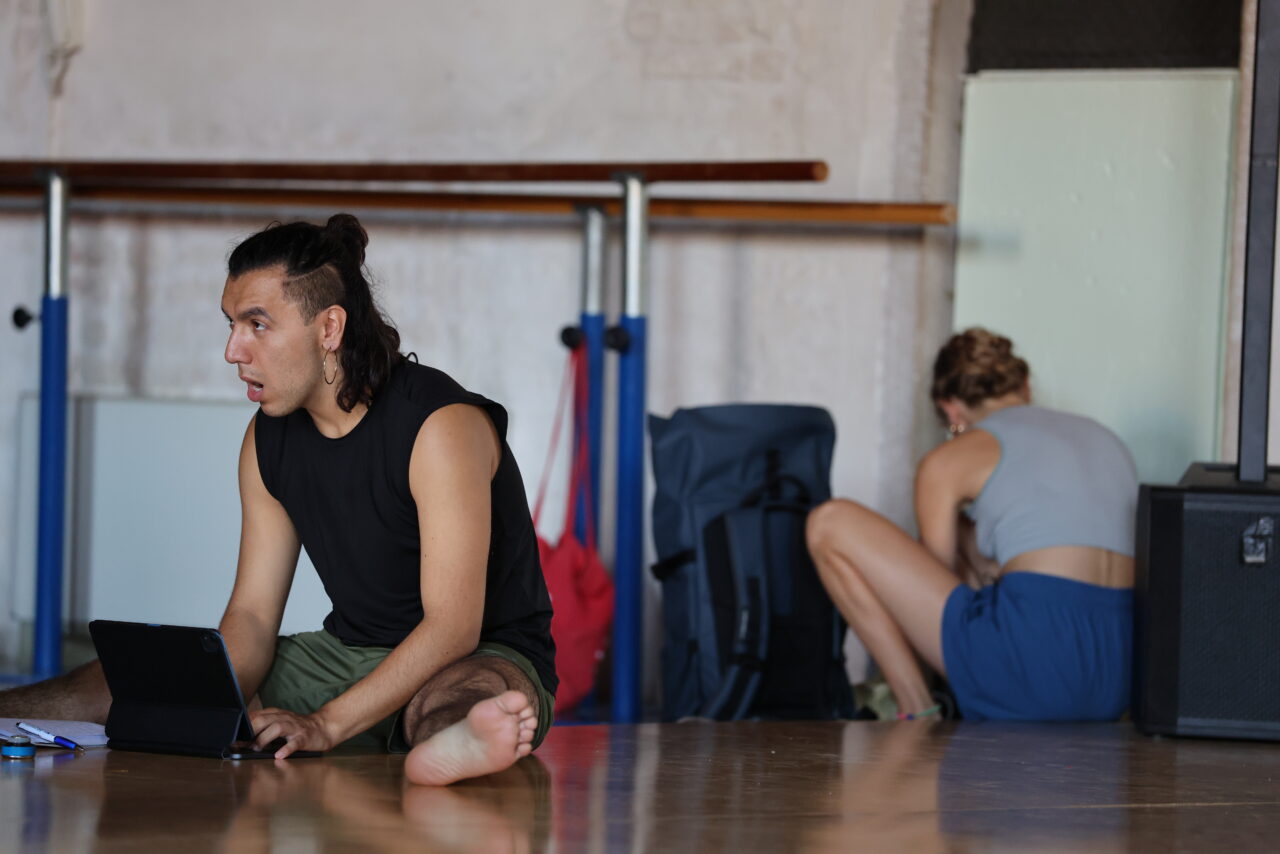
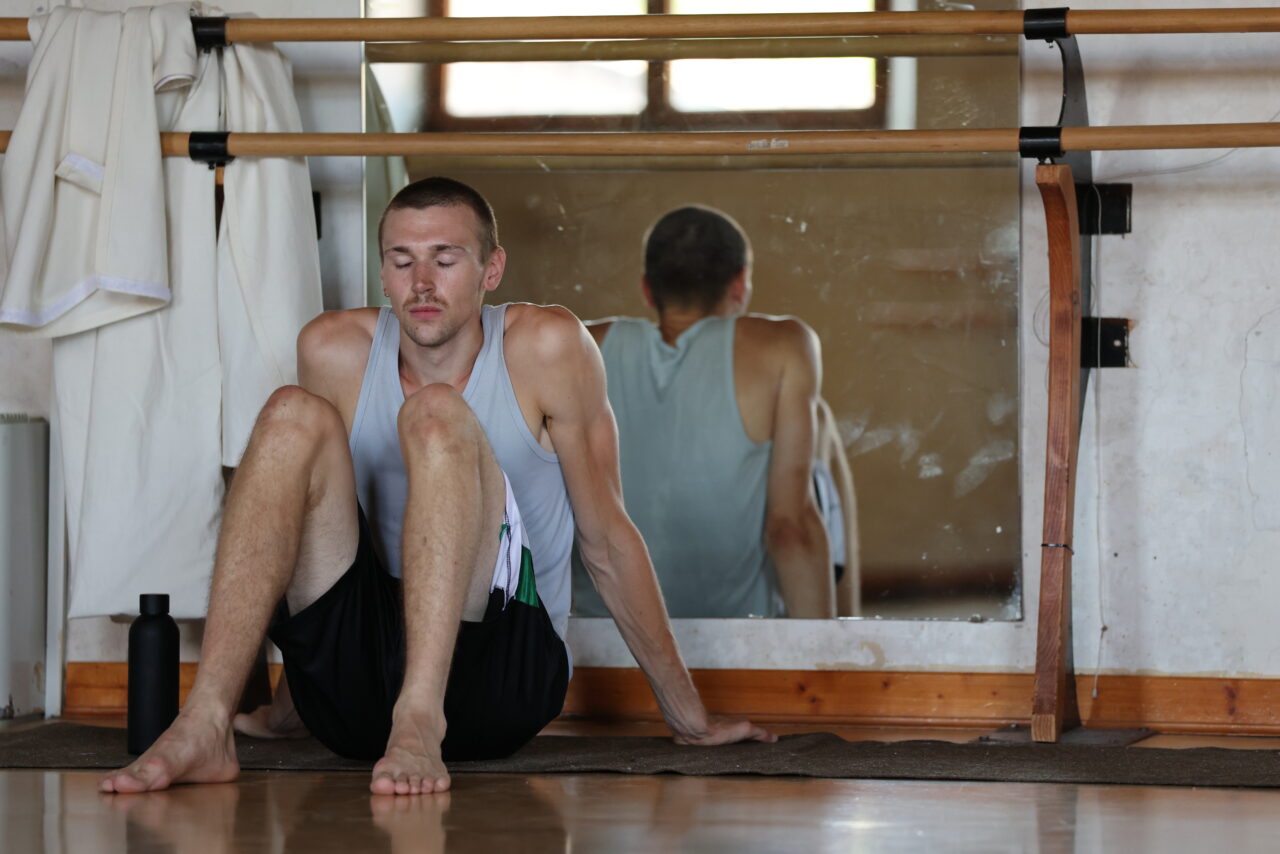
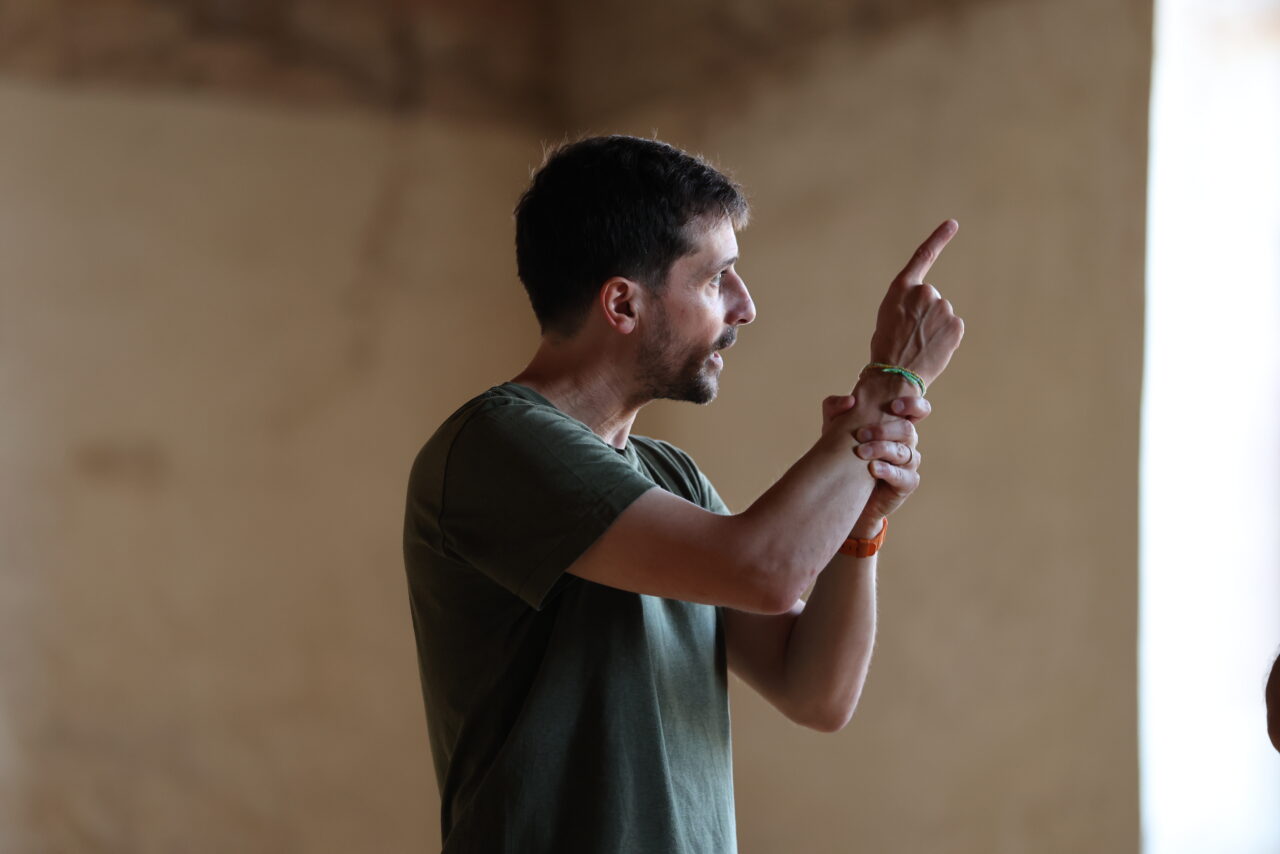
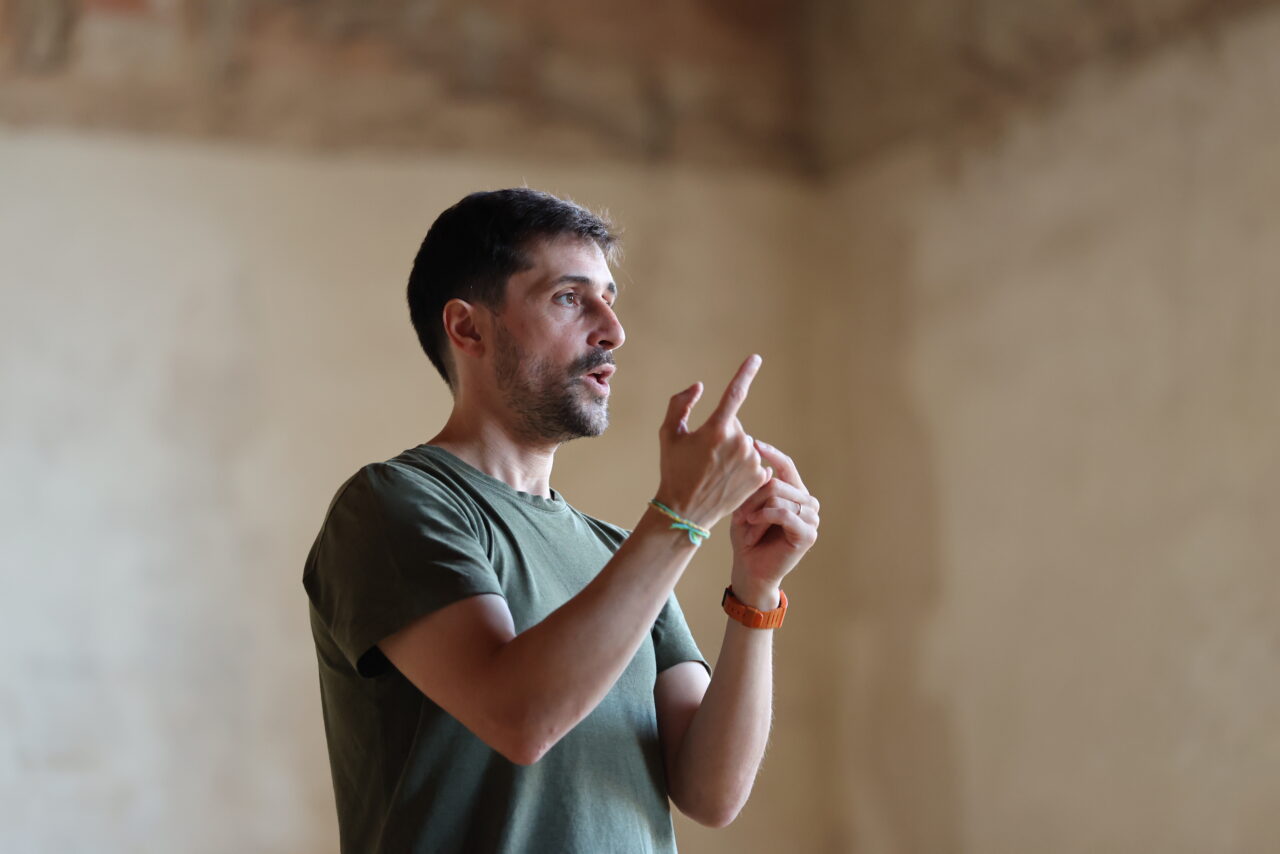
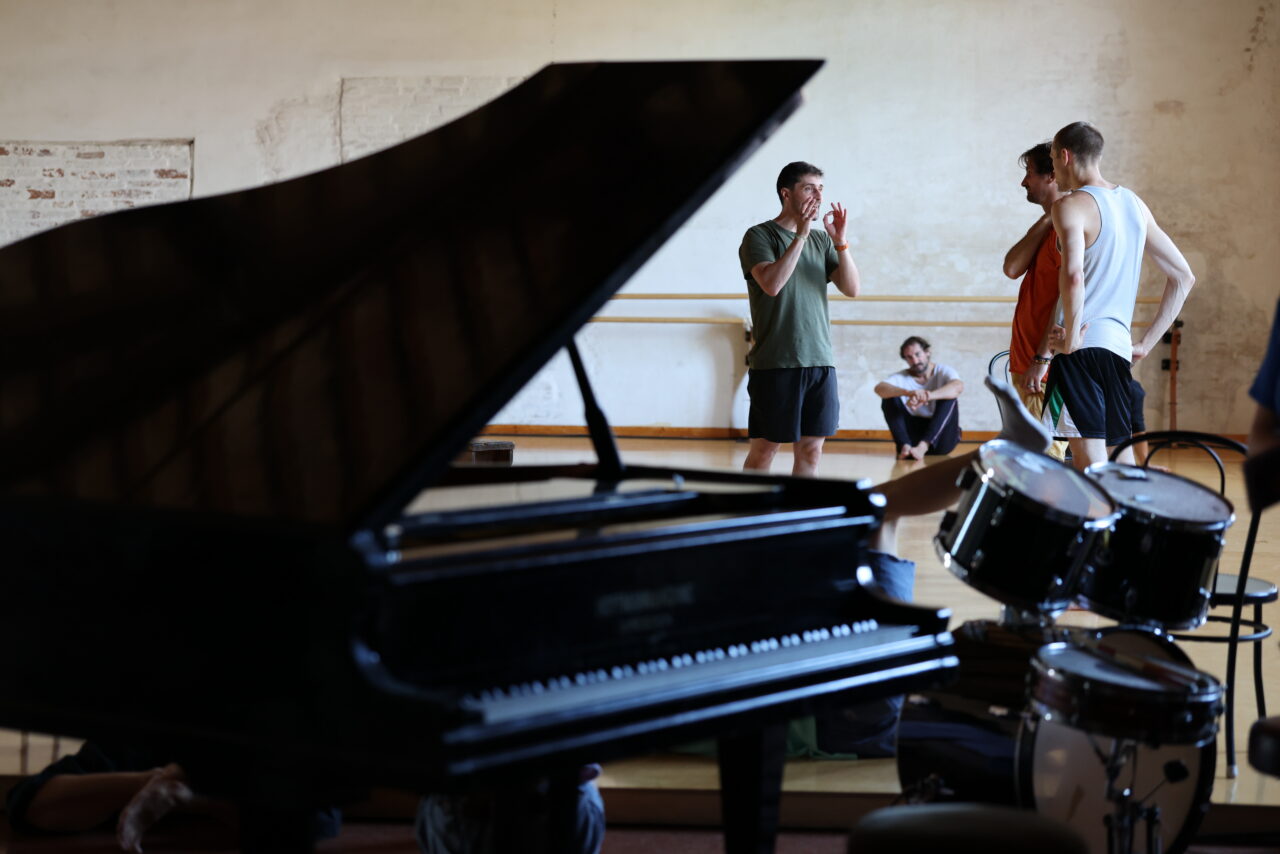
Two weeks, two opposite entrances
Put side by side, the weeks approached the same craft from opposite ends. Punchdrunk begins with the spectator and builds a world for them to walk into, so the composition is of attention itself. Theatre Re begins with the performer’s body and what it can be made to mean, and trusts the audience to read it. One week asked where the audience stands. The other asked what the body is saying before anyone decides what it means. A cohort that has stood in both within a fortnight holds a sharper instrument than either week alone would have given it.
What weeks like these leave is rarely a finished piece. It is a set of questions that keep working after the guests have flown home. Punchdrunk’s methods rest on rigorous world-building beneath the surface an audience ever meets, which leaves a maker asking what the unseen nine-tenths of their own work is, and whether they have actually built it. Theatre Re leaves the harder discipline of making before understanding, and of trusting that the meaning will arrive if the action is true.
The road continues
This is the second dispatch from the traineeship. The first told the story of the opening residency in Melpignano. The two weeks that followed these guest weeks turned the cohort from students of other people’s methods into makers of their own work, and produced six audio walks through the Venice Biennale. From Venice the road turned to Greece, to Athens and then to the Peloponnese.
A degree that puts its students in rooms like these. Read more about the CPPM programme.