CPPM makes six audio walks through the Venice Biennale with Imanuel Schipper (Rimini Protokoll)
7. Aug 2026
Presented 25 July 2026 · Giardini and Arsenale, Venice · walkable while the Biennale runs
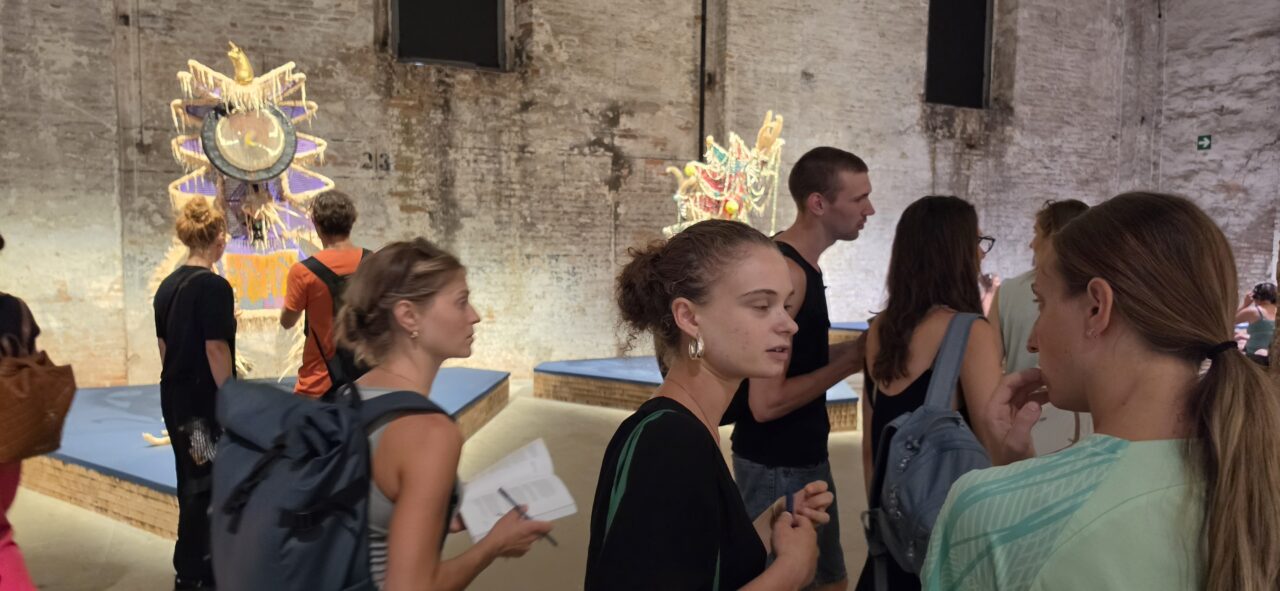
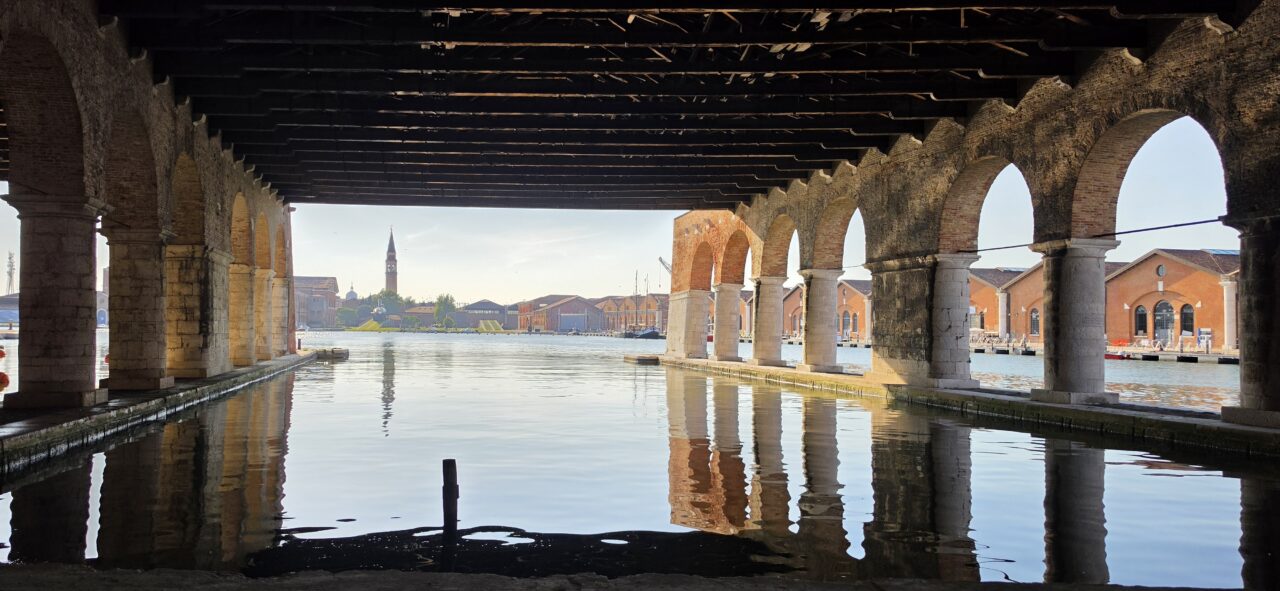
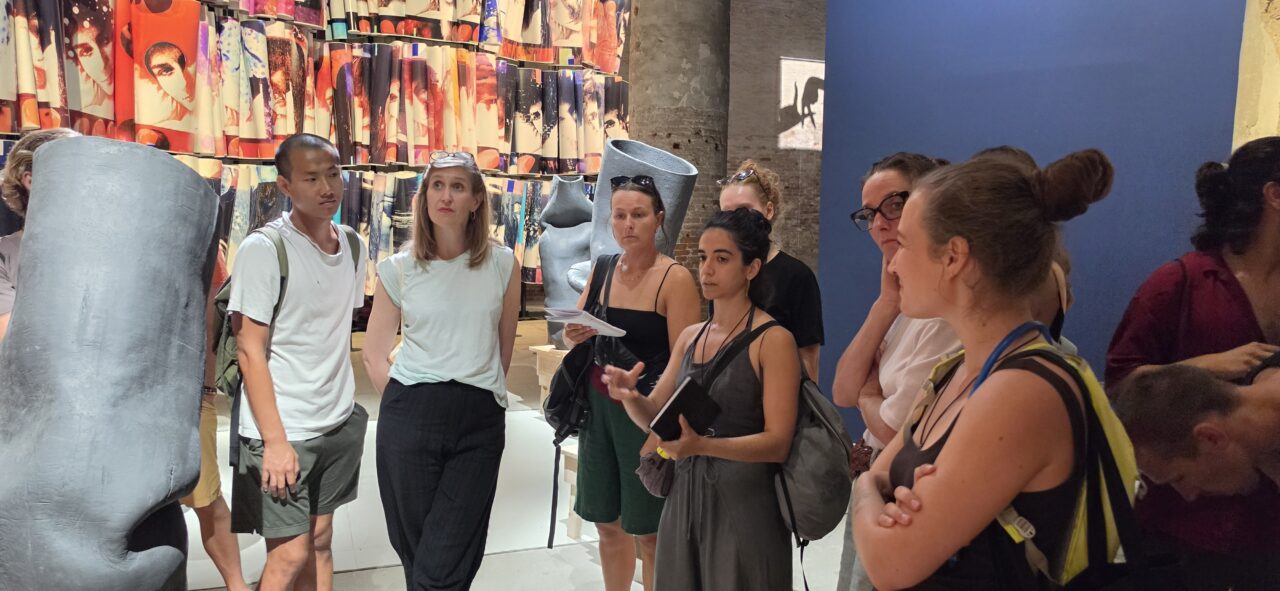
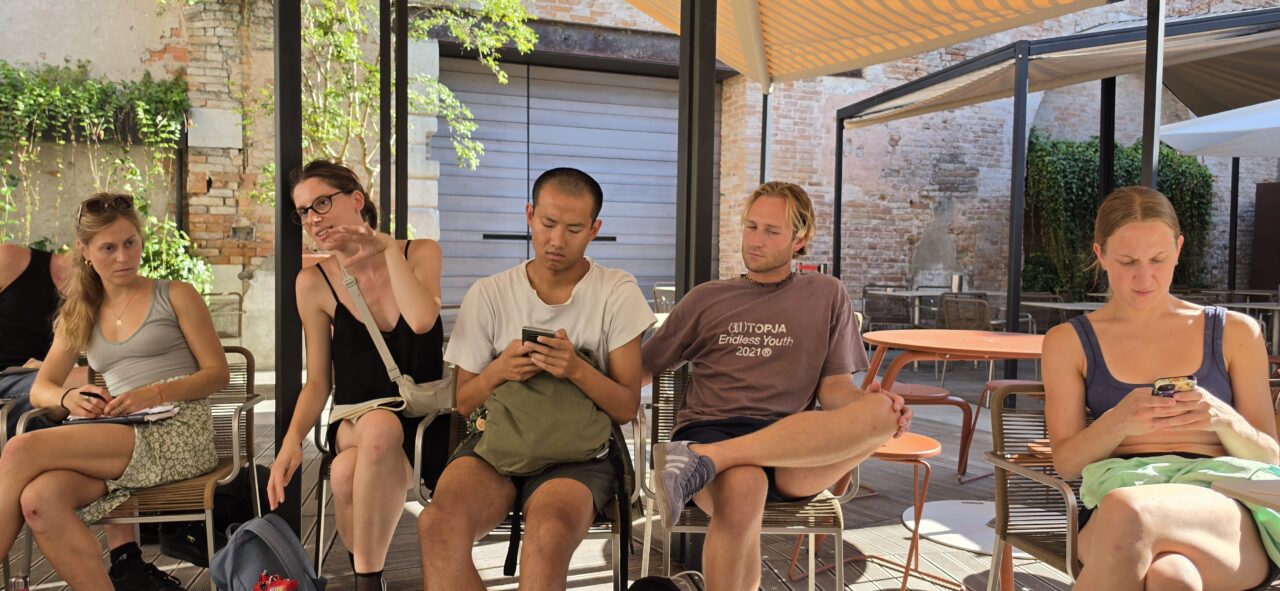
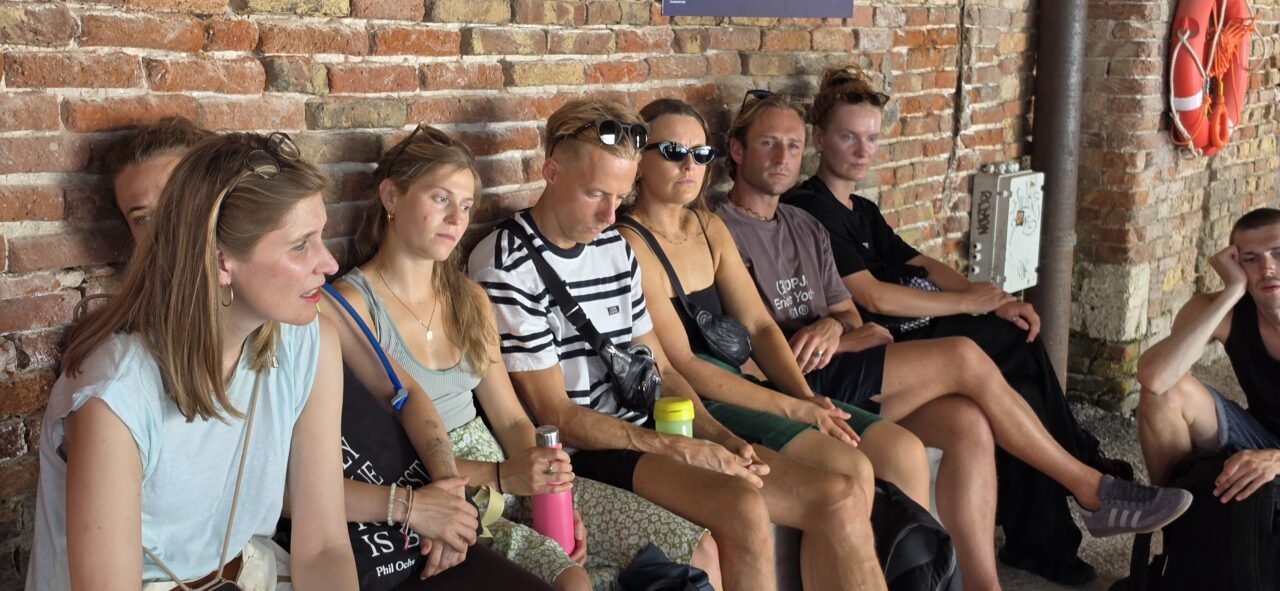
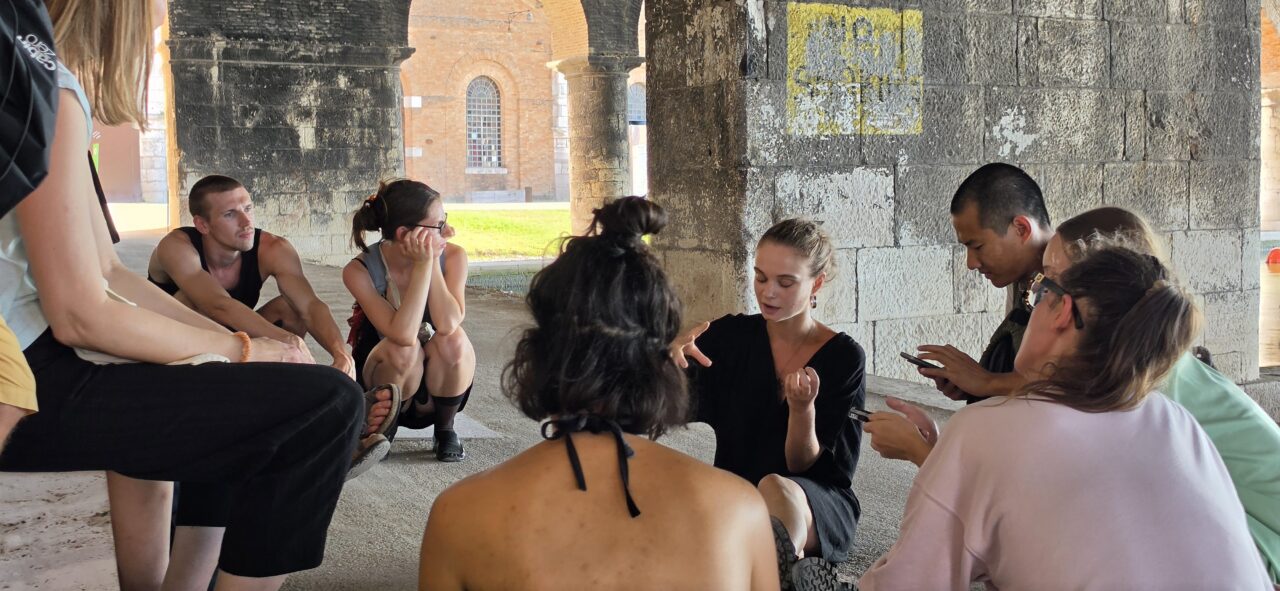
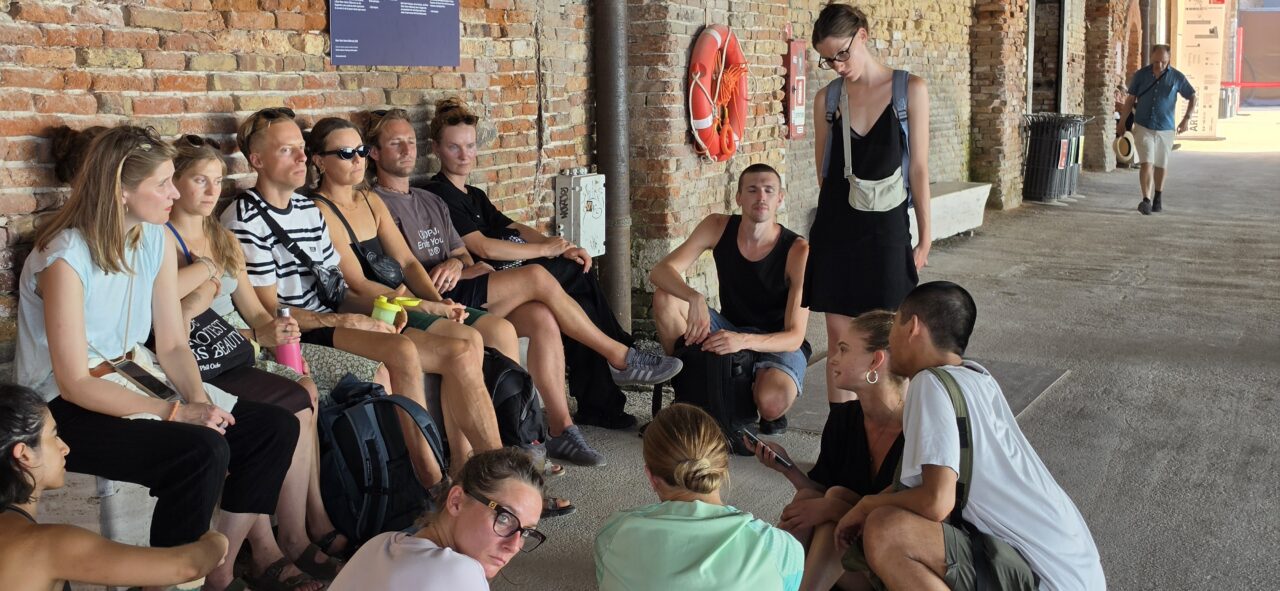
Six audio walks now run through the 61st Venice Biennale, made by CPPM master’s students in two weeks in and around the exhibition. Anyone with a Biennale ticket can walk them. They are what the cohort made in the closing fortnight of its month in Venice, the third chapter of a four-month Erasmus+ traineeship through Italy and Greece.
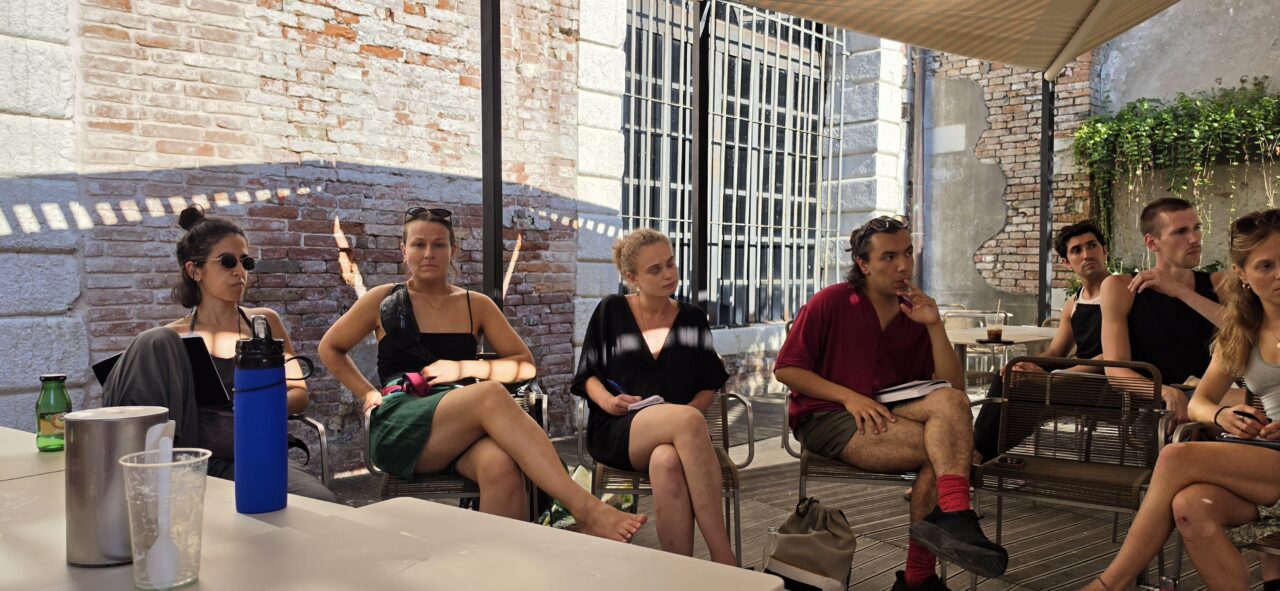
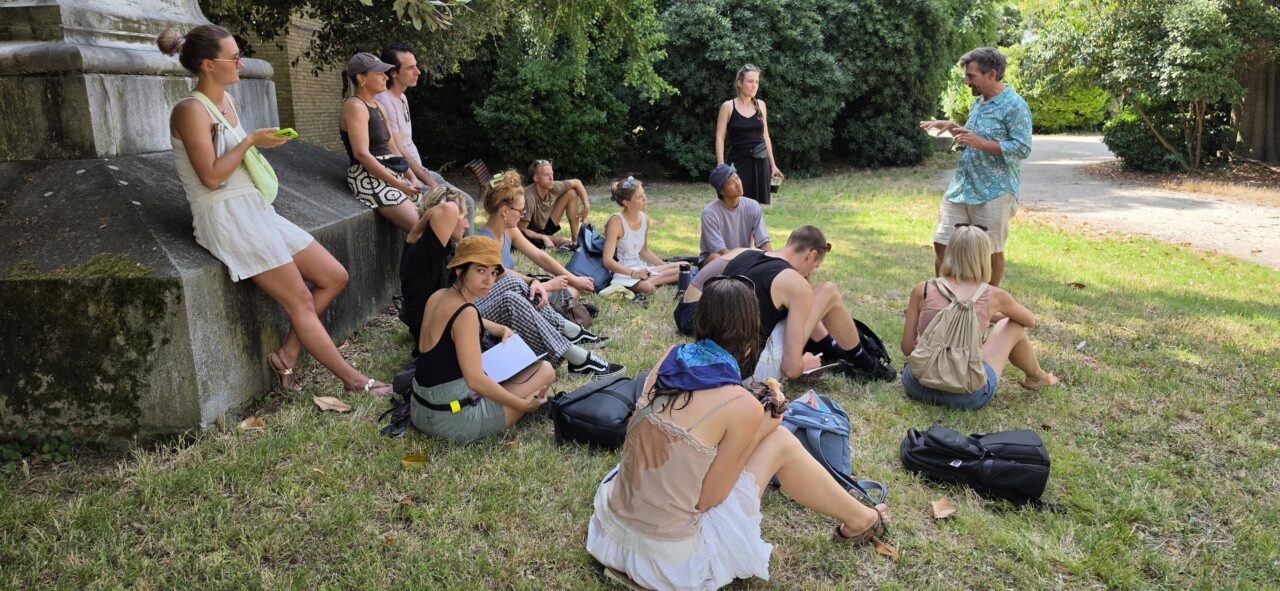
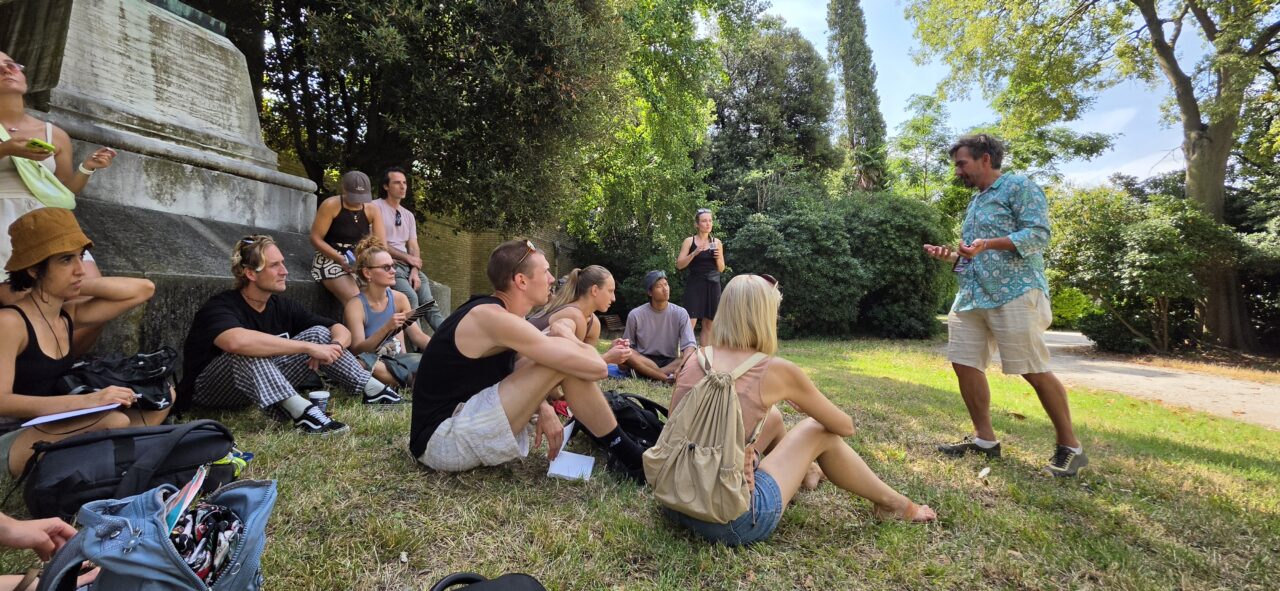
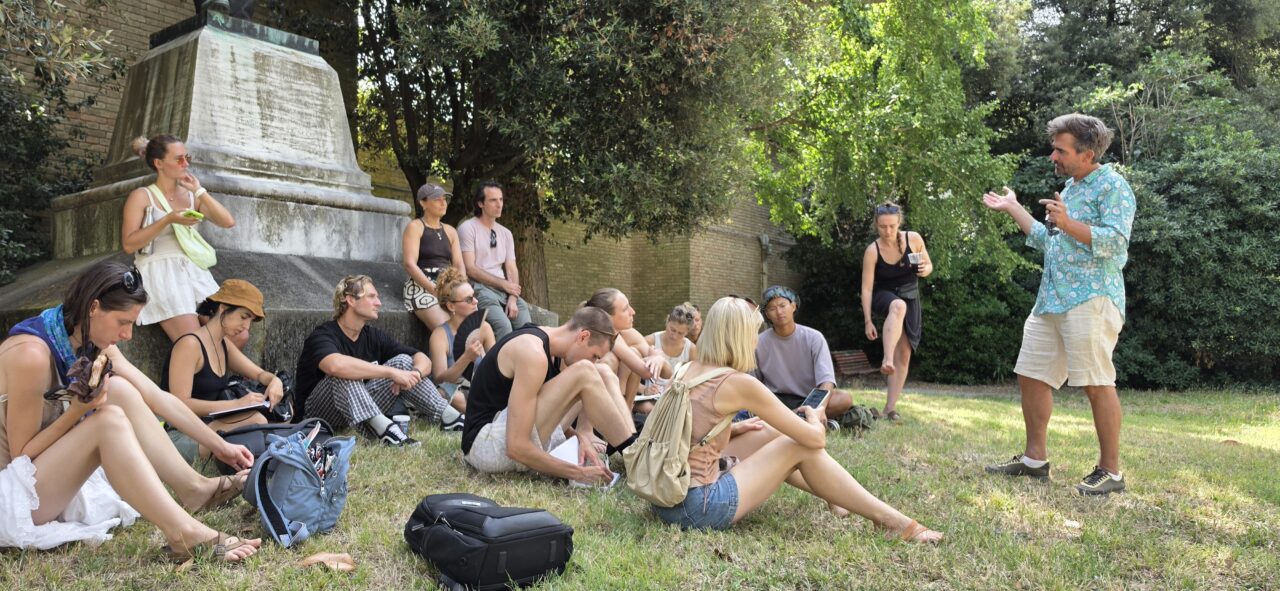
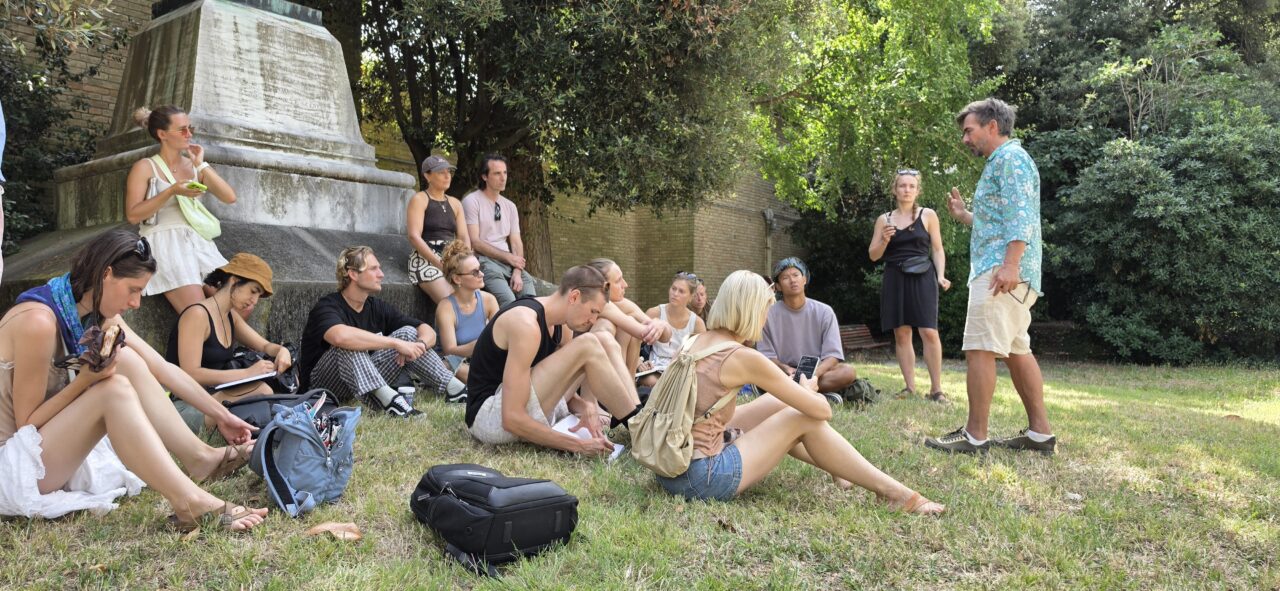
The Venice Biennale audio walks grew out of Watching Otherwise, a seminar on spectatorship: how we watch, who is allowed to watch, and under what conditions. Imanuel Schipper led it. A dramaturge and performance studies scholar, he has worked with the theatre collective Rimini Protokoll for more than twenty years. He is also a long-standing guest teacher at CPPM, having first worked with the programme in 2020 and 2021. Like every phase, the Venice chapter was shaped by Cracalia ETS. The Italian cultural association is the umbrella for the entire four-month traineeship.
From an olive grove to the Giardini
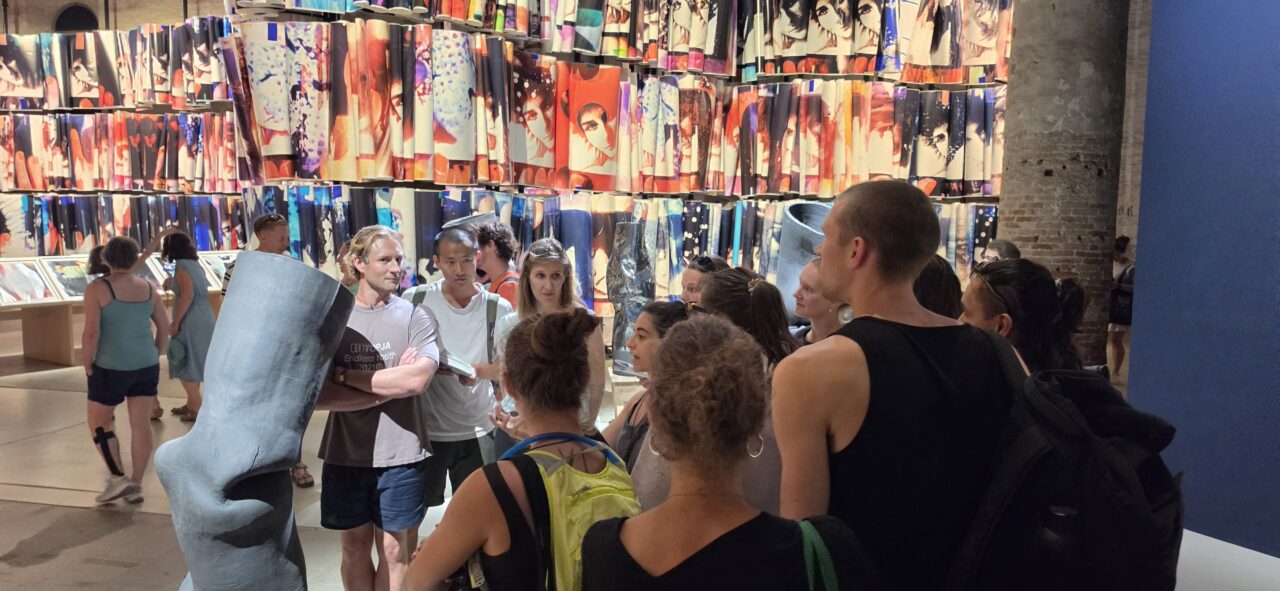
The seminar opened with a week on Corfu, at Elaionas, an olive-grove retreat near the village of Arillas. That week laid the theoretical ground. First the group read, walked and watched together, starting from Jacques Rancière’s claim that the spectator is never passive. From there the reading widened. Claire Bishop brought distracted attention, Diana Taylor the body as a memory no archive can hold. Then came Schipper’s own question: how does a spectator stop being a bystander and become a co-producer of the work? No one needs the reading list to walk the walks: they carry the questions on their own. Two weeks in Venice then turned theory into practice. The walks grew in direct relation to the Biennale itself, conceived by the late Koyo Kouoh as In Minor Keys.
An audioguide turned inside out
Each walk turns the ordinary audioguide inside out. It does not explain the art. Instead it asks what you are doing when you look at it: where your attention goes, what it passes over, whose gaze you have borrowed without noticing. As a result, you end the visit having seen the same exhibition as everyone else, and a different one. The makers call the walks first passes rather than finished artworks. They were made inside the two weeks of the seminar itself, so the questions are still audible in the walking.
Behind the walks sits a discovery about how performance gets made. Anette Pärn, one of the makers of The Walking Alive, came to the seminar carrying a phrase she had never quite settled: “structure releases content.” Her suspicion had always been “that something arbitrary can only produce something arbitrary.” Two weeks of making an audio walk shifted that: with no time for contemplation, decisions had to be made fast, stuck with, and built on rather than returned to. And they “did not stay arbitrary for very long. Each one narrowed the field slightly, so the next one had less room left in which to be random, until at some point the choices seemed to be made by the thing itself rather than by us.” On the far side the phrase held: “the walk exists, and it holds whatever it turned out to hold.”
The Venice Biennale audio walks were made independently of La Biennale di Venezia. They were not commissioned by the Biennale and are not part of its programme. Yet the exhibition stays exactly as it is. The walk only changes how you move through it.
CPPM 2025-27
Six walks, thirteen makers
Each walk starts at a real point in the Giardini or the Arsenale and runs on the listener’s own phone. Some groups merged in the process, so six walks emerged, made by twelve CPPM students and Laurits Muru:
- Petra: the one who stayed by Juuli Hyttinen (Finland) and Maria Papachristodoulou (Greece). A walk about movement and displacement, where art, nature and an unexpected companion change how you experience the Biennale. 21 min · Giardini.
- The Walking Alive by Anette Pärn (Estonia), Dita Lūriņa (Latvia) and Leah Rose Gayer (UK). Some things are simply waiting: the walk begins with a countdown and ends with an unexpected return. 21 min · Arsenale.
- The Garden Beneath the Garden by Ana Trif (Romania) and Laurits Muru (Estonia). What if the Giardini could reveal the invisible layers of power, memory and imagination beneath your feet? 27 min · Giardini.
- Coffee Date by Elar Vahter (Estonia), Avery Gerhardt (USA) and Charis Taplin (UK). A walk with the lady who knows it all about the Giardini della Biennale. 25 min · Giardini.
- Venetian Archive by Edward Skaines (Australia) and Clarisse Degeneffe (Belgium). A futuristic journey into a post-AI era, when the century’s most influential artistic mecca has become an archive. 16 min · Giardini.
- Inventory by Zhenyan Ding (China). Can time, boundaries, the past and the future also be inventoried and measured? 29 min · Giardini.
The twelve are members of the current CPPM cohort.
How to walk them
The walks were presented on 25 July as a sharing for the cohort, and they remain accessible. Walking one takes a Biennale day ticket, headphones and a charged phone. Interested? Then write to info_cppm@eamt.ee or ask any CPPM student.
The road continues
This is the third dispatch from the traineeship. The first told the story of the opening residency in Melpignano. The second covered the two guest weeks that opened the Venice chapter, with Punchdrunk and Theatre Re on the Giudecca. Venice closed at the end of July and the cohort travelled on to Greece, first to Athens and then to the Peloponnese, where the four months end with a residency at the Marina Abramović Institute.
The walks were made by students partway through a master’s built around making. Read more about the CPPM programme.